Unit 05 · Chapter 4 · 9 min read

Trade, corridors, and restricted activity

Look beyond the payment name to the commercial transaction.

The invoice says spare parts. That description may be accurate, incomplete, or misleading. A payment can be ordinary in amount while the goods, destination, end user, or intermediary make the activity legally significant.

Connect payment and trade evidence

Trade-related risk can involve the seller, buyer, goods, shipping route, intermediaries, and end use. A payment record often contains only part of that story. Determine what the product and institution can reasonably know and what evidence is required for the relevant activity.

Link invoices, orders, shipping records, and payment references where the business model supports it. Compare amounts, dates, and parties. An inconsistency is a review lead, not automatic proof of trade-based laundering. Commercial adjustments, partial shipments, and financing arrangements can explain differences.

A payment description is a compressed account of an underlying commercial activity. An invoice, shipping document, customer profile, and payment message can each reveal a different part of that activity. Compare them for relevant inconsistencies while recognizing that ordinary trade can involve agents, intermediaries, and routing changes. The purpose is to understand the transaction, not to assume that every additional participant proves concealment.

Data quality becomes a control issue at each handoff. A long business name may be truncated, a field may be mapped to free text, or a structured address may lose its country. Document which fields the next system actually receives. A screening service cannot evaluate information that was present upstream but discarded before the request reached it.
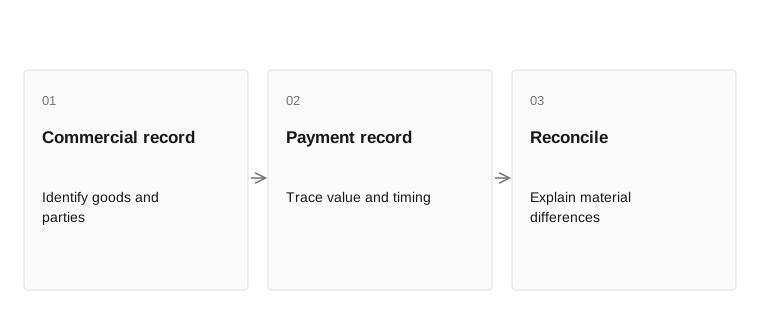
Connect payment and trade evidence — the flow
Connect payment and trade evidence Connect payment and trade evidence — the flow Follow the sequence. Explain material differences. Commercial record Identify goods and parties Payment record Trace value and timing Reconcile Explain material differences
  1. Commercial recordIdentify goods and parties
  2. Payment recordTrace value and timing
  3. ReconcileExplain material differences
Follow the sequence. Explain material differences. Chapter sources · Open image
Connect payment and trade evidence — the distinction
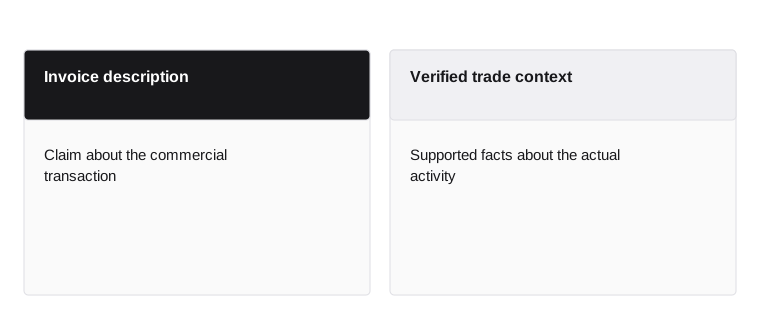
Connect payment and trade evidence Connect payment and trade evidence — the distinction These concepts answer different questions. Read each definition in the context of the section. Invoice description Claim about the commercial transaction Verified trade context Supported facts about the actual activity
Invoice description
  • Claim about the commercial transaction
Verified trade context
  • Supported facts about the actual activity
These concepts answer different questions. Read each definition in the context of the section. Chapter sources · Open image
Trade comparison
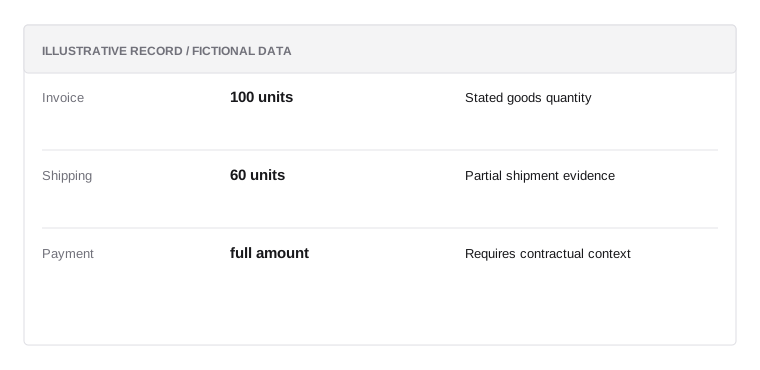
Connect payment and trade evidence Trade comparison Fictional teaching record. Requires contractual context. Trade comparison Illustrative data; not a real customer record or a prescribed policy. Invoice 100 units Stated goods quantity Shipping 60 units Partial shipment evidence Payment full amount Requires contractual context Neither record alone may explain the transaction
Fictional educational excerpt / Not for execution

Trade comparison

Illustrative data; not a real customer record or a prescribed policy.

  1. Invoice100 units

    Stated goods quantity

  2. Shipping60 units

    Partial shipment evidence

  3. Paymentfull amount

    Requires contractual context

Neither record alone may explain the transaction

Fictional teaching record. Requires contractual context. Chapter sources · Open image
Connect payment and trade evidence — control and failure modes
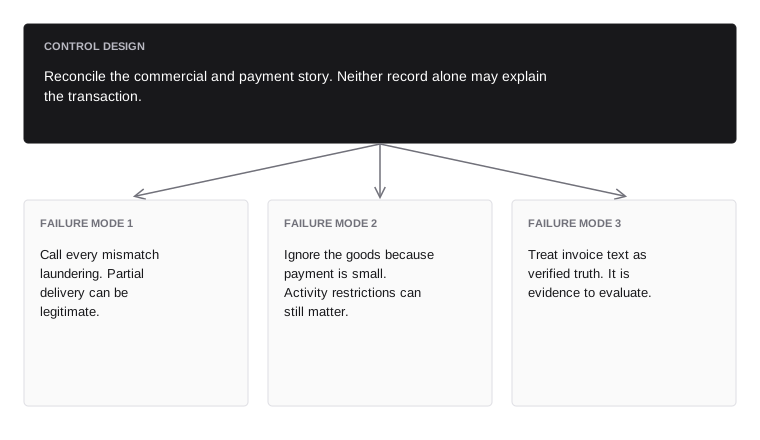
Connect payment and trade evidence Connect payment and trade evidence — control and failure modes Neither record alone may explain the transaction. The branches show why alternative designs fail. Control design Reconcile the commercial and payment story. Neither record alone may explain the transaction. Failure mode 1 Call every mismatch laundering. Partial delivery can be legitimate. avoid Failure mode 2 Ignore the goods because payment is small. Activity restrictions can still matter. avoid Failure mode 3 Treat invoice text as verified truth. It is evidence to evaluate. avoid
Control design

Reconcile the commercial and payment story. Neither record alone may explain the transaction.

Failure mode 1avoid
Call every mismatch laundering. Partial delivery can be legitimate.
Failure mode 2avoid
Ignore the goods because payment is small. Activity restrictions can still matter.
Failure mode 3avoid
Treat invoice text as verified truth. It is evidence to evaluate.
Neither record alone may explain the transaction. The branches show why alternative designs fail. Chapter sources · Open image

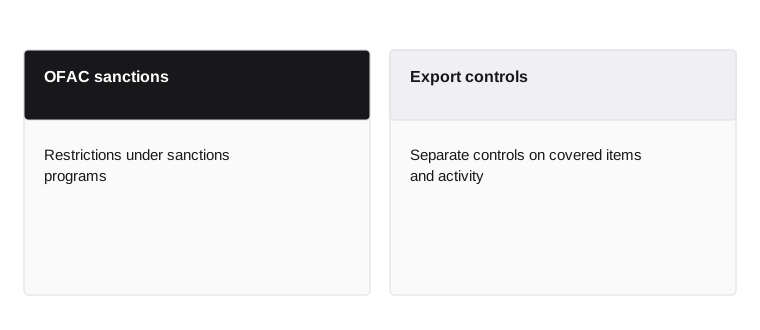
Distinguish sanctions and export controls

Sanctions and export controls can overlap but are separate legal frameworks. Export controls can depend on the item, destination, end user, and end use, among other factors. A clean OFAC name screen does not establish export authorization.

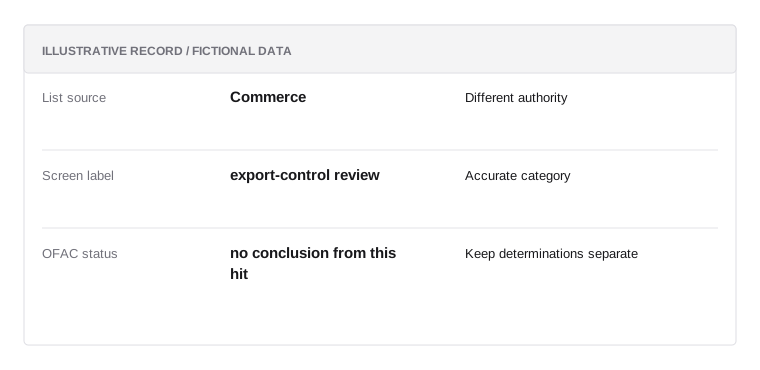
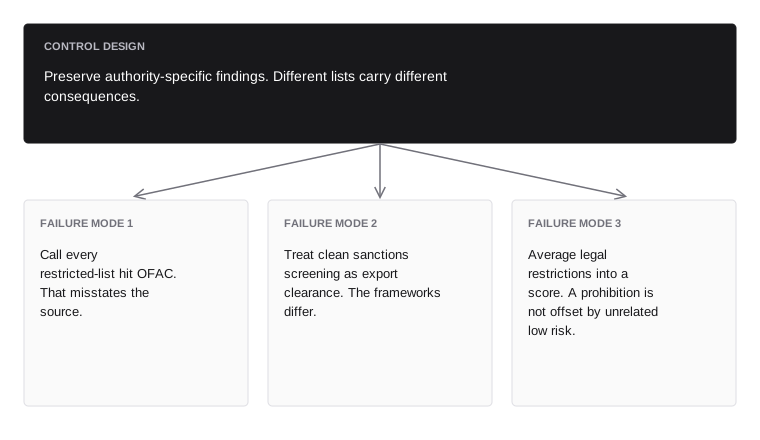
Keep list sources and legal dispositions typed by authority. A hit on a Commerce list should not be labeled an OFAC determination. Route the issue to the responsible expertise and preserve the applicable source. Engineering systems should support multiple constraints without flattening them into a generic risk score.

Sanctions and export controls can overlap while regulating different aspects of the same transaction. A payment review may need information about the parties and service; an export analysis may also depend on the item, destination, end user, and end use. Do not collapse these responsibilities into a single name-screening result. The operating model should identify which team supplies each determination and which missing fact prevents the transaction from proceeding under the approved workflow.
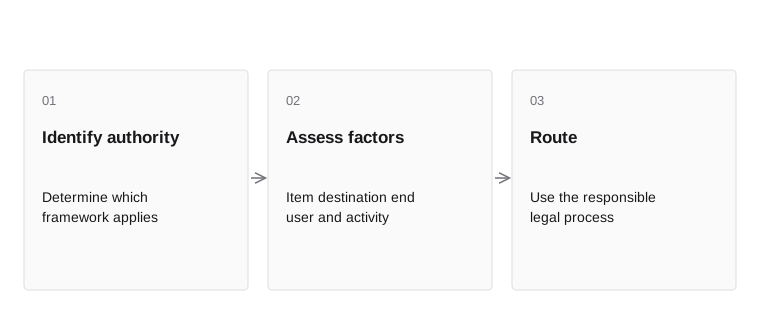
Distinguish sanctions and export controls — the flow
Distinguish sanctions and export controls Distinguish sanctions and export controls — the flow Follow the sequence. Use the responsible legal process. Identify authority Determine which framework applies Assess factors Item destination end user and activity Route Use the responsible legal process
  1. Identify authorityDetermine which framework applies
  2. Assess factorsItem destination end user and activity
  3. RouteUse the responsible legal process
Follow the sequence. Use the responsible legal process. Chapter sources · Open image
Distinguish sanctions and export controls — the distinction
Distinguish sanctions and export controls Distinguish sanctions and export controls — the distinction These concepts answer different questions. Read each definition in the context of the section. OFAC sanctions Restrictions under sanctions programs Export controls Separate controls on covered items and activity
OFAC sanctions
  • Restrictions under sanctions programs
Export controls
  • Separate controls on covered items and activity
These concepts answer different questions. Read each definition in the context of the section. Chapter sources · Open image
Authority routing
Distinguish sanctions and export controls Authority routing Fictional teaching record. Keep determinations separate. Authority routing Illustrative data; not a real customer record or a prescribed policy. List source Commerce Different authority Screen label export-control review Accurate category OFAC status no conclusion from this hit Keep determinations separate Different lists carry different consequences
Fictional educational excerpt / Not for execution

Authority routing

Illustrative data; not a real customer record or a prescribed policy.

  1. List sourceCommerce

    Different authority

  2. Screen labelexport-control review

    Accurate category

  3. OFAC statusno conclusion from this hit

    Keep determinations separate

Different lists carry different consequences

Fictional teaching record. Keep determinations separate. Chapter sources · Open image
Distinguish sanctions and export controls — control and failure modes
Distinguish sanctions and export controls Distinguish sanctions and export controls — control and failure modes Different lists carry different consequences. The branches show why alternative designs fail. Control design Preserve authority-specific findings. Different lists carry different consequences. Failure mode 1 Call every restricted-list hit OFAC. That misstates the source. avoid Failure mode 2 Treat clean sanctions screening as export clearance. The frameworks differ. avoid Failure mode 3 Average legal restrictions into a score. A prohibition is not offset by unrelated low risk. avoid
Control design

Preserve authority-specific findings. Different lists carry different consequences.

Failure mode 1avoid
Call every restricted-list hit OFAC. That misstates the source.
Failure mode 2avoid
Treat clean sanctions screening as export clearance. The frameworks differ.
Failure mode 3avoid
Average legal restrictions into a score. A prohibition is not offset by unrelated low risk.
Different lists carry different consequences. The branches show why alternative designs fail. Chapter sources · Open image

Use corridor context without stereotypes

A corridor combines origin, destination, currency, partners, and product behavior. Risk can change when a new intermediary or route is introduced. Country context can matter, but it should be linked to relevant evidence and applicable rules.

Avoid treating a nationality or broad region as a conclusion about an individual. Compare activity against a supported business purpose and the actual route. Document the reason for additional review and the evidence that resolves it. This improves both analytical quality and fair treatment of legitimate customers.
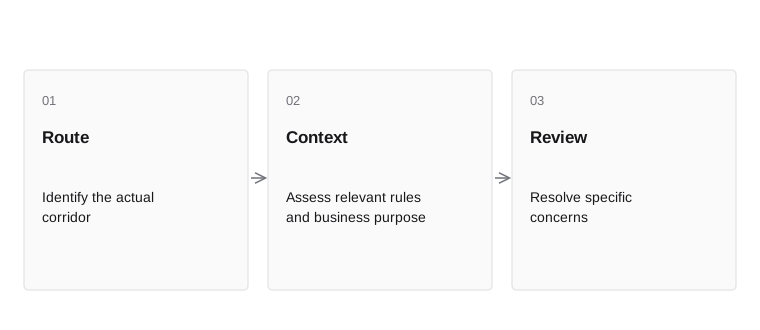
Use corridor context without stereotypes — the flow
Use corridor context without stereotypes Use corridor context without stereotypes — the flow Follow the sequence. Resolve specific concerns. Route Identify the actual corridor Context Assess relevant rules and business purpose Review Resolve specific concerns
  1. RouteIdentify the actual corridor
  2. ContextAssess relevant rules and business purpose
  3. ReviewResolve specific concerns
Follow the sequence. Resolve specific concerns. Chapter sources · Open image
Use corridor context without stereotypes — the distinction
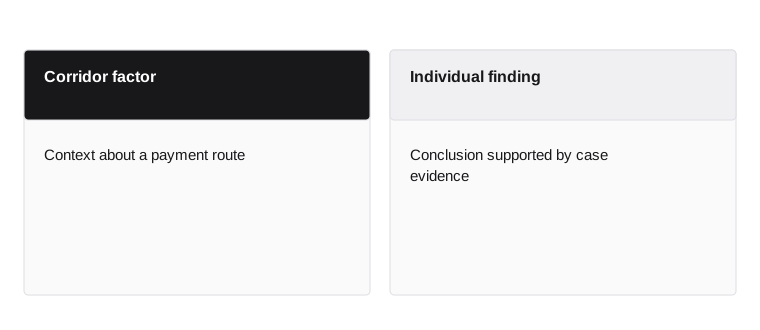
Use corridor context without stereotypes Use corridor context without stereotypes — the distinction These concepts answer different questions. Read each definition in the context of the section. Corridor factor Context about a payment route Individual finding Conclusion supported by case evidence
Corridor factor
  • Context about a payment route
Individual finding
  • Conclusion supported by case evidence
These concepts answer different questions. Read each definition in the context of the section. Chapter sources · Open image
Route change
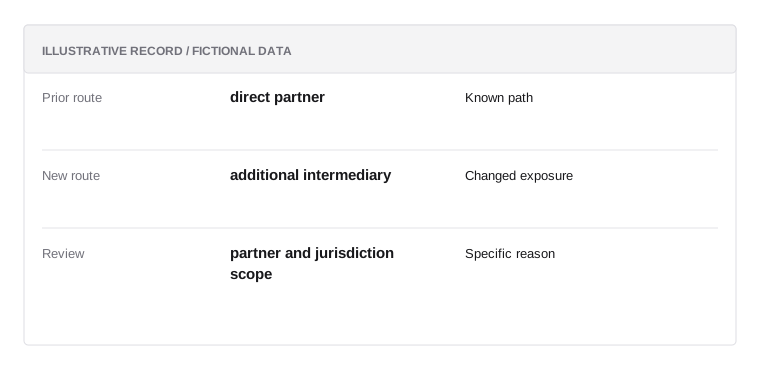
Use corridor context without stereotypes Route change Fictional teaching record. Specific reason. Route change Illustrative data; not a real customer record or a prescribed policy. Prior route direct partner Known path New route additional intermediary Changed exposure Review partner and jurisdiction scope Specific reason Broad labels are not individual findings
Fictional educational excerpt / Not for execution

Route change

Illustrative data; not a real customer record or a prescribed policy.

  1. Prior routedirect partner

    Known path

  2. New routeadditional intermediary

    Changed exposure

  3. Reviewpartner and jurisdiction scope

    Specific reason

Broad labels are not individual findings

Fictional teaching record. Specific reason. Chapter sources · Open image
Use corridor context without stereotypes — control and failure modes
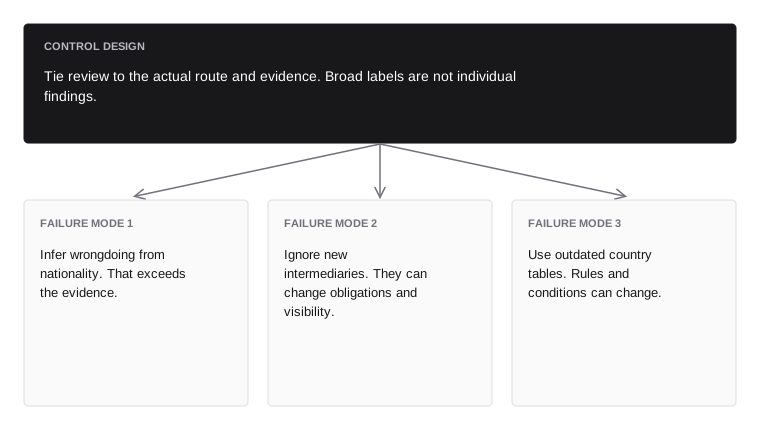
Use corridor context without stereotypes Use corridor context without stereotypes — control and failure modes Broad labels are not individual findings. The branches show why alternative designs fail. Control design Tie review to the actual route and evidence. Broad labels are not individual findings. Failure mode 1 Infer wrongdoing from nationality. That exceeds the evidence. avoid Failure mode 2 Ignore new intermediaries. They can change obligations and visibility. avoid Failure mode 3 Use outdated country tables. Rules and conditions can change. avoid
Control design

Tie review to the actual route and evidence. Broad labels are not individual findings.

Failure mode 1avoid
Infer wrongdoing from nationality. That exceeds the evidence.
Failure mode 2avoid
Ignore new intermediaries. They can change obligations and visibility.
Failure mode 3avoid
Use outdated country tables. Rules and conditions can change.
Broad labels are not individual findings. The branches show why alternative designs fail. Chapter sources · Open image

Detect data loss at handoffs

Payment messages can lose detail when translated between formats or systems. Truncated names, missing intermediary fields, and stripped remittance text can weaken screening and investigation. Map fields through each handoff and test the transformations.

Keep source values in a controlled record and identify what is sent onward. A downstream partner may receive less context than the originating platform. When information is missing, use the approved exception or repair process. Do not silently replace unknown party data with the platform name to satisfy a required field.
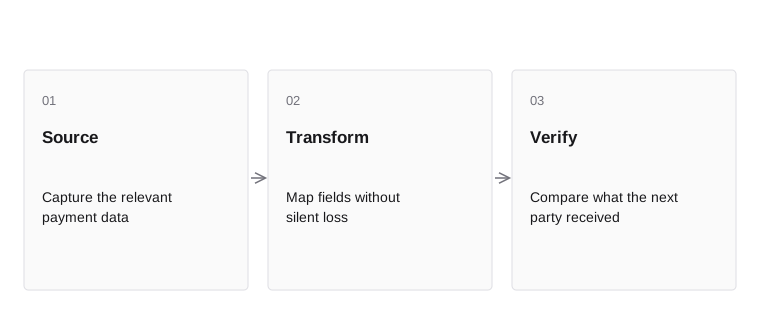
Detect data loss at handoffs — the flow
Detect data loss at handoffs Detect data loss at handoffs — the flow Follow the sequence. Compare what the next party received. Source Capture the relevant payment data Transform Map fields without silent loss Verify Compare what the next party received
  1. SourceCapture the relevant payment data
  2. TransformMap fields without silent loss
  3. VerifyCompare what the next party received
Follow the sequence. Compare what the next party received. Chapter sources · Open image
Detect data loss at handoffs — the distinction
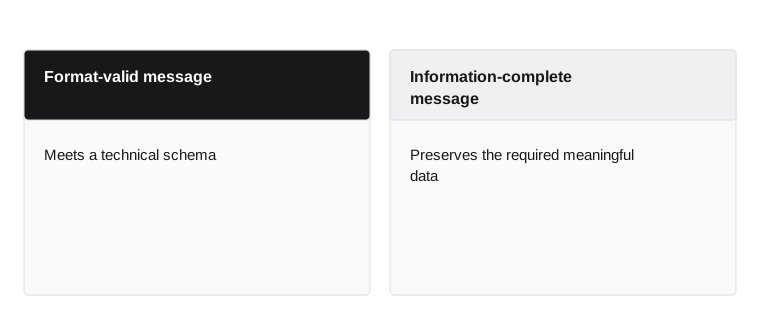
Detect data loss at handoffs Detect data loss at handoffs — the distinction These concepts answer different questions. Read each definition in the context of the section. Format-valid message Meets a technical schema Information-complete message Preserves the required meaningful data
Format-valid message
  • Meets a technical schema
Information-complete message
  • Preserves the required meaningful data
These concepts answer different questions. Read each definition in the context of the section. Chapter sources · Open image
Handoff defect
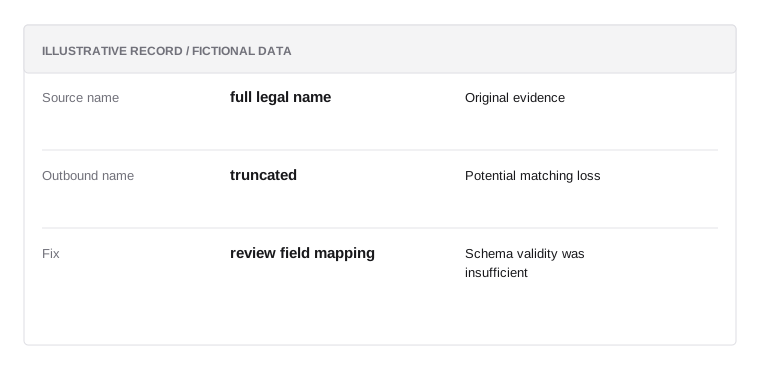
Detect data loss at handoffs Handoff defect Fictional teaching record. Schema validity was insufficient. Handoff defect Illustrative data; not a real customer record or a prescribed policy. Source name full legal name Original evidence Outbound name truncated Potential matching loss Fix review field mapping Schema validity was insufficient Valid formatting can still lose important meaning
Fictional educational excerpt / Not for execution

Handoff defect

Illustrative data; not a real customer record or a prescribed policy.

  1. Source namefull legal name

    Original evidence

  2. Outbound nametruncated

    Potential matching loss

  3. Fixreview field mapping

    Schema validity was insufficient

Valid formatting can still lose important meaning

Fictional teaching record. Schema validity was insufficient. Chapter sources · Open image
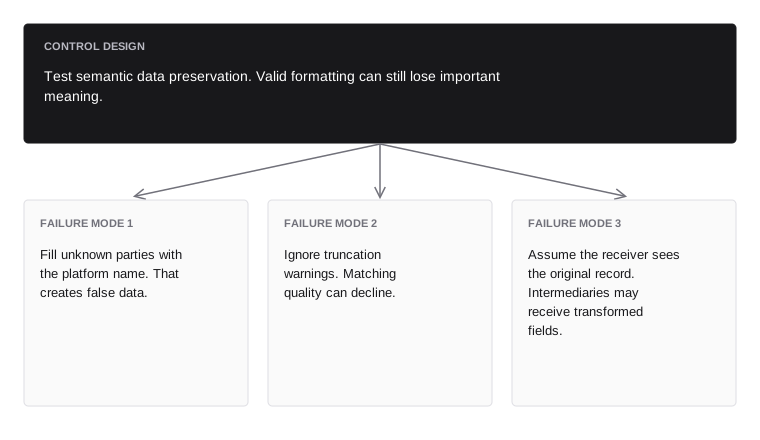
Detect data loss at handoffs — control and failure modes
Detect data loss at handoffs Detect data loss at handoffs — control and failure modes Valid formatting can still lose important meaning. The branches show why alternative designs fail. Control design Test semantic data preservation. Valid formatting can still lose important meaning. Failure mode 1 Fill unknown parties with the platform name. That creates false data. avoid Failure mode 2 Ignore truncation warnings. Matching quality can decline. avoid Failure mode 3 Assume the receiver sees the original record. Intermediaries may receive transformed fields. avoid
Control design

Test semantic data preservation. Valid formatting can still lose important meaning.

Failure mode 1avoid
Fill unknown parties with the platform name. That creates false data.
Failure mode 2avoid
Ignore truncation warnings. Matching quality can decline.
Failure mode 3avoid
Assume the receiver sees the original record. Intermediaries may receive transformed fields.
Valid formatting can still lose important meaning. The branches show why alternative designs fail. Chapter sources · Open image

Review exceptions as a population

Exceptions can reveal a systemic defect: missing invoices, ambiguous goods, repeated data repairs, or frequent manual approvals. Track the reason, owner, age, and final disposition of each exception.

Aggregate patterns by product, partner, and source system. If one partner repeatedly removes beneficiary identifiers, fix the integration rather than asking analysts to repair each payment forever. An exception should be temporary and bounded, with a defined review path. Permanent manual work can hide a control gap behind impressive operational effort.
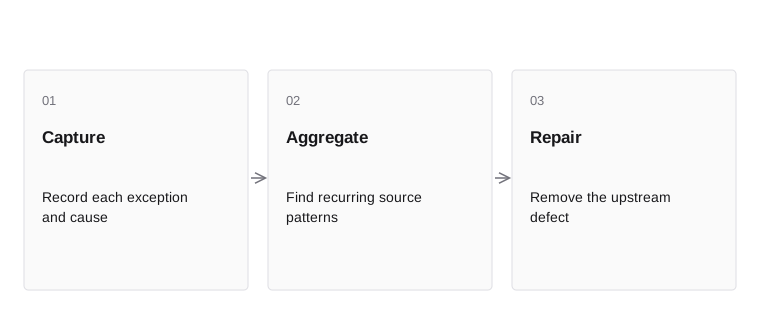
Review exceptions as a population — the flow
Review exceptions as a population Review exceptions as a population — the flow Follow the sequence. Remove the upstream defect. Capture Record each exception and cause Aggregate Find recurring source patterns Repair Remove the upstream defect
  1. CaptureRecord each exception and cause
  2. AggregateFind recurring source patterns
  3. RepairRemove the upstream defect
Follow the sequence. Remove the upstream defect. Chapter sources · Open image
Review exceptions as a population — the distinction
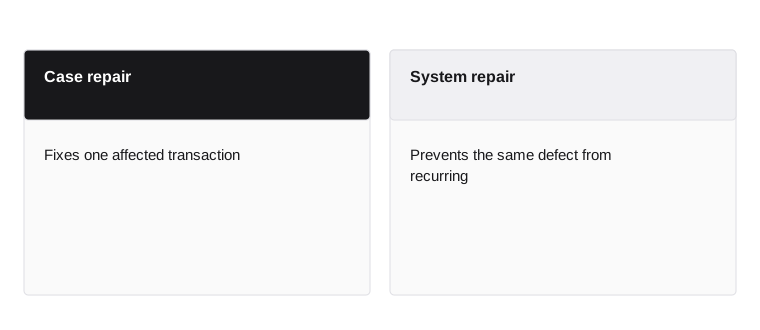
Review exceptions as a population Review exceptions as a population — the distinction These concepts answer different questions. Read each definition in the context of the section. Case repair Fixes one affected transaction System repair Prevents the same defect from recurring
Case repair
  • Fixes one affected transaction
System repair
  • Prevents the same defect from recurring
These concepts answer different questions. Read each definition in the context of the section. Chapter sources · Open image
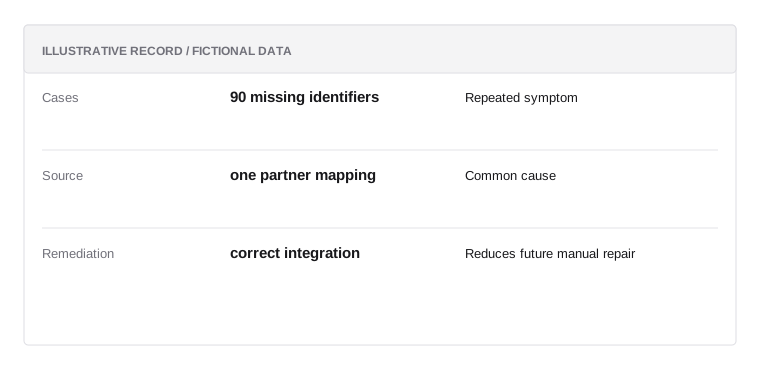
Exception trend
Review exceptions as a population Exception trend Fictional teaching record. Reduces future manual repair. Exception trend Illustrative data; not a real customer record or a prescribed policy. Cases 90 missing identifiers Repeated symptom Source one partner mapping Common cause Remediation correct integration Reduces future manual repair Repeated manual work can signal an upstream problem
Fictional educational excerpt / Not for execution

Exception trend

Illustrative data; not a real customer record or a prescribed policy.

  1. Cases90 missing identifiers

    Repeated symptom

  2. Sourceone partner mapping

    Common cause

  3. Remediationcorrect integration

    Reduces future manual repair

Repeated manual work can signal an upstream problem

Fictional teaching record. Reduces future manual repair. Chapter sources · Open image
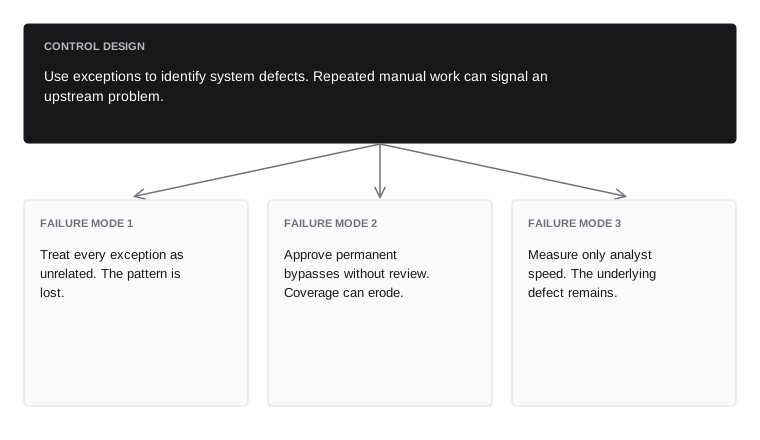
Review exceptions as a population — control and failure modes
Review exceptions as a population Review exceptions as a population — control and failure modes Repeated manual work can signal an upstream problem. The branches show why alternative designs fail. Control design Use exceptions to identify system defects. Repeated manual work can signal an upstream problem. Failure mode 1 Treat every exception as unrelated. The pattern is lost. avoid Failure mode 2 Approve permanent bypasses without review. Coverage can erode. avoid Failure mode 3 Measure only analyst speed. The underlying defect remains. avoid
Control design

Use exceptions to identify system defects. Repeated manual work can signal an upstream problem.

Failure mode 1avoid
Treat every exception as unrelated. The pattern is lost.
Failure mode 2avoid
Approve permanent bypasses without review. Coverage can erode.
Failure mode 3avoid
Measure only analyst speed. The underlying defect remains.
Repeated manual work can signal an upstream problem. The branches show why alternative designs fail. Chapter sources · Open image

Chapter connections

This chapter builds on Ownership graphs and the 50 Percent Rule. Continue with Digital assets, stablecoins, and wallet risk to follow the next part of the system. Use the glossary for terminology and risk mathematics for formulas and worked calculations.

Sources

Reviewed 2026-09-17
  1. OFAC: sanctions programs and country information
  2. BIS: Export Administration Regulations
  3. FATF: trade-based money laundering