Sponsor banks, vendors, and third-party risk
Keep accountability visible across the financial-service supply chain.
The vendor says the bank owns it. The bank says the platform runs it. The platform says the vendor automates it. A responsibility that travels in a circle is still a responsibility no one is performing.
Map responsibility beyond the contract title
Third-party relationships can cover technology, operations, customer contact, screening, and funds handling. Identify the actual work and the accountable entity for each duty. A service-level agreement measures performance; it does not necessarily transfer legal responsibility.
Create a responsibility matrix for normal work, exceptions, incidents, and termination. Include subcontractors where relevant. The person who can fix an outage may differ from the person who can authorize a customer remedy. Test the handoffs with a concrete case so gaps appear before a live incident.
A contract can allocate tasks, but the customer experience crosses the whole chain. A fintech may own the interface, a bank may hold funds, a processor may move messages, and another provider may perform identity checks. The operating map should show who can observe each failure, who can stop the affected action, who must communicate, and who can correct the records.
A responsibility matrix is useful only when the named teams can perform the work. Confirm access to the necessary data, service contacts, escalation authority, and reconciliation records. A partner can agree to investigate an issue yet lack the identifiers needed to locate it. Integration design should supply those identifiers before the first incident.
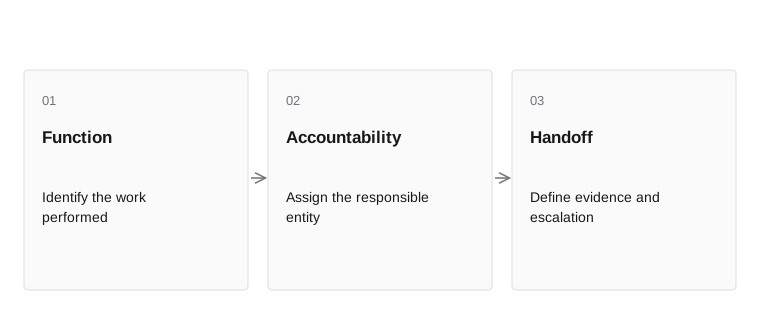
- FunctionIdentify the work performed
- AccountabilityAssign the responsible entity
- HandoffDefine evidence and escalation
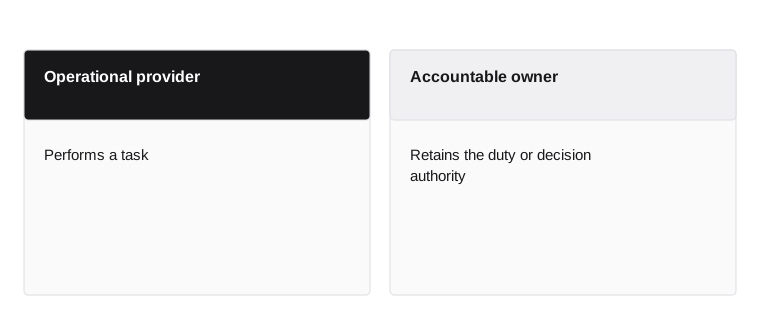
- Operational provider
- Performs a task
- Accountable owner
- Retains the duty or decision authority
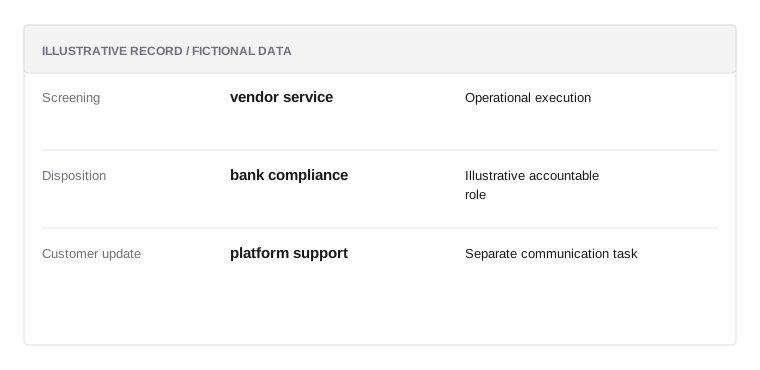
Responsibility example
Illustrative data; not a real customer record or a prescribed policy.
- Screeningvendor service
Operational execution
- Dispositionbank compliance
Illustrative accountable role
- Customer updateplatform support
Separate communication task
A contract title does not resolve every handoff
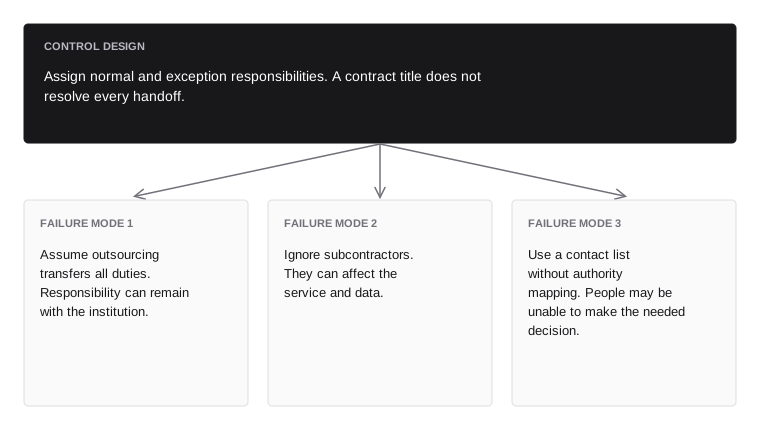
Assign normal and exception responsibilities. A contract title does not resolve every handoff.
- Failure mode 1avoid
- Assume outsourcing transfers all duties. Responsibility can remain with the institution.
- Failure mode 2avoid
- Ignore subcontractors. They can affect the service and data.
- Failure mode 3avoid
- Use a contact list without authority mapping. People may be unable to make the needed decision.
Perform risk-based due diligence
Vendor diligence should match the criticality and nature of the service. Assess security, resilience, financial condition, compliance support, data handling, and the ability to provide evidence. A low-cost service can still be critical if every payment depends on it.
Review what assurance reports cover and what they exclude. A report for one product or period may not cover the service you use today. Track unresolved findings and compensating controls. The purpose is to understand the dependency and decide whether it can be managed, not to collect certificates without reading their scope.
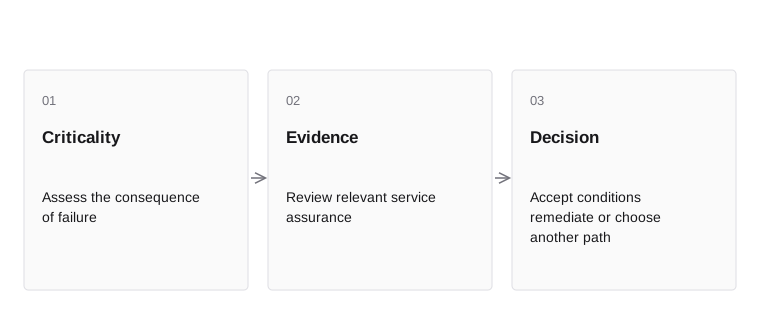
- CriticalityAssess the consequence of failure
- EvidenceReview relevant service assurance
- DecisionAccept conditions remediate or choose another path
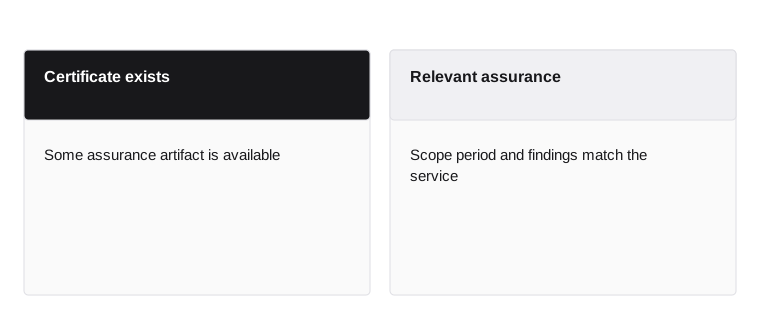
- Certificate exists
- Some assurance artifact is available
- Relevant assurance
- Scope period and findings match the service
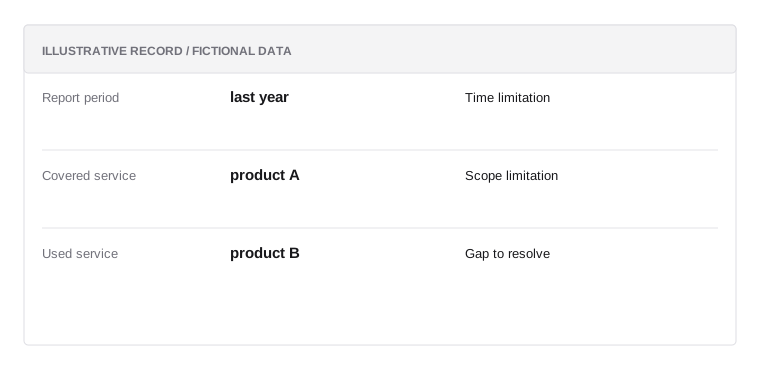
Assurance review
Illustrative data; not a real customer record or a prescribed policy.
- Report periodlast year
Time limitation
- Covered serviceproduct A
Scope limitation
- Used serviceproduct B
Gap to resolve
An artifact may not cover the actual dependency
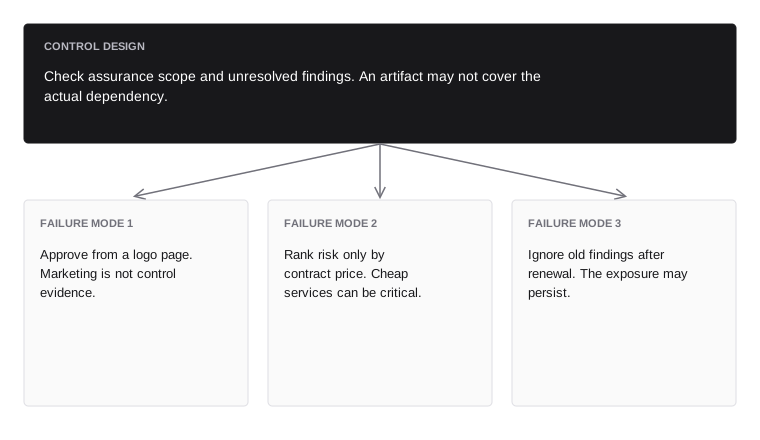
Check assurance scope and unresolved findings. An artifact may not cover the actual dependency.
- Failure mode 1avoid
- Approve from a logo page. Marketing is not control evidence.
- Failure mode 2avoid
- Rank risk only by contract price. Cheap services can be critical.
- Failure mode 3avoid
- Ignore old findings after renewal. The exposure may persist.
Monitor the relationship in operation
Due diligence is a starting point. Monitor service health, data quality, incidents, complaints, control changes, and contractual performance. Define which changes require notice or review. A vendor can alter a model or subprocessor without changing the API shape.
Use your own outcome evidence where possible. Vendor uptime can be high while your integration receives incomplete records. Reconcile expected and received data, test support escalation, and review repeated exceptions. Keep the relationship owner accountable for unresolved issues rather than distributing them across unrelated tickets.
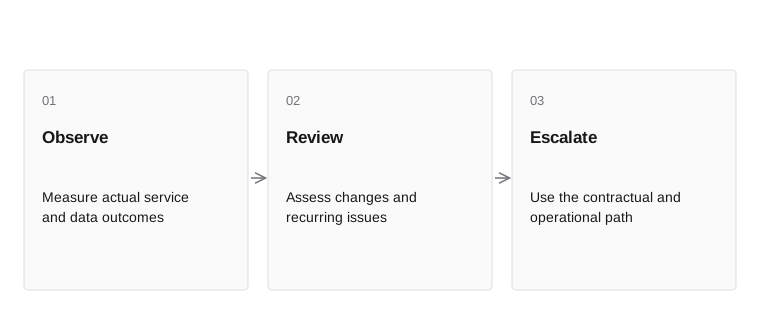
- ObserveMeasure actual service and data outcomes
- ReviewAssess changes and recurring issues
- EscalateUse the contractual and operational path
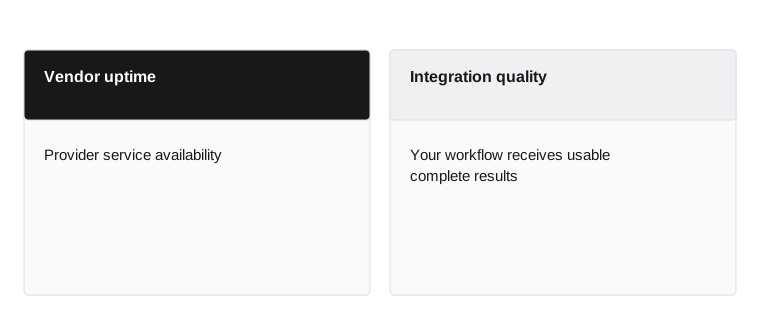
- Vendor uptime
- Provider service availability
- Integration quality
- Your workflow receives usable complete results
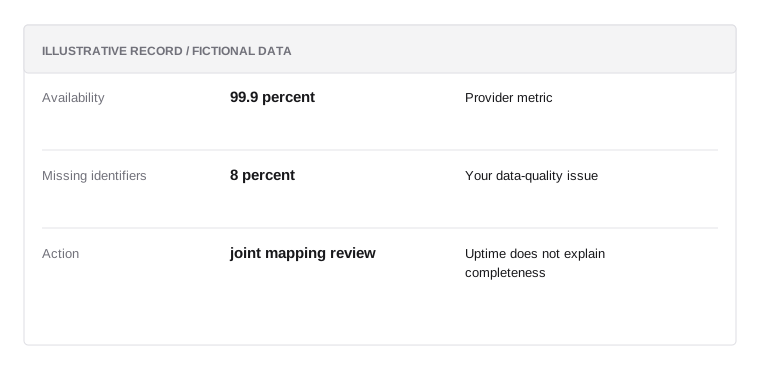
Partner monitoring
Illustrative data; not a real customer record or a prescribed policy.
- Availability99.9 percent
Provider metric
- Missing identifiers8 percent
Your data-quality issue
- Actionjoint mapping review
Uptime does not explain completeness
Provider metrics can miss integration defects
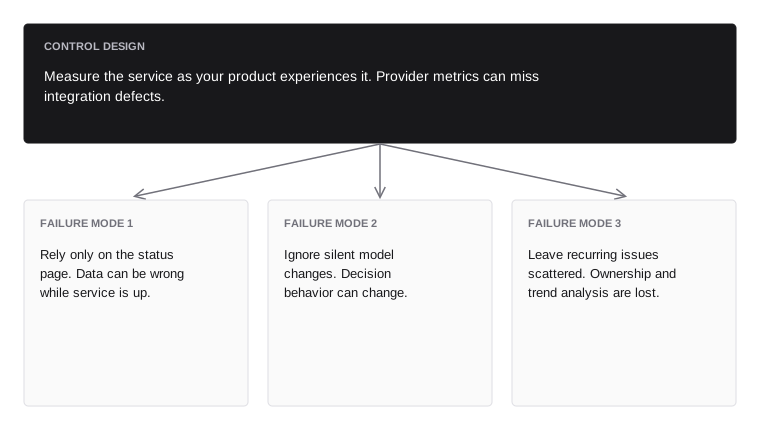
Measure the service as your product experiences it. Provider metrics can miss integration defects.
- Failure mode 1avoid
- Rely only on the status page. Data can be wrong while service is up.
- Failure mode 2avoid
- Ignore silent model changes. Decision behavior can change.
- Failure mode 3avoid
- Leave recurring issues scattered. Ownership and trend analysis are lost.
Plan for failure and exit
A critical partner can fail, restrict service, change terms, or end the relationship. An exit plan should address data portability, customer obligations, funds, keys, notices, and operational capacity. A second contract is not a tested migration.
Define the minimum service needed during transition and the evidence required to reconcile balances. Test exports and recovery procedures before they are urgent. Avoid assuming every transaction can be rerouted to another bank without legal, contractual, and technical work. The plan should state which dependencies remain and how unresolved obligations will be handled.
Exit planning tests whether the business can continue to meet existing obligations after a relationship ends. It covers funds, records, open disputes, customer communication, credentials, and the ability to operate or transfer critical services. A replacement vendor does not automatically inherit the history required to resolve old cases. Define the export format, completeness checks, retention responsibilities, and transition sequence. The plan is strongest when a controlled test demonstrates that the receiving system can use the data, not merely download a file.
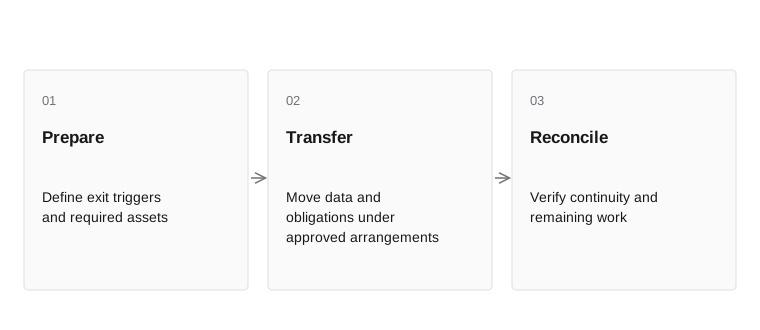
- PrepareDefine exit triggers and required assets
- TransferMove data and obligations under approved arrangements
- ReconcileVerify continuity and remaining work
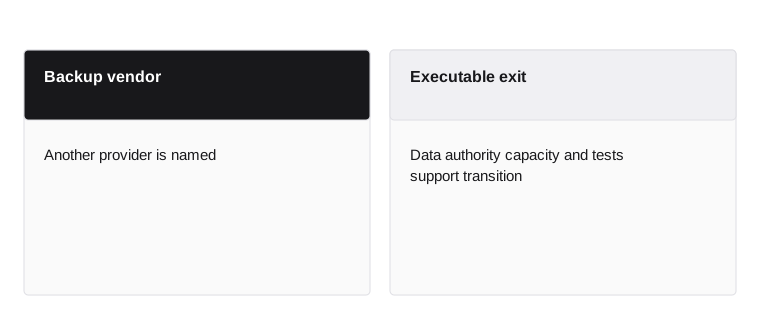
- Backup vendor
- Another provider is named
- Executable exit
- Data authority capacity and tests support transition
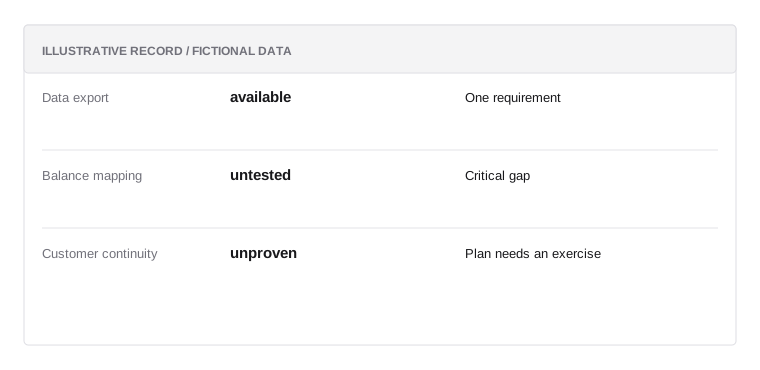
Exit readiness
Illustrative data; not a real customer record or a prescribed policy.
- Data exportavailable
One requirement
- Balance mappinguntested
Critical gap
- Customer continuityunproven
Plan needs an exercise
A named alternative does not prove migration readiness
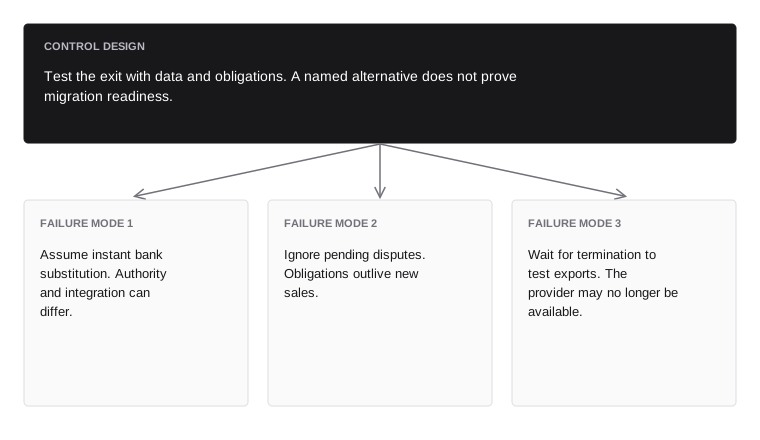
Test the exit with data and obligations. A named alternative does not prove migration readiness.
- Failure mode 1avoid
- Assume instant bank substitution. Authority and integration can differ.
- Failure mode 2avoid
- Ignore pending disputes. Obligations outlive new sales.
- Failure mode 3avoid
- Wait for termination to test exports. The provider may no longer be available.
Avoid false assurance in customer promises
Customer-facing statements about deposits, insurance, security, speed, and partner roles must reflect the actual product and applicable conditions. A fintech logo beside a bank logo does not explain where funds are held or what protection applies.
Review the complete customer journey: marketing, onboarding, balance screens, help text, and incident messages. Make relevant conditions understandable at the point they matter. Keep approved wording linked to the current product arrangement so a partner change triggers a content review. Accurate promises reduce both compliance risk and customer confusion.
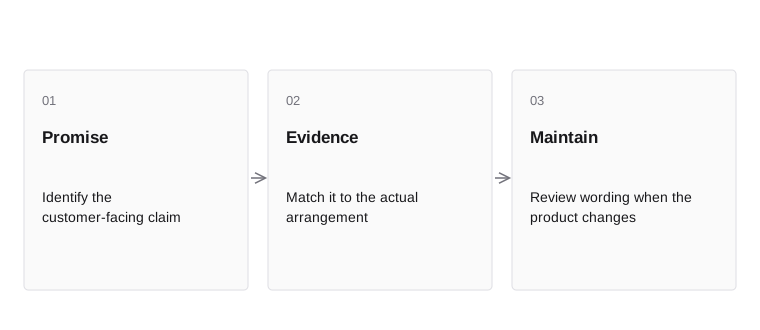
- PromiseIdentify the customer-facing claim
- EvidenceMatch it to the actual arrangement
- MaintainReview wording when the product changes
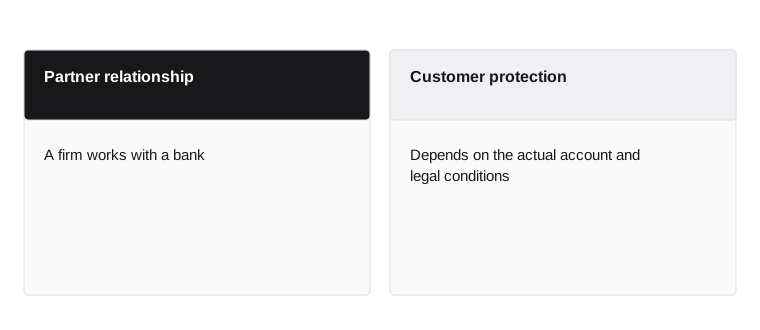
- Partner relationship
- A firm works with a bank
- Customer protection
- Depends on the actual account and legal conditions
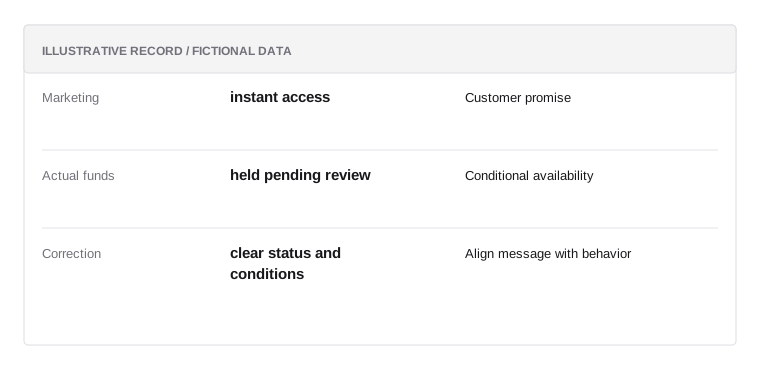
Claim review
Illustrative data; not a real customer record or a prescribed policy.
- Marketinginstant access
Customer promise
- Actual fundsheld pending review
Conditional availability
- Correctionclear status and conditions
Align message with behavior
One accurate disclaimer may not repair misleading screens
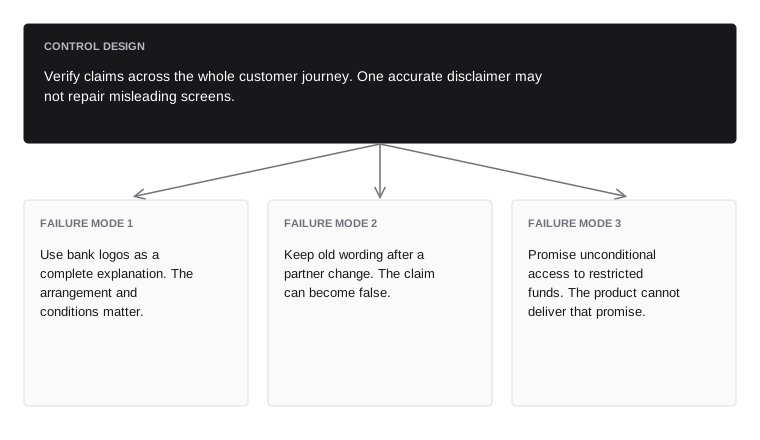
Verify claims across the whole customer journey. One accurate disclaimer may not repair misleading screens.
- Failure mode 1avoid
- Use bank logos as a complete explanation. The arrangement and conditions matter.
- Failure mode 2avoid
- Keep old wording after a partner change. The claim can become false.
- Failure mode 3avoid
- Promise unconditional access to restricted funds. The product cannot deliver that promise.
Chapter connections
This chapter builds on Privacy, payment data, and secure evidence. Use the glossary for terminology and risk mathematics for formulas and worked calculations.