Unit 02 · Chapter 3 · 10 min read

Transaction risk and decision economics

Use signals, uncertainty, and cost to choose proportionate actions.

A rule blocks every large purchase. Fraud falls. So does the business. The interesting engineering problem is to protect good payments while finding harmful ones, with imperfect evidence and a clock that keeps moving.

Define the unit of decision

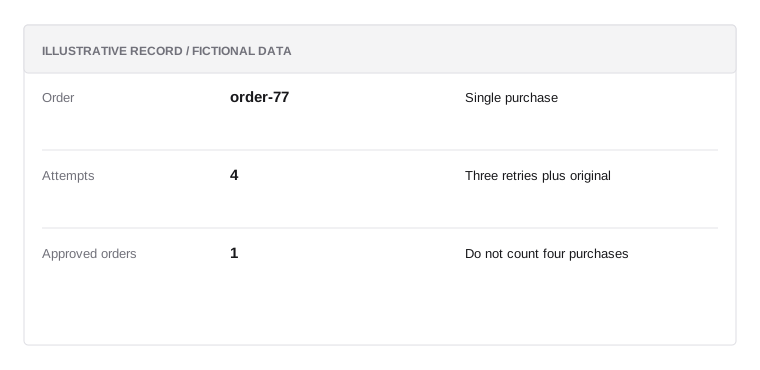
A payment attempt, an order, a customer, and a merchant are different units. One order may generate several attempts. A customer-level restriction can affect many orders. Choose the unit before creating labels or measuring approval.

Give each decision a stable identifier and link it to the relevant entities. Separate raw attempt counts from unique purchase counts. Otherwise, repeated retries can make approval appear worse and make a busy customer appear like many unrelated people. The action should also have a scope: blocking one payment is different from closing an account.
Define the unit of decision — the flow
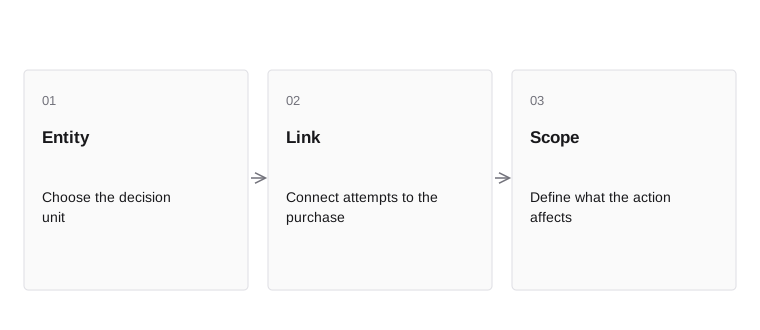
Define the unit of decision Define the unit of decision — the flow Follow the sequence. Define what the action affects. Entity Choose the decision unit Link Connect attempts to the purchase Scope Define what the action affects
  1. EntityChoose the decision unit
  2. LinkConnect attempts to the purchase
  3. ScopeDefine what the action affects
Follow the sequence. Define what the action affects. Chapter sources · Open image
Define the unit of decision — the distinction
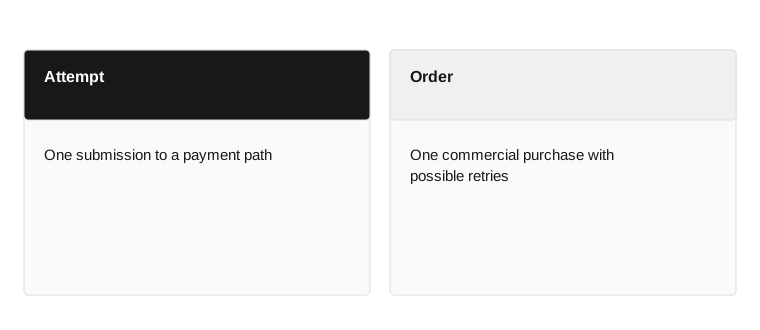
Define the unit of decision Define the unit of decision — the distinction These concepts answer different questions. Read each definition in the context of the section. Attempt One submission to a payment path Order One commercial purchase with possible retries
Attempt
  • One submission to a payment path
Order
  • One commercial purchase with possible retries
These concepts answer different questions. Read each definition in the context of the section. Chapter sources · Open image
Attempt grouping
Define the unit of decision Attempt grouping Fictional teaching record. Do not count four purchases. Attempt grouping Illustrative data; not a real customer record or a prescribed policy. Order order-77 Single purchase Attempts 4 Three retries plus original Approved orders 1 Do not count four purchases Retries change the denominator
Fictional educational excerpt / Not for execution

Attempt grouping

Illustrative data; not a real customer record or a prescribed policy.

  1. Orderorder-77

    Single purchase

  2. Attempts4

    Three retries plus original

  3. Approved orders1

    Do not count four purchases

Retries change the denominator

Fictional teaching record. Do not count four purchases. Chapter sources · Open image
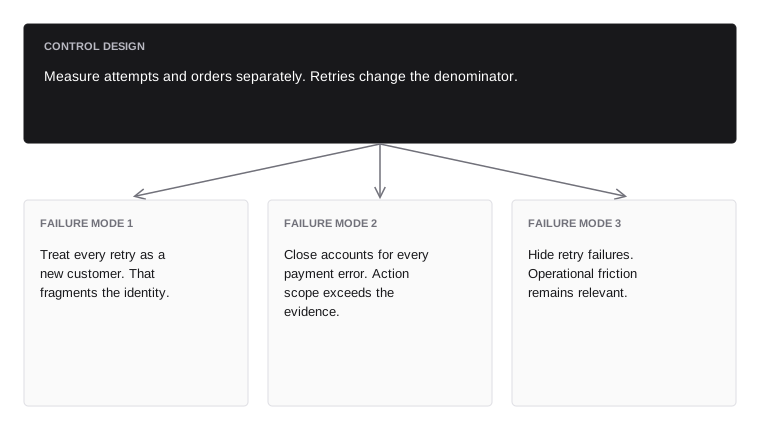
Define the unit of decision — control and failure modes
Define the unit of decision Define the unit of decision — control and failure modes Retries change the denominator. The branches show why alternative designs fail. Control design Measure attempts and orders separately. Retries change the denominator. Failure mode 1 Treat every retry as a new customer. That fragments the identity. avoid Failure mode 2 Close accounts for every payment error. Action scope exceeds the evidence. avoid Failure mode 3 Hide retry failures. Operational friction remains relevant. avoid
Control design

Measure attempts and orders separately. Retries change the denominator.

Failure mode 1avoid
Treat every retry as a new customer. That fragments the identity.
Failure mode 2avoid
Close accounts for every payment error. Action scope exceeds the evidence.
Failure mode 3avoid
Hide retry failures. Operational friction remains relevant.
Retries change the denominator. The branches show why alternative designs fail. Chapter sources · Open image

Use signals with known meaning

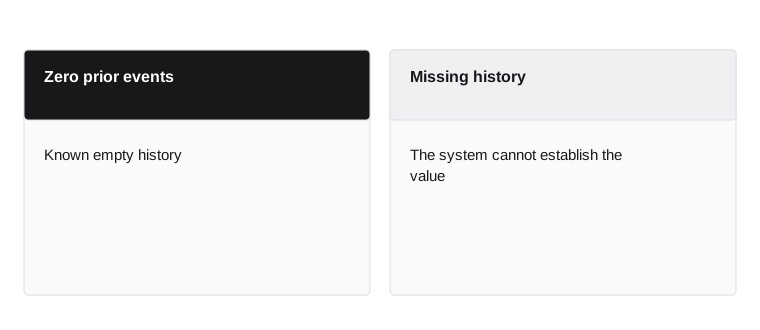
A risk signal is evidence, not a verdict. Device history, amount change, destination novelty, and prior outcomes can all help. Their value depends on data quality, freshness, population, and the event being assessed. A missing value should remain distinguishable from a known safe value.

Write a feature definition with its event window, source, units, and availability time. For example, successful payments in the previous hour excludes the current attempt and must be computed from events available then. Test boundary times and delayed events. A model cannot repair a feature that means different things in training and production.
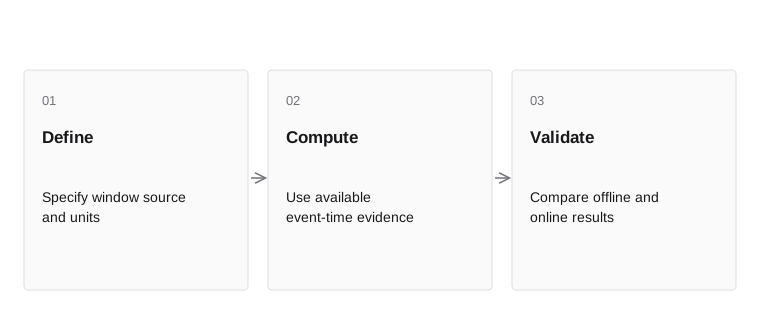
Use signals with known meaning — the flow
Use signals with known meaning Use signals with known meaning — the flow Follow the sequence. Compare offline and online results. Define Specify window source and units Compute Use available event-time evidence Validate Compare offline and online results
  1. DefineSpecify window source and units
  2. ComputeUse available event-time evidence
  3. ValidateCompare offline and online results
Follow the sequence. Compare offline and online results. Chapter sources · Open image
Use signals with known meaning — the distinction
Use signals with known meaning Use signals with known meaning — the distinction These concepts answer different questions. Read each definition in the context of the section. Zero prior events Known empty history Missing history The system cannot establish the value
Zero prior events
  • Known empty history
Missing history
  • The system cannot establish the value
These concepts answer different questions. Read each definition in the context of the section. Chapter sources · Open image
Velocity feature record
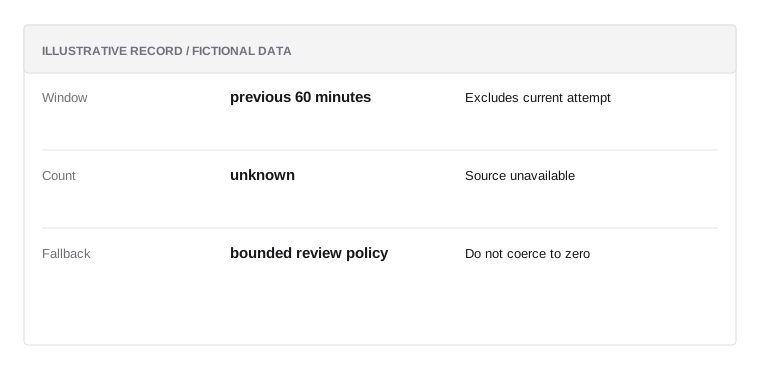
Use signals with known meaning Velocity feature record Fictional teaching record. Do not coerce to zero. Velocity feature record Illustrative data; not a real customer record or a prescribed policy. Window previous 60 minutes Excludes current attempt Count unknown Source unavailable Fallback bounded review policy Do not coerce to zero Unknown history differs from no history
Fictional educational excerpt / Not for execution

Velocity feature record

Illustrative data; not a real customer record or a prescribed policy.

  1. Windowprevious 60 minutes

    Excludes current attempt

  2. Countunknown

    Source unavailable

  3. Fallbackbounded review policy

    Do not coerce to zero

Unknown history differs from no history

Fictional teaching record. Do not coerce to zero. Chapter sources · Open image
Use signals with known meaning — control and failure modes
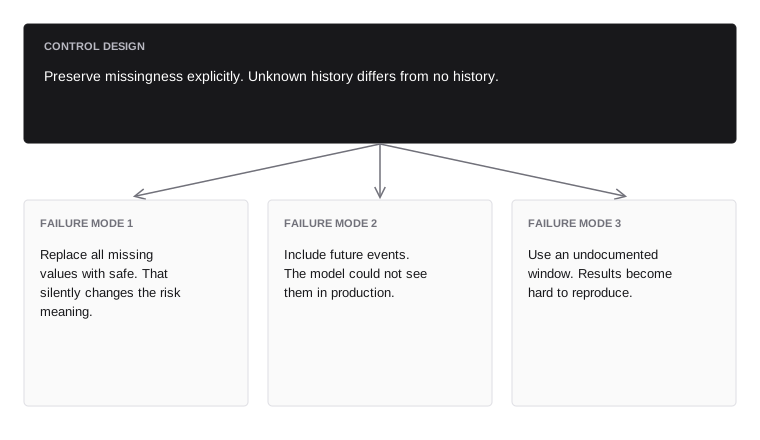
Use signals with known meaning Use signals with known meaning — control and failure modes Unknown history differs from no history. The branches show why alternative designs fail. Control design Preserve missingness explicitly. Unknown history differs from no history. Failure mode 1 Replace all missing values with safe. That silently changes the risk meaning. avoid Failure mode 2 Include future events. The model could not see them in production. avoid Failure mode 3 Use an undocumented window. Results become hard to reproduce. avoid
Control design

Preserve missingness explicitly. Unknown history differs from no history.

Failure mode 1avoid
Replace all missing values with safe. That silently changes the risk meaning.
Failure mode 2avoid
Include future events. The model could not see them in production.
Failure mode 3avoid
Use an undocumented window. Results become hard to reproduce.
Unknown history differs from no history. The branches show why alternative designs fail. Chapter sources · Open image

Choose actions by expected consequence

A score becomes useful when connected to an action. Compare expected fraud loss, margin, customer friction, review cost, and available evidence. The comparison is a decision aid, not permission to ignore legal restrictions. Mandatory prohibitions remain constraints.

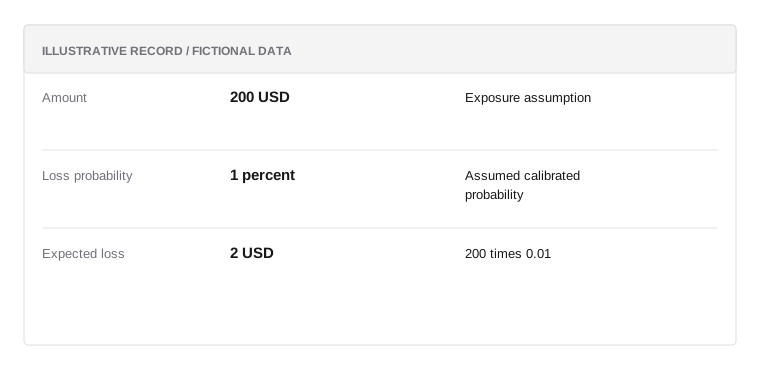
In a simple teaching example, a $200 payment with a 1 percent loss probability and full loss severity has $2 expected loss. If incremental contribution before risk is $6, the expected remainder is $4 before other costs. Change severity, recovery, or probability and the result changes. Never confuse expected value with a promise about one transaction.

Suppose a legitimate payment contributes $4 and a fraudulent payment can lose $100. A model score cannot be compared directly with either amount unless its probability meaning is established. Even with a calibrated probability, the decision also depends on how a review or authentication step changes outcomes. A challenge that prevents some losses may also cause good customers to leave. Estimate these effects separately and state which costs are missing from a simplified calculation.

The best action can differ for two payments with the same predicted probability. One may involve immediate delivery of a transferable asset; another may allow a shipment hold and reliable recovery. The model describes evidence about an outcome. The policy applies that evidence to the action available at this point in the transaction.
Choose actions by expected consequence — the flow
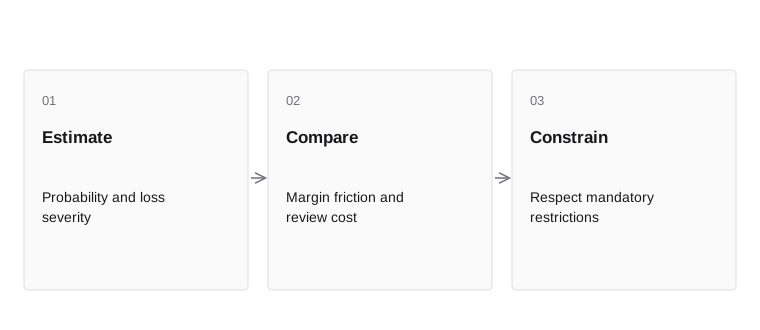
Choose actions by expected consequence Choose actions by expected consequence — the flow Follow the sequence. Respect mandatory restrictions. Estimate Probability and loss severity Compare Margin friction and review cost Constrain Respect mandatory restrictions
  1. EstimateProbability and loss severity
  2. CompareMargin friction and review cost
  3. ConstrainRespect mandatory restrictions
Follow the sequence. Respect mandatory restrictions. Chapter sources · Open image
Choose actions by expected consequence — the distinction
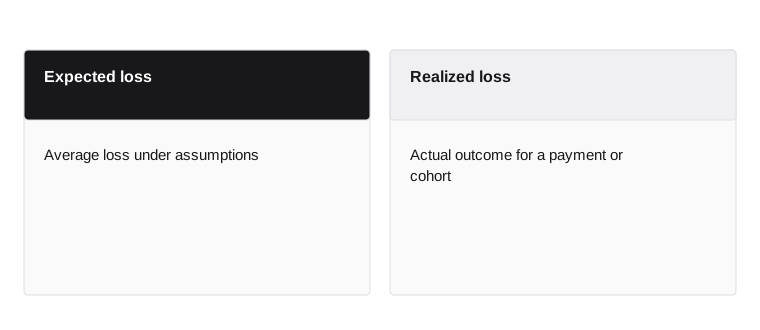
Choose actions by expected consequence Choose actions by expected consequence — the distinction These concepts answer different questions. Read each definition in the context of the section. Expected loss Average loss under assumptions Realized loss Actual outcome for a payment or cohort
Expected loss
  • Average loss under assumptions
Realized loss
  • Actual outcome for a payment or cohort
These concepts answer different questions. Read each definition in the context of the section. Chapter sources · Open image
Illustrative economics
Choose actions by expected consequence Illustrative economics Fictional teaching record. 200 times 0.01. Illustrative economics Illustrative data; not a real customer record or a prescribed policy. Amount 200 USD Exposure assumption Loss probability 1 percent Assumed calibrated probability Expected loss 2 USD 200 times 0.01 Expected loss depends on both
Fictional educational excerpt / Not for execution

Illustrative economics

Illustrative data; not a real customer record or a prescribed policy.

  1. Amount200 USD

    Exposure assumption

  2. Loss probability1 percent

    Assumed calibrated probability

  3. Expected loss2 USD

    200 times 0.01

Expected loss depends on both

Fictional teaching record. 200 times 0.01. Chapter sources · Open image
Choose actions by expected consequence — control and failure modes
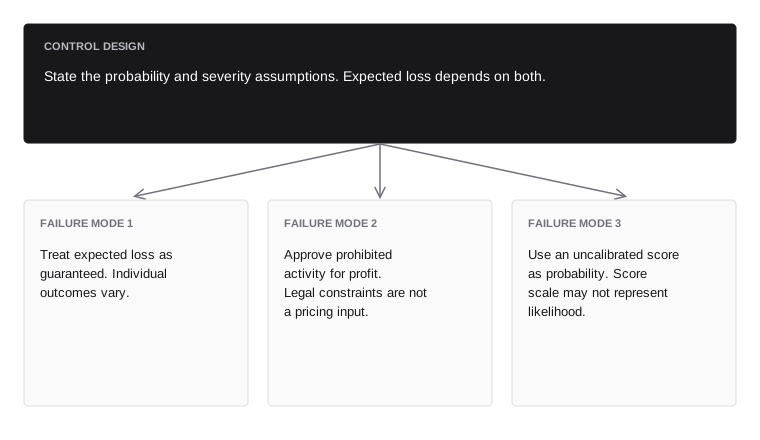
Choose actions by expected consequence Choose actions by expected consequence — control and failure modes Expected loss depends on both. The branches show why alternative designs fail. Control design State the probability and severity assumptions. Expected loss depends on both. Failure mode 1 Treat expected loss as guaranteed. Individual outcomes vary. avoid Failure mode 2 Approve prohibited activity for profit. Legal constraints are not a pricing input. avoid Failure mode 3 Use an uncalibrated score as probability. Score scale may not represent likelihood. avoid
Control design

State the probability and severity assumptions. Expected loss depends on both.

Failure mode 1avoid
Treat expected loss as guaranteed. Individual outcomes vary.
Failure mode 2avoid
Approve prohibited activity for profit. Legal constraints are not a pricing input.
Failure mode 3avoid
Use an uncalibrated score as probability. Score scale may not represent likelihood.
Expected loss depends on both. The branches show why alternative designs fail. Chapter sources · Open image

Use a ladder of interventions

Approve, request stronger evidence, review, limit, delay, and decline have different effects. Select an action that can reduce the specific uncertainty before harm occurs. A document request does little for a suspected compromised session if it does not test current control.

Each intervention needs a completion route. Set a queue owner, timeout, and permitted customer actions. Measure whether the intervention produces useful evidence. If nearly every review ends in approval without new information, the queue may be an expensive delay. If reviewers lack authority to act, the queue is a storage system for unresolved risk.
Use a ladder of interventions — the flow
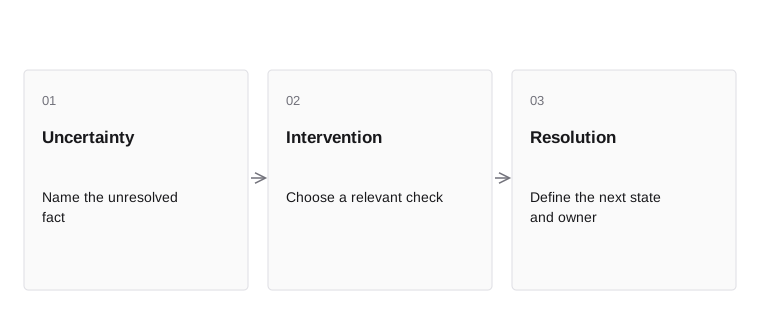
Use a ladder of interventions Use a ladder of interventions — the flow Follow the sequence. Define the next state and owner. Uncertainty Name the unresolved fact Intervention Choose a relevant check Resolution Define the next state and owner
  1. UncertaintyName the unresolved fact
  2. InterventionChoose a relevant check
  3. ResolutionDefine the next state and owner
Follow the sequence. Define the next state and owner. Chapter sources · Open image
Use a ladder of interventions — the distinction
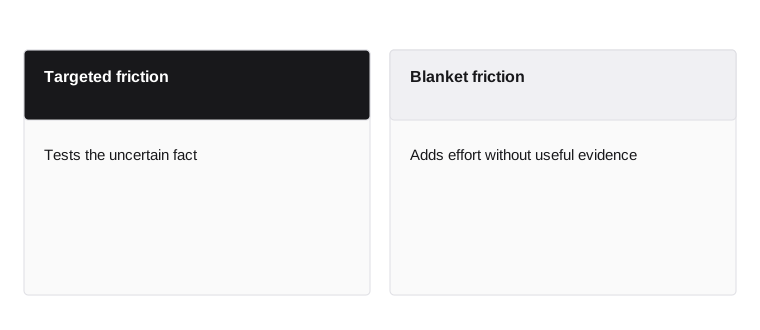
Use a ladder of interventions Use a ladder of interventions — the distinction These concepts answer different questions. Read each definition in the context of the section. Targeted friction Tests the uncertain fact Blanket friction Adds effort without useful evidence
Targeted friction
  • Tests the uncertain fact
Blanket friction
  • Adds effort without useful evidence
These concepts answer different questions. Read each definition in the context of the section. Chapter sources · Open image
Intervention contract
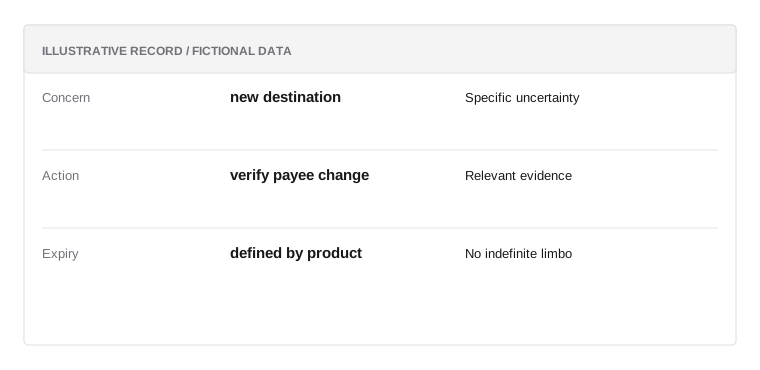
Use a ladder of interventions Intervention contract Fictional teaching record. No indefinite limbo. Intervention contract Illustrative data; not a real customer record or a prescribed policy. Concern new destination Specific uncertainty Action verify payee change Relevant evidence Expiry defined by product No indefinite limbo A useful check changes the evidence
Fictional educational excerpt / Not for execution

Intervention contract

Illustrative data; not a real customer record or a prescribed policy.

  1. Concernnew destination

    Specific uncertainty

  2. Actionverify payee change

    Relevant evidence

  3. Expirydefined by product

    No indefinite limbo

A useful check changes the evidence

Fictional teaching record. No indefinite limbo. Chapter sources · Open image
Use a ladder of interventions — control and failure modes
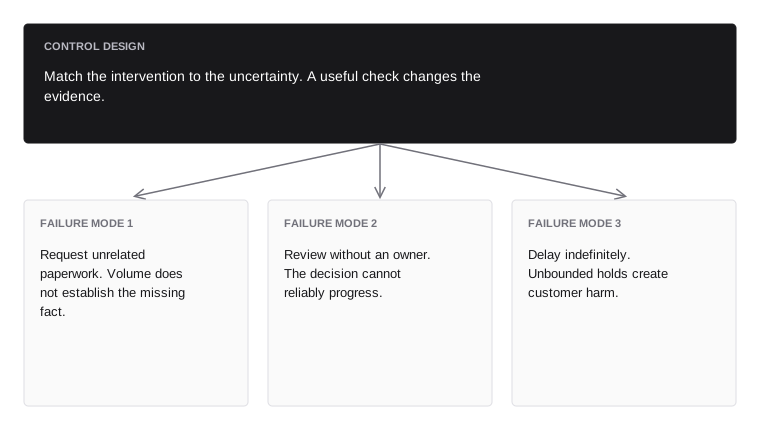
Use a ladder of interventions Use a ladder of interventions — control and failure modes A useful check changes the evidence. The branches show why alternative designs fail. Control design Match the intervention to the uncertainty. A useful check changes the evidence. Failure mode 1 Request unrelated paperwork. Volume does not establish the missing fact. avoid Failure mode 2 Review without an owner. The decision cannot reliably progress. avoid Failure mode 3 Delay indefinitely. Unbounded holds create customer harm. avoid
Control design

Match the intervention to the uncertainty. A useful check changes the evidence.

Failure mode 1avoid
Request unrelated paperwork. Volume does not establish the missing fact.
Failure mode 2avoid
Review without an owner. The decision cannot reliably progress.
Failure mode 3avoid
Delay indefinitely. Unbounded holds create customer harm.
A useful check changes the evidence. The branches show why alternative designs fail. Chapter sources · Open image

Evaluate what the control misses

Observed loss is shaped by prior decisions. Declined payments do not produce the same outcomes as approved payments. A policy can appear safe simply because it refuses nearly everything. Compare loss with approval, customer impact, and the composition of traffic.

Use controlled evaluation where lawful and suitable, and analyze uncertainty when labels are unavailable. Review false positives through appeals and representative samples. Monitor the loss distribution, not just an average. A stable average can hide a new high-loss segment. Every metric should have an owner who knows its denominator and its blind spots.

A decline policy hides part of its own outcome. A stopped transaction cannot reveal exactly what would have happened if the platform had allowed it. Counting every decline as prevented fraud rewards aggressive controls regardless of customer harm. Use reviewed samples, mature outcomes, and carefully governed evaluation methods to estimate the blind spots. Keep measured results separate from assumed prevention. A dashboard becomes more useful when it shows uncertainty than when it gives an unsupported precise savings total.
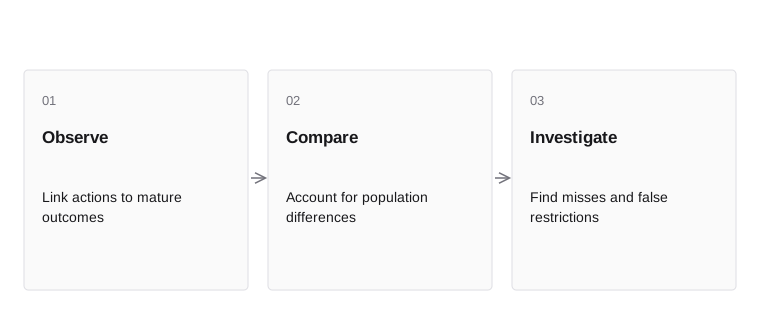
Evaluate what the control misses — the flow
Evaluate what the control misses Evaluate what the control misses — the flow Follow the sequence. Find misses and false restrictions. Observe Link actions to mature outcomes Compare Account for population differences Investigate Find misses and false restrictions
  1. ObserveLink actions to mature outcomes
  2. CompareAccount for population differences
  3. InvestigateFind misses and false restrictions
Follow the sequence. Find misses and false restrictions. Chapter sources · Open image
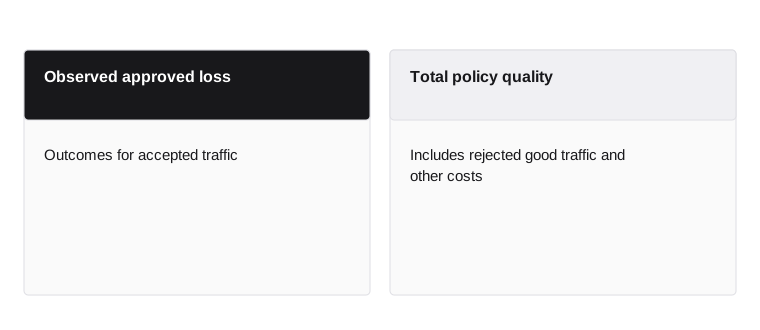
Evaluate what the control misses — the distinction
Evaluate what the control misses Evaluate what the control misses — the distinction These concepts answer different questions. Read each definition in the context of the section. Observed approved loss Outcomes for accepted traffic Total policy quality Includes rejected good traffic and other costs
Observed approved loss
  • Outcomes for accepted traffic
Total policy quality
  • Includes rejected good traffic and other costs
These concepts answer different questions. Read each definition in the context of the section. Chapter sources · Open image
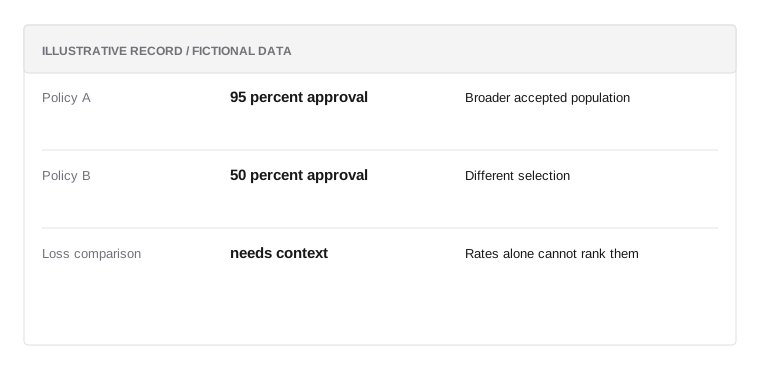
Policy comparison
Evaluate what the control misses Policy comparison Fictional teaching record. Rates alone cannot rank them. Policy comparison Illustrative data; not a real customer record or a prescribed policy. Policy A 95 percent approval Broader accepted population Policy B 50 percent approval Different selection Loss comparison needs context Rates alone cannot rank them Selection affects the observed loss rate
Fictional educational excerpt / Not for execution

Policy comparison

Illustrative data; not a real customer record or a prescribed policy.

  1. Policy A95 percent approval

    Broader accepted population

  2. Policy B50 percent approval

    Different selection

  3. Loss comparisonneeds context

    Rates alone cannot rank them

Selection affects the observed loss rate
Fictional teaching record. Rates alone cannot rank them. Chapter sources · Open image
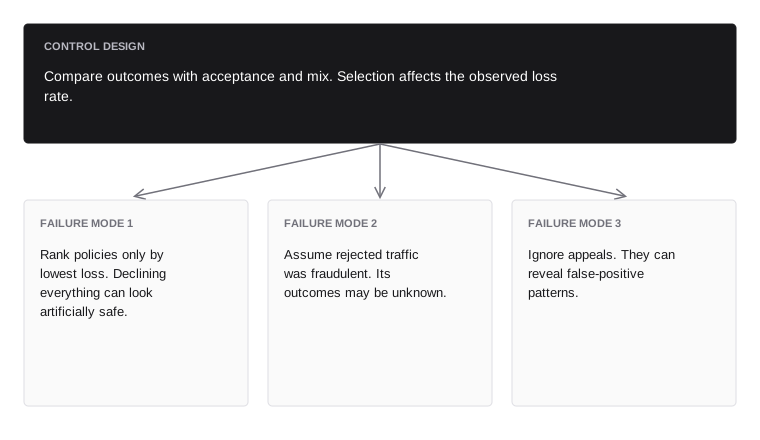
Evaluate what the control misses — control and failure modes
Evaluate what the control misses Evaluate what the control misses — control and failure modes Selection affects the observed loss rate. The branches show why alternative designs fail. Control design Compare outcomes with acceptance and mix. Selection affects the observed loss rate. Failure mode 1 Rank policies only by lowest loss. Declining everything can look artificially safe. avoid Failure mode 2 Assume rejected traffic was fraudulent. Its outcomes may be unknown. avoid Failure mode 3 Ignore appeals. They can reveal false-positive patterns. avoid
Control design

Compare outcomes with acceptance and mix. Selection affects the observed loss rate.

Failure mode 1avoid
Rank policies only by lowest loss. Declining everything can look artificially safe.
Failure mode 2avoid
Assume rejected traffic was fraudulent. Its outcomes may be unknown.
Failure mode 3avoid
Ignore appeals. They can reveal false-positive patterns.
Selection affects the observed loss rate. The branches show why alternative designs fail. Chapter sources · Open image

Chapter connections

This chapter builds on Account takeover and account recovery. Continue with Scams, money mules, and social engineering to follow the next part of the system. Use the glossary for terminology and risk mathematics for formulas and worked calculations.

Sources

Reviewed 2026-09-17
  1. NIST: AI Risk Management Framework
  2. Stripe: PaymentIntent lifecycle (provider example)