Entity resolution and financial networks
Connect records without turning association into guilt.
Three businesses share an address. It could be a criminal network. It could also be a popular accountant’s office. A graph makes relationships visible; it does not explain them on its own.
Resolve records before drawing edges
Entity resolution determines whether records refer to the same real-world person or organization. Exact identifiers can help, but names, addresses, and dates may be incomplete or inconsistent. Keep the original record and the proposed match with a confidence and reason.
A false merge can attach another person’s transactions to a customer. A false split can hide a relevant pattern across accounts. Evaluate both errors. Use manual review for consequential uncertain matches and preserve the ability to undo a merge. A graph built on unreliable identities can look precise while being wrong at its foundation.
Entity resolution is the task of deciding which records refer to the same real-world subject. Exact agreement can still mislead: unrelated people can share a name, and businesses can share an address with many other tenants. Disagreement can also mislead when a legitimate name has multiple spellings or an address changes. Treat the resolution result as an evidence-supported relationship with a confidence and history where appropriate.
A mistaken merge has consequences beyond one screen. It can combine unrelated payment histories, spread a negative label, and create a network that appears suspicious only because the data was joined incorrectly. Review high-impact merges and make correction possible. Preserve the original records so a reviewer can reconstruct how the system produced the combined view.
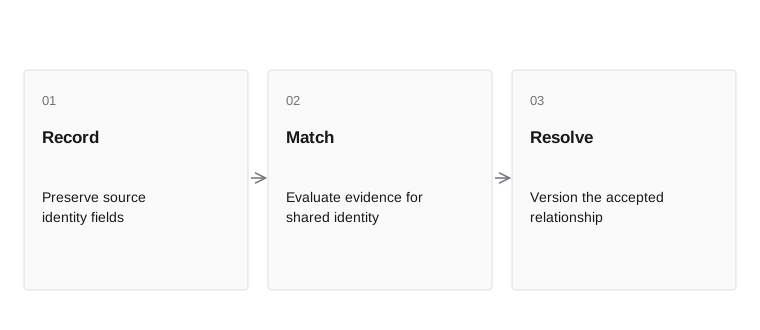
- RecordPreserve source identity fields
- MatchEvaluate evidence for shared identity
- ResolveVersion the accepted relationship
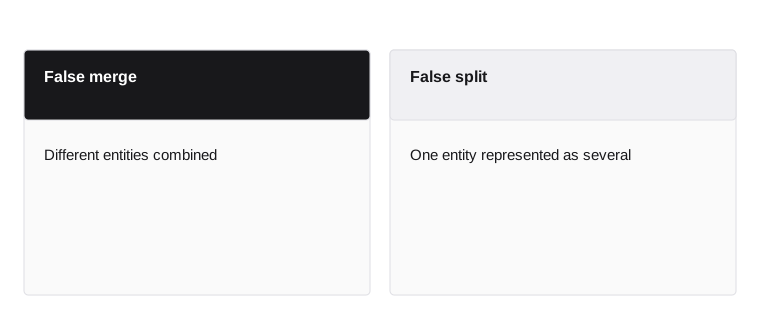
- False merge
- Different entities combined
- False split
- One entity represented as several
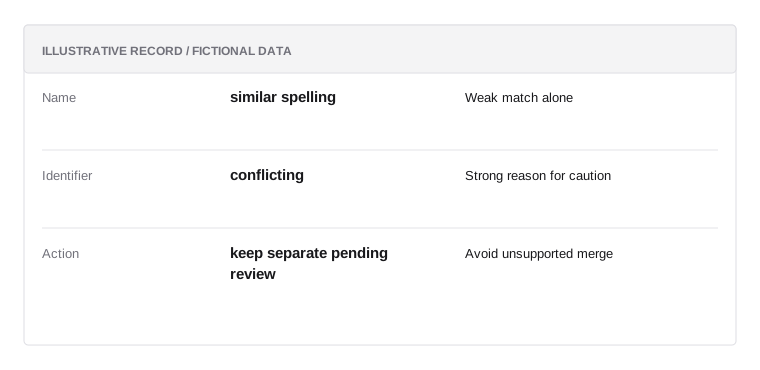
Entity-match review
Illustrative data; not a real customer record or a prescribed policy.
- Namesimilar spelling
Weak match alone
- Identifierconflicting
Strong reason for caution
- Actionkeep separate pending review
Avoid unsupported merge
Identity links can be wrong
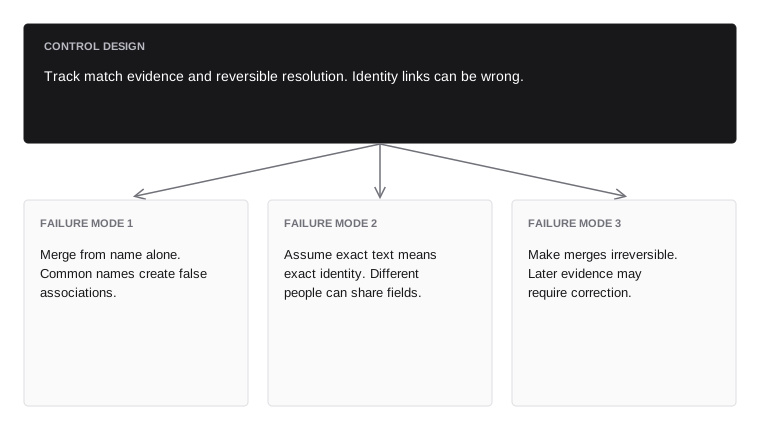
Track match evidence and reversible resolution. Identity links can be wrong.
- Failure mode 1avoid
- Merge from name alone. Common names create false associations.
- Failure mode 2avoid
- Assume exact text means exact identity. Different people can share fields.
- Failure mode 3avoid
- Make merges irreversible. Later evidence may require correction.
Type the relationships
Ownership, control, shared device, shared address, payment, and employment are different edges. Their direction and time matter. A person who once worked for a business does not necessarily control it now. A payment edge does not imply an ownership relationship.
Define an edge schema with type, source, observed time, effective period, and confidence. Keep inferred relationships visibly distinct from confirmed ones. This supports queries that answer a specific investigative question. A diagram that draws every connection with the same line encourages readers to assign meaning the data does not contain.
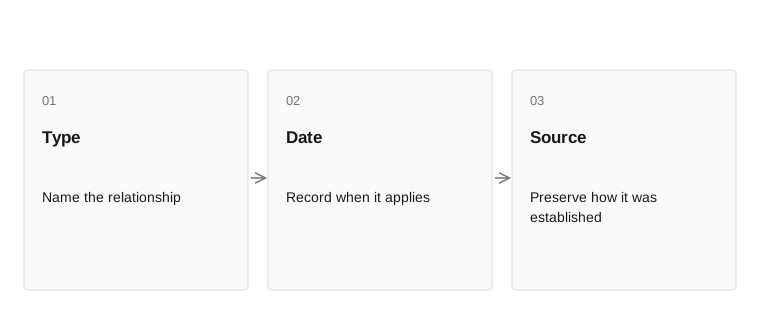
- TypeName the relationship
- DateRecord when it applies
- SourcePreserve how it was established
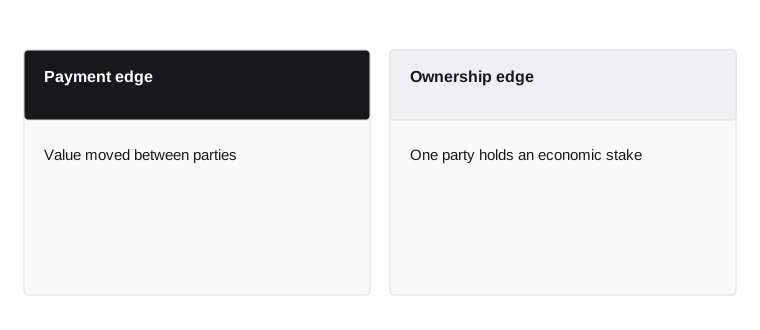
- Payment edge
- Value moved between parties
- Ownership edge
- One party holds an economic stake
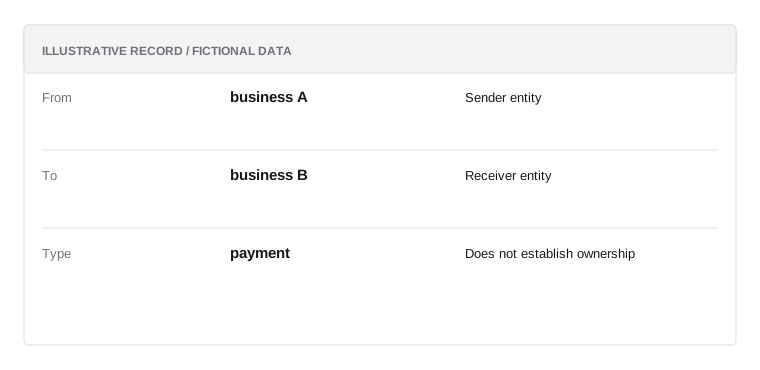
Graph edge specimen
Illustrative data; not a real customer record or a prescribed policy.
- Frombusiness A
Sender entity
- Tobusiness B
Receiver entity
- Typepayment
Does not establish ownership
The meaning of a connection must remain explicit
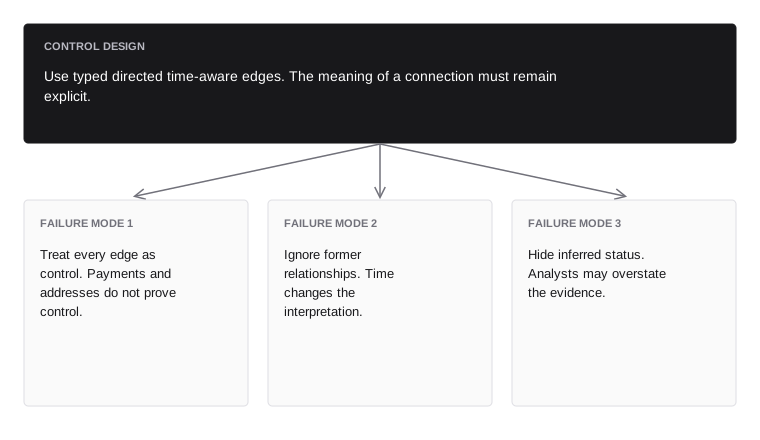
Use typed directed time-aware edges. The meaning of a connection must remain explicit.
- Failure mode 1avoid
- Treat every edge as control. Payments and addresses do not prove control.
- Failure mode 2avoid
- Ignore former relationships. Time changes the interpretation.
- Failure mode 3avoid
- Hide inferred status. Analysts may overstate the evidence.
Compare the network with the business story
A wholesaler may receive many payments and pay a few suppliers. A payroll service may receive one large funding transfer and send many smaller payments. Similar graph shapes can be normal in different businesses.
Compare the network with the customer profile, product, and transaction timing. Document the inconsistency being investigated. Do not publish exact operational detection thresholds in general customer messages. The teaching point is to identify an unexplained mismatch and obtain evidence, not to supply a checklist for staying just below a rule.
Edges need meaning. A shared director, a common device, a payment, and an ownership interest are different relationships with different implications. Drawing every edge as an identical line makes the network visually impressive but analytically weak. Add the relationship type, direction, time, and source. A cluster that existed years ago may not describe current control. A payment in one direction is not proof of ownership. The best network view helps the investigator test a business explanation rather than rewarding the largest or most colorful cluster.
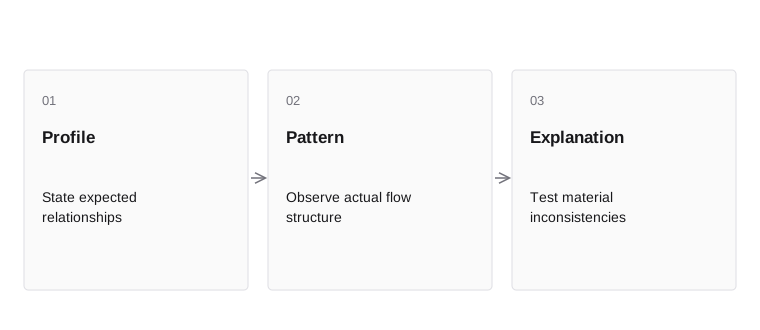
- ProfileState expected relationships
- PatternObserve actual flow structure
- ExplanationTest material inconsistencies
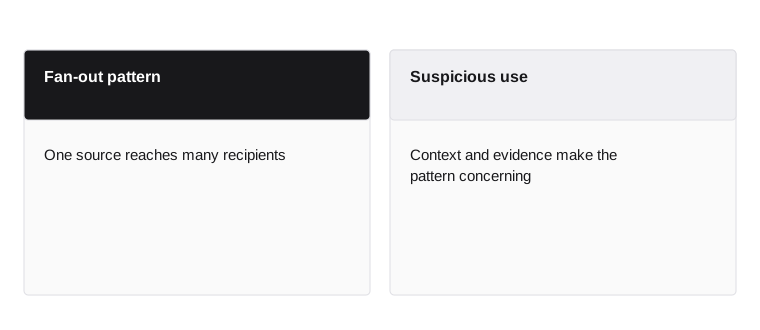
- Fan-out pattern
- One source reaches many recipients
- Suspicious use
- Context and evidence make the pattern concerning
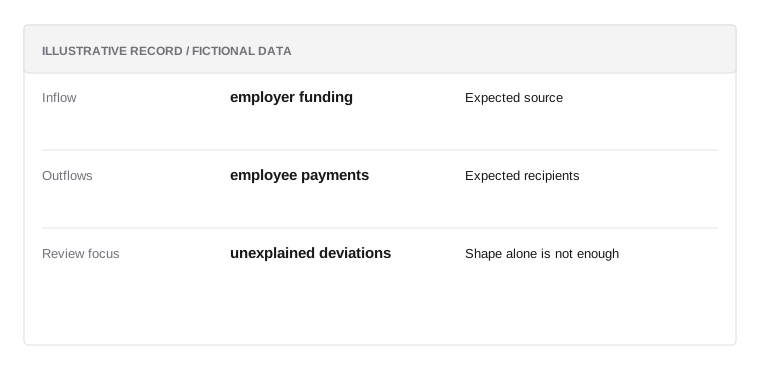
Payroll pattern
Illustrative data; not a real customer record or a prescribed policy.
- Inflowemployer funding
Expected source
- Outflowsemployee payments
Expected recipients
- Review focusunexplained deviations
Shape alone is not enough
The same shape can have legitimate uses
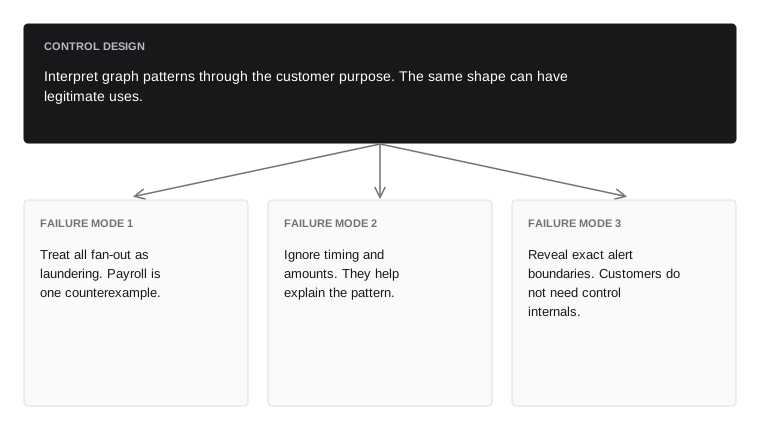
Interpret graph patterns through the customer purpose. The same shape can have legitimate uses.
- Failure mode 1avoid
- Treat all fan-out as laundering. Payroll is one counterexample.
- Failure mode 2avoid
- Ignore timing and amounts. They help explain the pattern.
- Failure mode 3avoid
- Reveal exact alert boundaries. Customers do not need control internals.
Use graph evidence carefully
A path through several entities can suggest a relationship worth investigating. It does not automatically prove common ownership, intent, or knowledge. Each step needs a valid edge and an interpretation. The farther the path, the more assumptions may accumulate.
Show the actual path used to support an alert, including dates and sources. Limit claims to what the evidence supports. If one edge is uncertain, the conclusion should reflect that uncertainty. Analysts need a way to inspect the underlying records rather than rely on a dramatic network picture with no provenance.
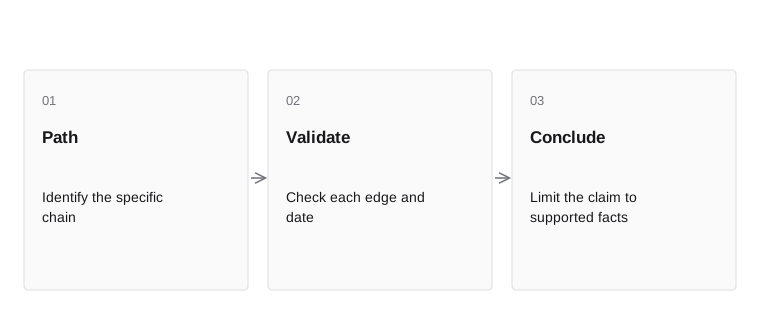
- PathIdentify the specific chain
- ValidateCheck each edge and date
- ConcludeLimit the claim to supported facts
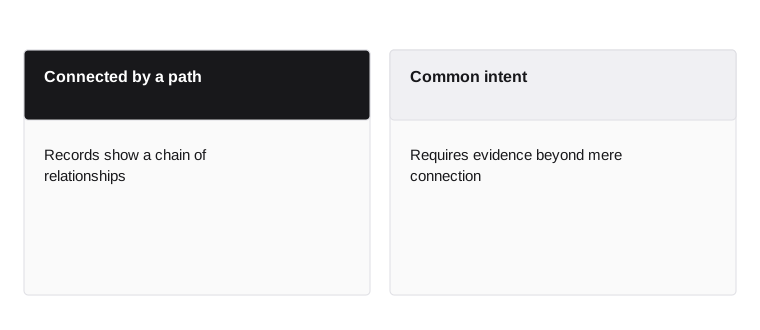
- Connected by a path
- Records show a chain of relationships
- Common intent
- Requires evidence beyond mere connection
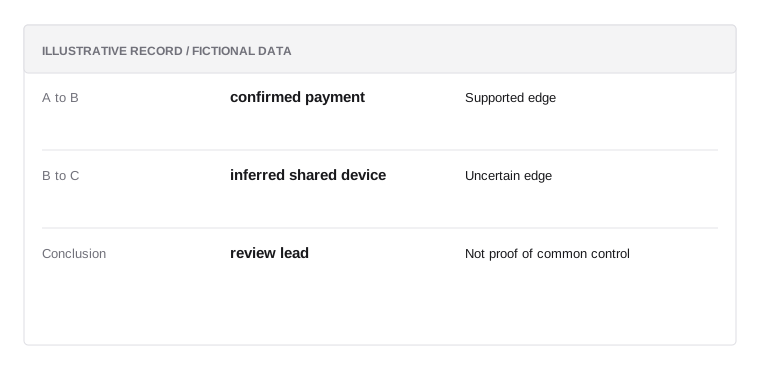
Path evidence
Illustrative data; not a real customer record or a prescribed policy.
- A to Bconfirmed payment
Supported edge
- B to Cinferred shared device
Uncertain edge
- Conclusionreview lead
Not proof of common control
The path is only as strong as its evidence
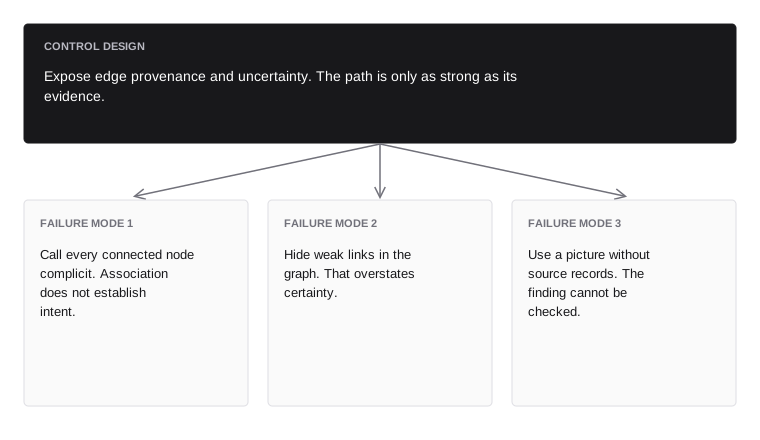
Expose edge provenance and uncertainty. The path is only as strong as its evidence.
- Failure mode 1avoid
- Call every connected node complicit. Association does not establish intent.
- Failure mode 2avoid
- Hide weak links in the graph. That overstates certainty.
- Failure mode 3avoid
- Use a picture without source records. The finding cannot be checked.
Control graph access and change
Financial networks reveal relationships about customers and third parties. Apply purpose-based access, query logging, and export controls. An investigator may need a limited neighborhood, while a model pipeline needs approved aggregate features. Neither necessarily needs unrestricted raw network access.
Version entity-resolution logic and test changes before rebuilding the graph. A new matching rule can suddenly connect thousands of accounts and trigger a wave of alerts. Compare the changed edges, affected customers, and downstream decisions. The graph is a production dependency, not a passive illustration.
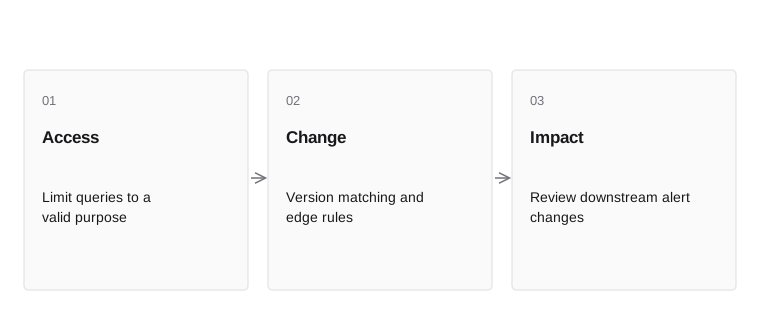
- AccessLimit queries to a valid purpose
- ChangeVersion matching and edge rules
- ImpactReview downstream alert changes
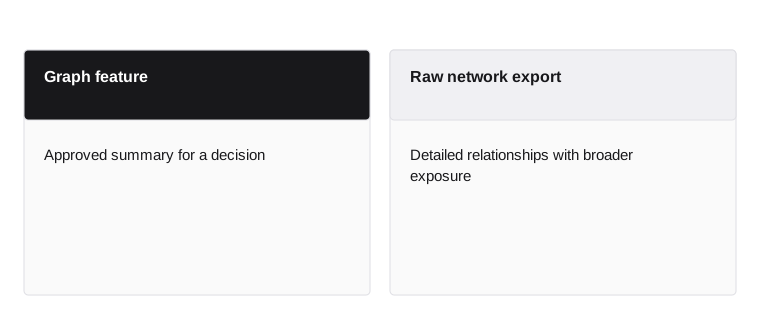
- Graph feature
- Approved summary for a decision
- Raw network export
- Detailed relationships with broader exposure
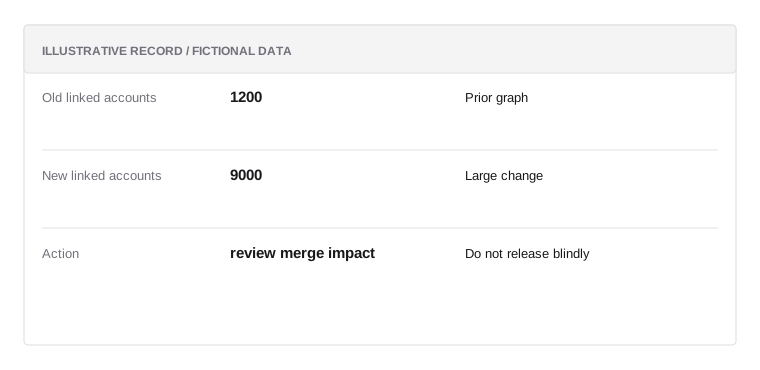
Matching release
Illustrative data; not a real customer record or a prescribed policy.
- Old linked accounts1200
Prior graph
- New linked accounts9000
Large change
- Actionreview merge impact
Do not release blindly
Resolution changes can alter many decisions
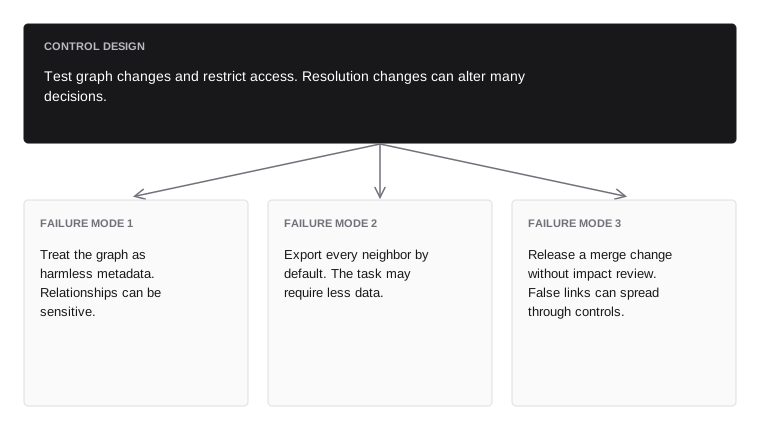
Test graph changes and restrict access. Resolution changes can alter many decisions.
- Failure mode 1avoid
- Treat the graph as harmless metadata. Relationships can be sensitive.
- Failure mode 2avoid
- Export every neighbor by default. The task may require less data.
- Failure mode 3avoid
- Release a merge change without impact review. False links can spread through controls.
Chapter connections
This chapter builds on Customer due diligence and beneficial ownership. Continue with Transaction monitoring and alert quality to follow the next part of the system. Use the glossary for terminology and risk mathematics for formulas and worked calculations.