First-party misuse, merchant abuse, and feedback
Distinguish deception from service problems and build reliable labels.
A customer says the package never arrived. The carrier says delivered. The photo shows a door, but perhaps the wrong door. Risk work gets better when the analyst can hold more than one explanation at a time.
Separate misuse from ordinary disputes
First-party misuse involves a party making a deceptive claim about its own transaction or obligation. A mistaken memory, confusing descriptor, or delivery failure can look similar at first. Use evidence that addresses the disputed fact rather than assuming intent from a claim category.
Check order recognition, household use, fulfillment, cancellation, and prior communication. Preserve what remains unknown. A repeated claim pattern can justify review, but repetition alone does not establish deception. The customer may be dealing with a recurring merchant failure. Accurate classification improves both fraud controls and service quality.
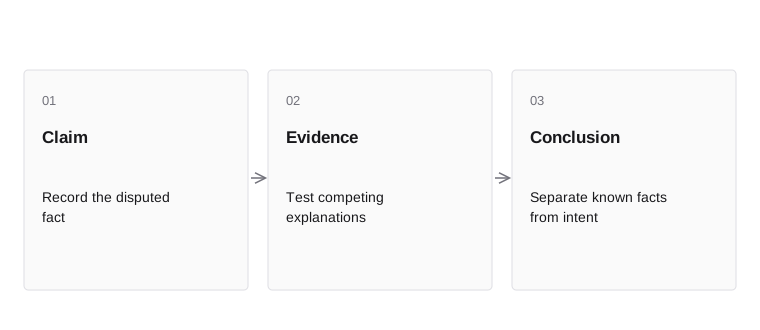
- ClaimRecord the disputed fact
- EvidenceTest competing explanations
- ConclusionSeparate known facts from intent
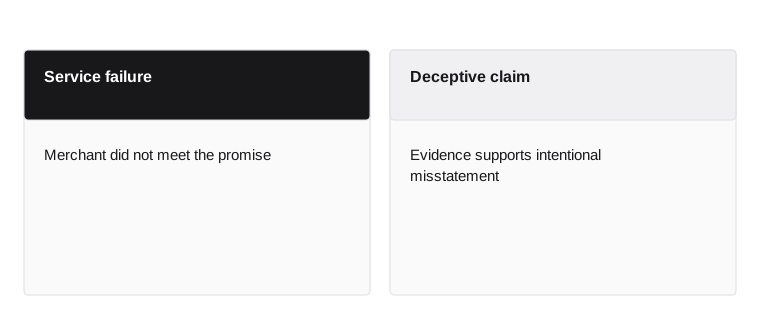
- Service failure
- Merchant did not meet the promise
- Deceptive claim
- Evidence supports intentional misstatement
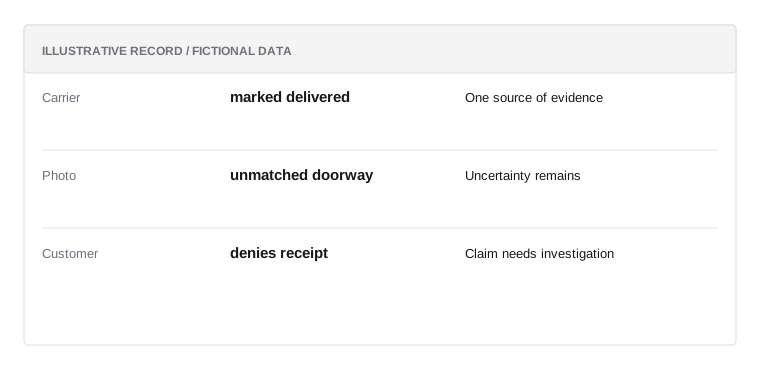
Delivery dispute
Illustrative data; not a real customer record or a prescribed policy.
- Carriermarked delivered
One source of evidence
- Photounmatched doorway
Uncertainty remains
- Customerdenies receipt
Claim needs investigation
The record may support more than one explanation
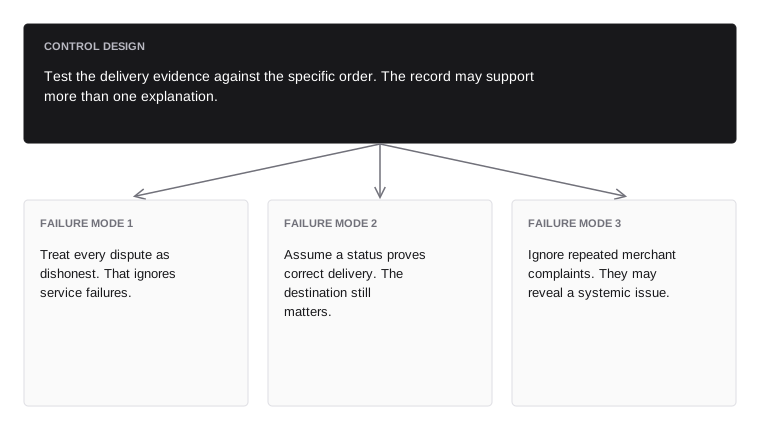
Test the delivery evidence against the specific order. The record may support more than one explanation.
- Failure mode 1avoid
- Treat every dispute as dishonest. That ignores service failures.
- Failure mode 2avoid
- Assume a status proves correct delivery. The destination still matters.
- Failure mode 3avoid
- Ignore repeated merchant complaints. They may reveal a systemic issue.
Merchant behavior can create customer risk
A merchant can misstate products, hide recurring charges, use misleading descriptors, or process transactions for undisclosed businesses. Underwriting is therefore not a one-time identity check. Compare the operating business with the approved model and monitor material changes.
Use website evidence, complaint themes, fulfillment behavior, and transaction patterns together. Preserve dated observations because websites and terms change. A sudden shift in average ticket or geography may reflect a legitimate expansion, but it should fit the merchant’s explanation and authority. The control should test the mismatch, not punish growth itself.
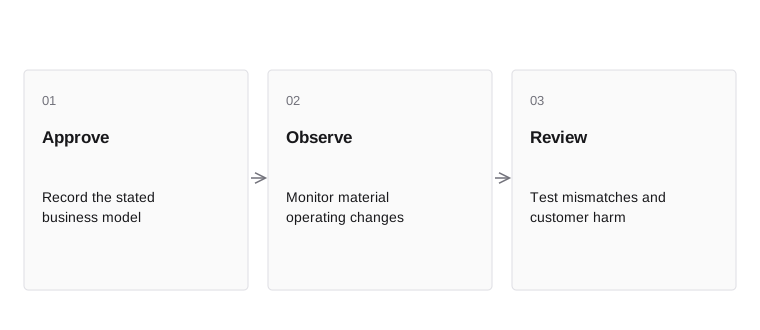
- ApproveRecord the stated business model
- ObserveMonitor material operating changes
- ReviewTest mismatches and customer harm
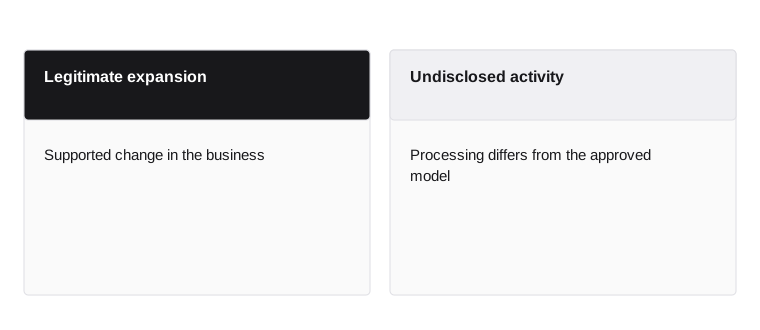
- Legitimate expansion
- Supported change in the business
- Undisclosed activity
- Processing differs from the approved model
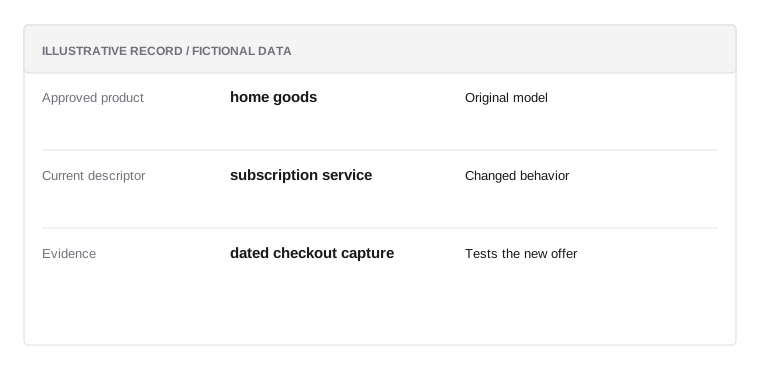
Merchant change review
Illustrative data; not a real customer record or a prescribed policy.
- Approved producthome goods
Original model
- Current descriptorsubscription service
Changed behavior
- Evidencedated checkout capture
Tests the new offer
Identity alone does not establish ongoing conduct
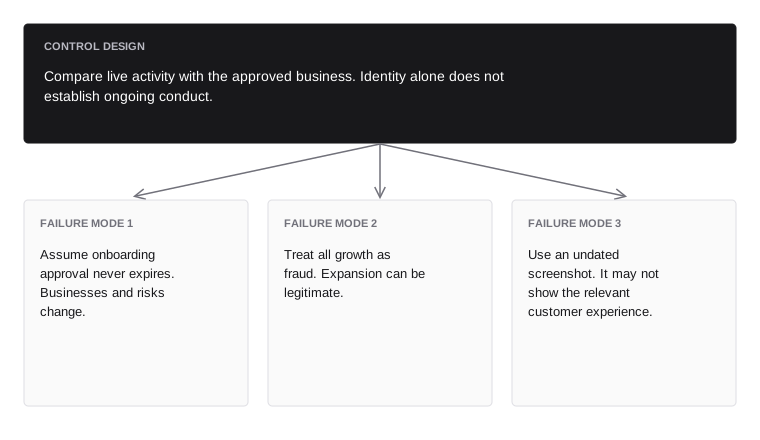
Compare live activity with the approved business. Identity alone does not establish ongoing conduct.
- Failure mode 1avoid
- Assume onboarding approval never expires. Businesses and risks change.
- Failure mode 2avoid
- Treat all growth as fraud. Expansion can be legitimate.
- Failure mode 3avoid
- Use an undated screenshot. It may not show the relevant customer experience.
Refunds and promotions need state controls
A refund, credit, and promotional benefit each change an obligation or entitlement. Model their eligibility and consumption so retries do not issue value twice. Link a refund to the original payment and enforce the allowed cumulative amount.
Separate a commercial goodwill credit from a reversal of the original charge. Otherwise, support may believe a customer was refunded while finance sees an unrelated credit. Record who can authorize an exception and why. Review exception patterns for product defects as well as misuse. Many repeated credits begin with an unreliable service rather than an inventive customer.
A refund is a new financial action with a relationship to an earlier purchase. Its permitted value depends on prior captures, prior refunds, currency, and product policy. Two support agents can each see an apparently refundable order and submit overlapping actions. A correct interface does not solve that race by itself; the server must enforce the remaining refundable amount within an appropriate transaction boundary.
Promotions have similar state problems. Eligibility, redemption, cancellation, and restoration need explicit transitions. Otherwise, customers can encounter inconsistent treatment and repeated requests can create unintended value. Before classifying a pattern as deliberate abuse, establish that the product itself did not promise or repeatedly grant the benefit. The distinction changes both the control and the customer response.
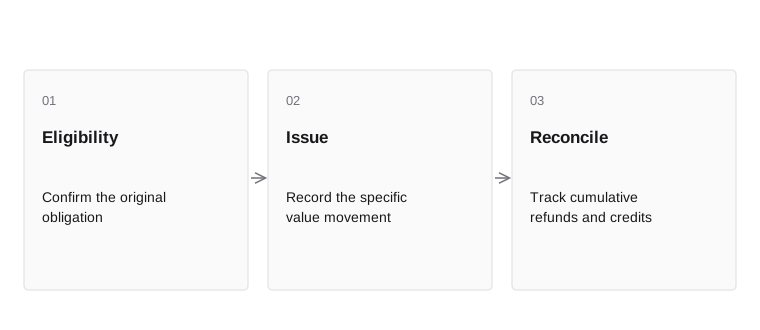
- EligibilityConfirm the original obligation
- IssueRecord the specific value movement
- ReconcileTrack cumulative refunds and credits
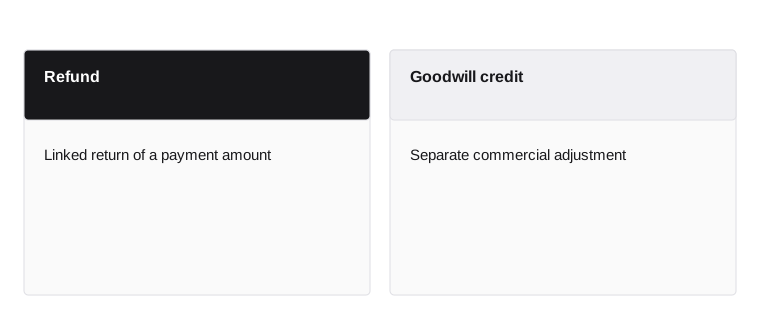
- Refund
- Linked return of a payment amount
- Goodwill credit
- Separate commercial adjustment
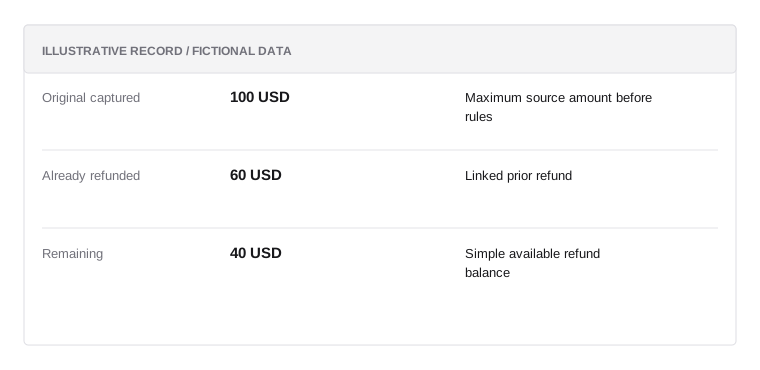
Refund limit specimen
Illustrative data; not a real customer record or a prescribed policy.
- Original captured100 USD
Maximum source amount before rules
- Already refunded60 USD
Linked prior refund
- Remaining40 USD
Simple available refund balance
Repeated calls must not exceed the allowed amount
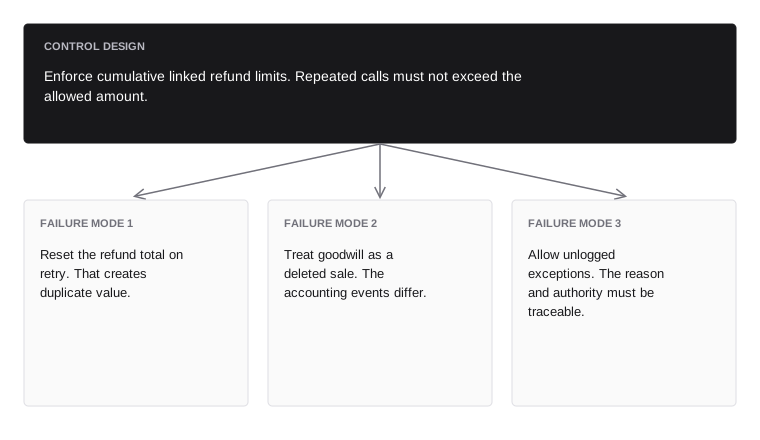
Enforce cumulative linked refund limits. Repeated calls must not exceed the allowed amount.
- Failure mode 1avoid
- Reset the refund total on retry. That creates duplicate value.
- Failure mode 2avoid
- Treat goodwill as a deleted sale. The accounting events differ.
- Failure mode 3avoid
- Allow unlogged exceptions. The reason and authority must be traceable.
Keep labels revisable and traceable
A label should state its definition, evidence, source, confidence, and time. Confirmed unauthorized use, merchant non-delivery, unresolved dispute, and technical duplicate are different outcomes. Collapsing them into one bad flag teaches a model a confused objective.
Version labels when evidence changes. Preserve the prior label and the reason for correction. A model trained last month should be reproducible using the labels available then. Review agreement between analysts and sample unresolved cases. High agreement can still be wrong if everyone uses the same flawed instructions, so compare with independent evidence where possible.
Labels should retain their history. A dispute can begin as an allegation, become a confirmed delivery problem, and later close with a partial refund. Overwriting every stage with a final word such as fraud removes information needed to explain earlier decisions. Store the original event, the label source, confidence or review status, the effective time, and subsequent corrections. A model trained from these records needs a defined outcome at a defined observation date, not an accidental mixture of every intermediate operational status.
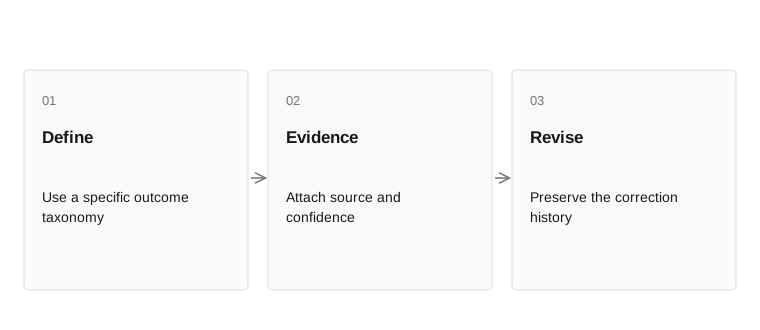
- DefineUse a specific outcome taxonomy
- EvidenceAttach source and confidence
- RevisePreserve the correction history
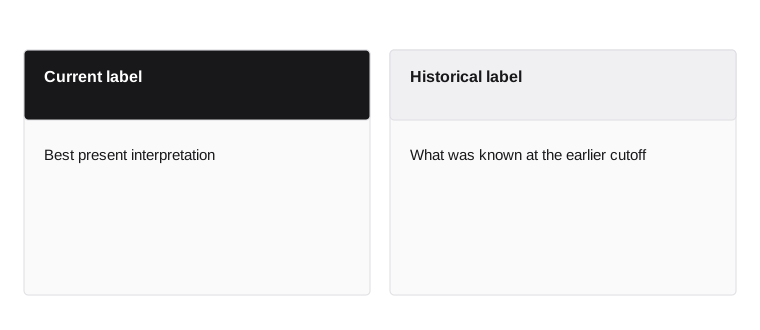
- Current label
- Best present interpretation
- Historical label
- What was known at the earlier cutoff
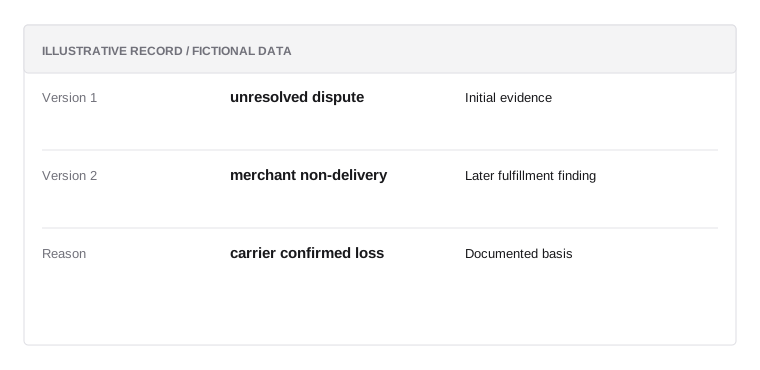
Label correction
Illustrative data; not a real customer record or a prescribed policy.
- Version 1unresolved dispute
Initial evidence
- Version 2merchant non-delivery
Later fulfillment finding
- Reasoncarrier confirmed loss
Documented basis
Corrections should not erase the training history
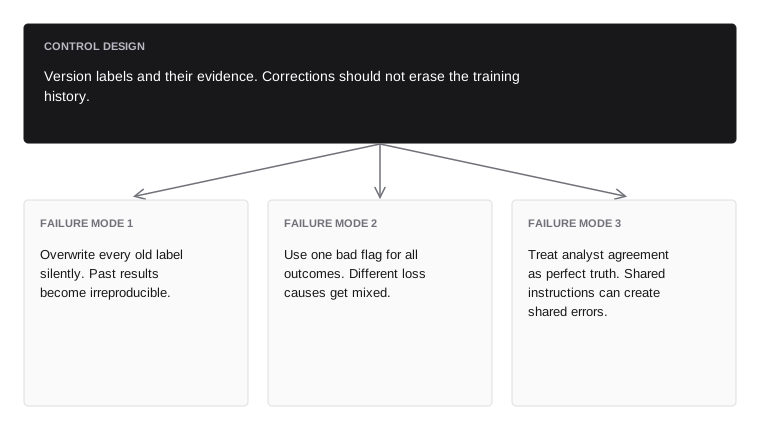
Version labels and their evidence. Corrections should not erase the training history.
- Failure mode 1avoid
- Overwrite every old label silently. Past results become irreproducible.
- Failure mode 2avoid
- Use one bad flag for all outcomes. Different loss causes get mixed.
- Failure mode 3avoid
- Treat analyst agreement as perfect truth. Shared instructions can create shared errors.
Close the loop into product design
Some fraud-like losses disappear when the product becomes clearer. A recognizable descriptor reduces unrecognized-payment claims. Clear cancellation and refund states reduce repeat contacts. Reliable delivery records improve both customer service and dispute handling.
Rank recurring causes by customer harm, loss, and preventability. Assign product fixes alongside detection changes. Verify the result using comparable cohorts and a sufficiently mature outcome window. If a new rule blocks more customers but the underlying complaint remains, it may be hiding a product defect rather than solving it.
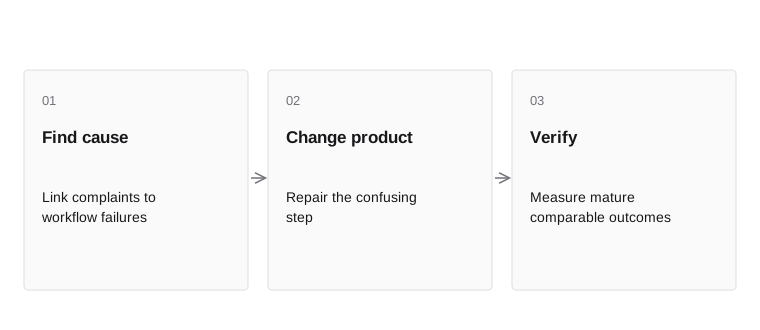
- Find causeLink complaints to workflow failures
- Change productRepair the confusing step
- VerifyMeasure mature comparable outcomes
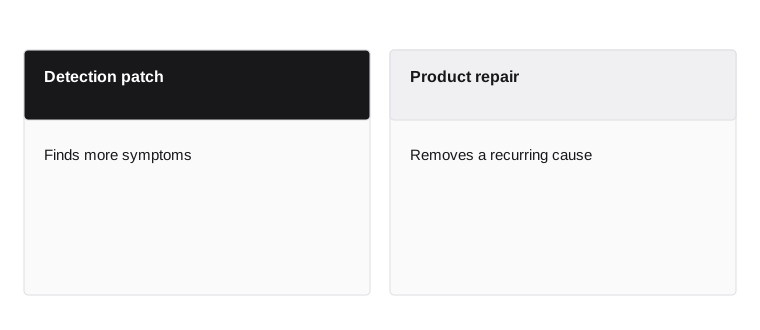
- Detection patch
- Finds more symptoms
- Product repair
- Removes a recurring cause
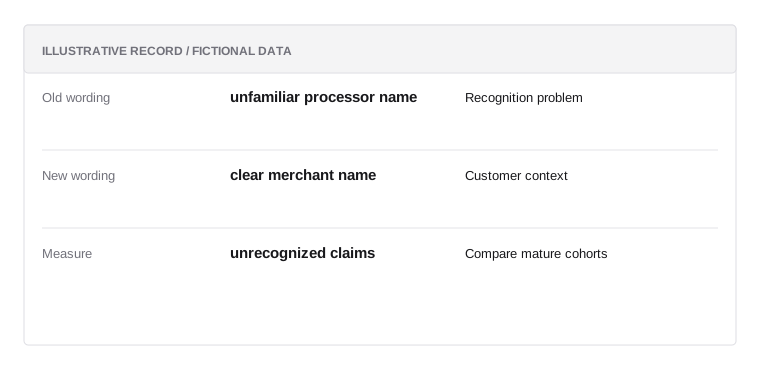
Descriptor improvement
Illustrative data; not a real customer record or a prescribed policy.
- Old wordingunfamiliar processor name
Recognition problem
- New wordingclear merchant name
Customer context
- Measureunrecognized claims
Compare mature cohorts
Prevention can improve the product itself
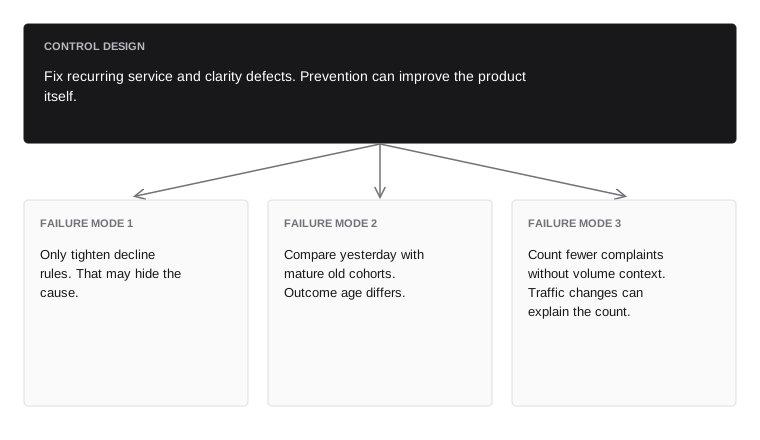
Fix recurring service and clarity defects. Prevention can improve the product itself.
- Failure mode 1avoid
- Only tighten decline rules. That may hide the cause.
- Failure mode 2avoid
- Compare yesterday with mature old cohorts. Outcome age differs.
- Failure mode 3avoid
- Count fewer complaints without volume context. Traffic changes can explain the count.
Chapter connections
This chapter builds on Scams, money mules, and social engineering. Use the glossary for terminology and risk mathematics for formulas and worked calculations.