Risk data contracts and event time
Build features that mean the same thing in analysis and production.
The model is excellent in the notebook. In production, a missing timestamp becomes midnight and a missing amount becomes zero. The model did not change. The meaning of its inputs did.
Define an event contract
An event contract gives fields stable meaning. Include event_id, entity references, event_type, occurred_at, received_at, schema_version, and explicit money units. A payment amount without a currency is incomplete. A timestamp without a documented time basis is difficult to compare.
Validate at ingestion and preserve rejected records in a controlled repair path. Do not silently coerce invalid amounts or unknown event types into safe defaults. Additive schema changes still need compatibility tests when downstream consumers assume a complete field set. The contract is shared by producers and consumers, not owned only by the data warehouse.
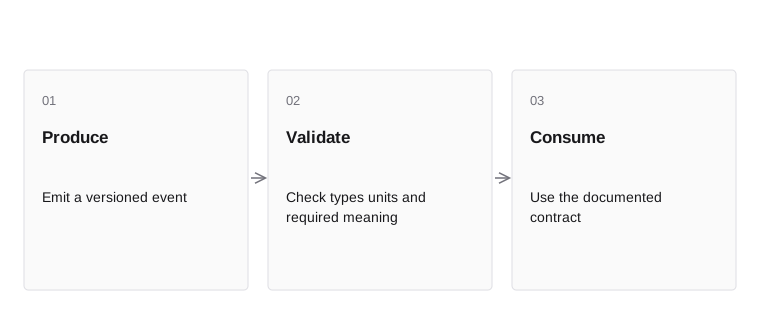
- ProduceEmit a versioned event
- ValidateCheck types units and required meaning
- ConsumeUse the documented contract
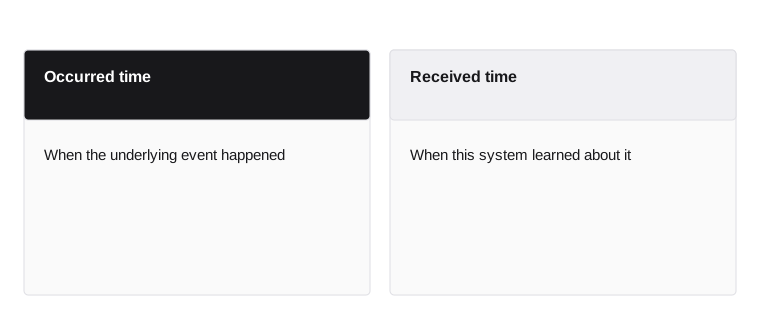
- Occurred time
- When the underlying event happened
- Received time
- When this system learned about it
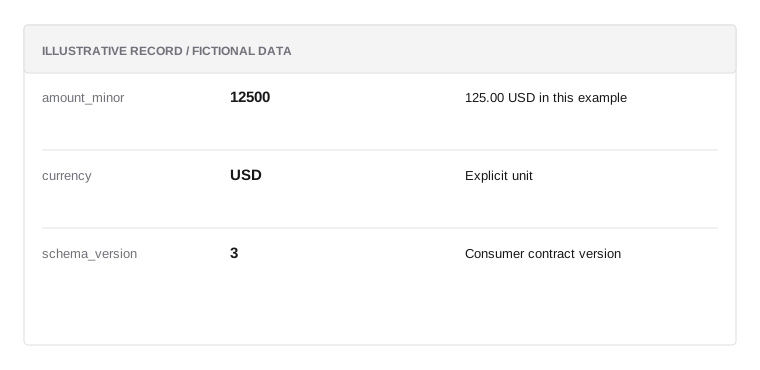
Event specimen
Illustrative data; not a real customer record or a prescribed policy.
- amount_minor12500
125.00 USD in this example
- currencyUSD
Explicit unit
- schema_version3
Consumer contract version
Safe-looking defaults can distort risk
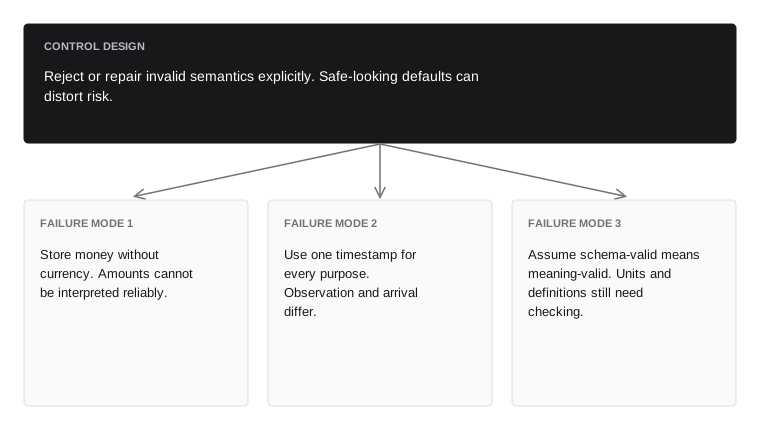
Reject or repair invalid semantics explicitly. Safe-looking defaults can distort risk.
- Failure mode 1avoid
- Store money without currency. Amounts cannot be interpreted reliably.
- Failure mode 2avoid
- Use one timestamp for every purpose. Observation and arrival differ.
- Failure mode 3avoid
- Assume schema-valid means meaning-valid. Units and definitions still need checking.
Make time-aware features reproducible
A point-in-time feature uses only information available at the decision. Filter both event time and knowledge time when delayed data matters. An event that happened yesterday but arrived tomorrow was not available to today’s model.
For a one-hour count, exclude the current event and define whether the lower boundary is inclusive. The following teaching query counts earlier attempts known by the decision cutoff. Production code also needs the actual schema, indexes, deduplication, and transaction policy.
SELECT count(*)
FROM payment_events
WHERE account_id = :account_id
  AND occurred_at >= :decision_time - interval '1 hour'
  AND occurred_at < :decision_time
  AND received_at <= :decision_time;
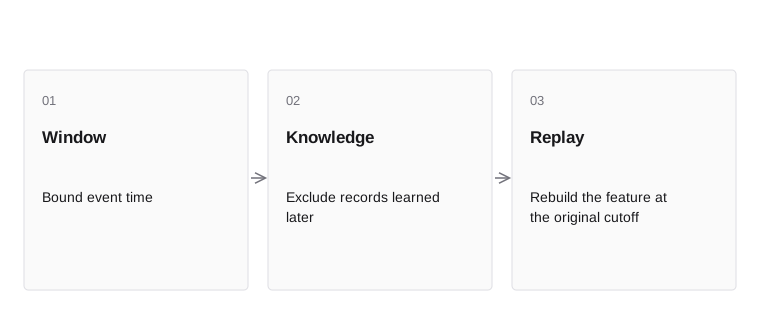
- WindowBound event time
- KnowledgeExclude records learned later
- ReplayRebuild the feature at the original cutoff
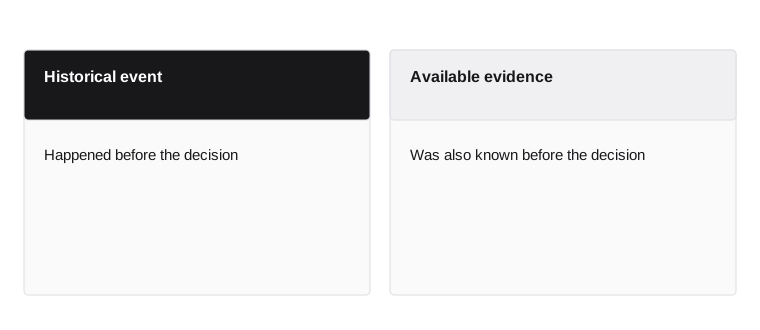
- Historical event
- Happened before the decision
- Available evidence
- Was also known before the decision
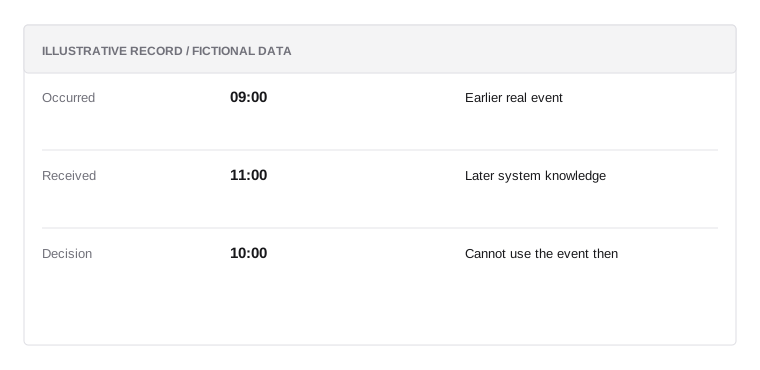
Late-arrival example
Illustrative data; not a real customer record or a prescribed policy.
- Occurred09:00
Earlier real event
- Received11:00
Later system knowledge
- Decision10:00
Cannot use the event then
Late data can create hidden leakage
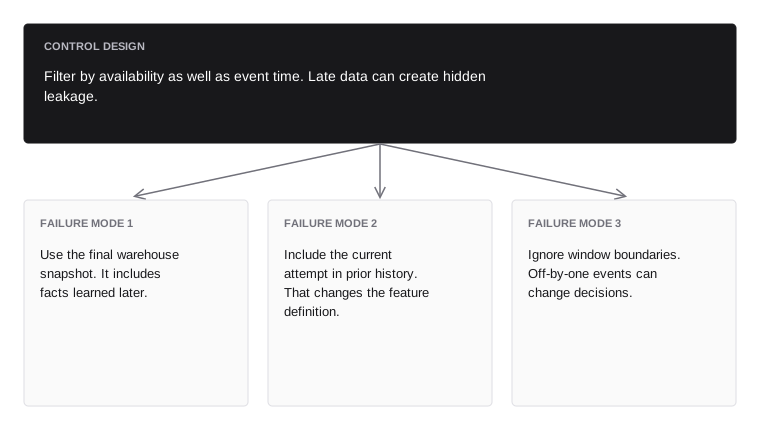
Filter by availability as well as event time. Late data can create hidden leakage.
- Failure mode 1avoid
- Use the final warehouse snapshot. It includes facts learned later.
- Failure mode 2avoid
- Include the current attempt in prior history. That changes the feature definition.
- Failure mode 3avoid
- Ignore window boundaries. Off-by-one events can change decisions.
Preserve missingness and quality
Missing data can come from a new customer, an unsupported source, a timeout, or a broken pipeline. These causes have different meanings. Use explicit validity and freshness fields rather than treating every missing value as zero.
Track completeness by source, product, and relevant population. A global 99 percent completeness rate can hide a fully broken small segment. Define which defects prevent a decision, which permit a bounded fallback, and which require later repair. The data-quality decision should be visible in the risk result so operations can distinguish customer risk from system uncertainty.
Missing is a state with possible causes. A device signal may be absent because the customer uses an unsupported environment, a provider is down, consent is unavailable, or the event arrived through a different product path. Replacing every absence with zero makes these situations look like the same measured value. Preserve the missing state and, where reliable and appropriate, its reason.
The decision policy must define what to do with that state. A model can be trained to handle missing inputs, but a new production outage may create a missingness pattern it never encountered during training. Monitor availability by feature and traffic segment. An aggregate health check can look normal while one high-impact population receives incomplete evidence.
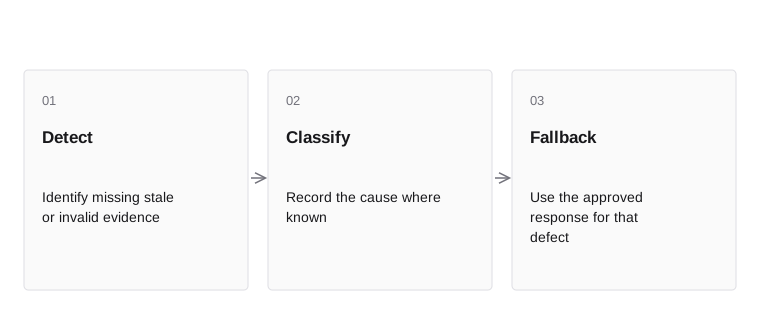
- DetectIdentify missing stale or invalid evidence
- ClassifyRecord the cause where known
- FallbackUse the approved response for that defect
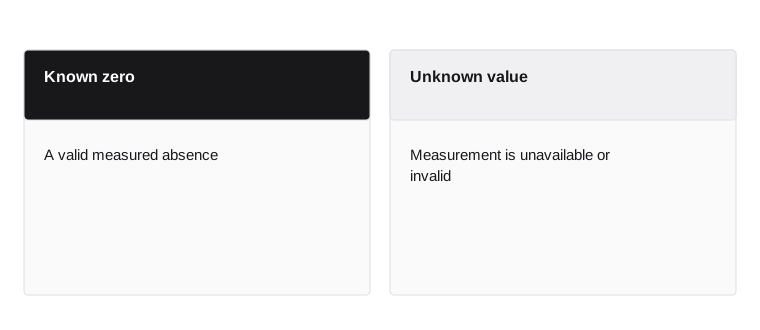
- Known zero
- A valid measured absence
- Unknown value
- Measurement is unavailable or invalid
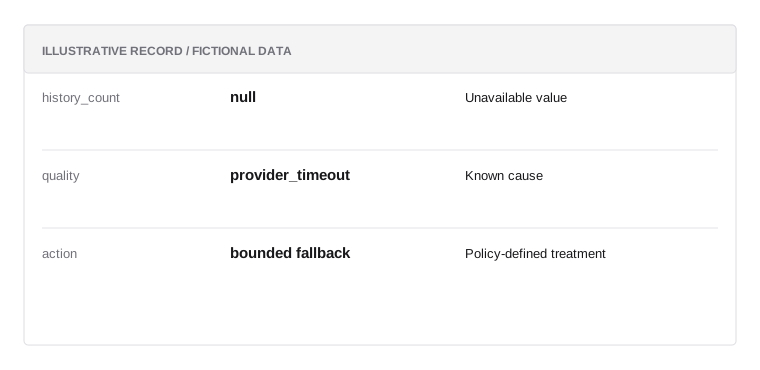
Quality record
Illustrative data; not a real customer record or a prescribed policy.
- history_countnull
Unavailable value
- qualityprovider_timeout
Known cause
- actionbounded fallback
Policy-defined treatment
System uncertainty must remain visible
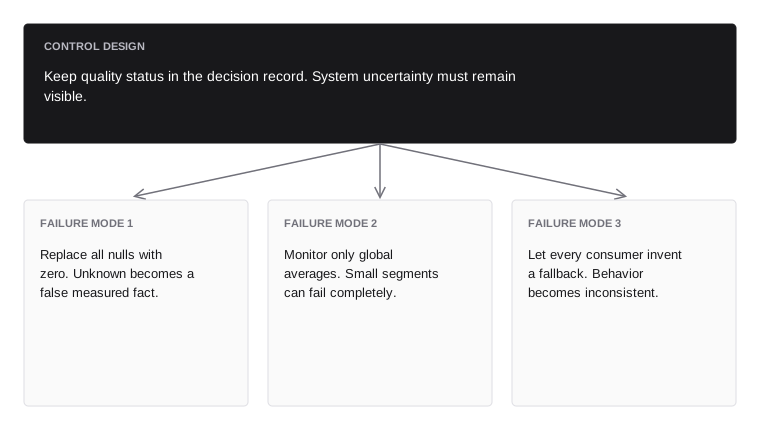
Keep quality status in the decision record. System uncertainty must remain visible.
- Failure mode 1avoid
- Replace all nulls with zero. Unknown becomes a false measured fact.
- Failure mode 2avoid
- Monitor only global averages. Small segments can fail completely.
- Failure mode 3avoid
- Let every consumer invent a fallback. Behavior becomes inconsistent.
Use lineage as an engineering tool
Lineage connects a feature to its source events, transformations, and versions. It supports debugging, model review, customer corrections, and incident analysis. A column name is not enough if its definition changed over time.
Store the feature definition version and the source snapshot or reproducible reference needed for the use. Apply privacy controls to the retained data. When a source defect is found, use lineage to identify affected decisions and models. Without it, teams often rerun everything or miss part of the impact because they cannot trace which records consumed the bad field.
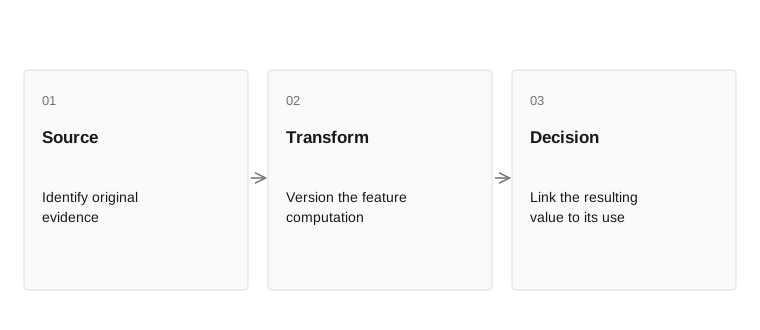
- SourceIdentify original evidence
- TransformVersion the feature computation
- DecisionLink the resulting value to its use
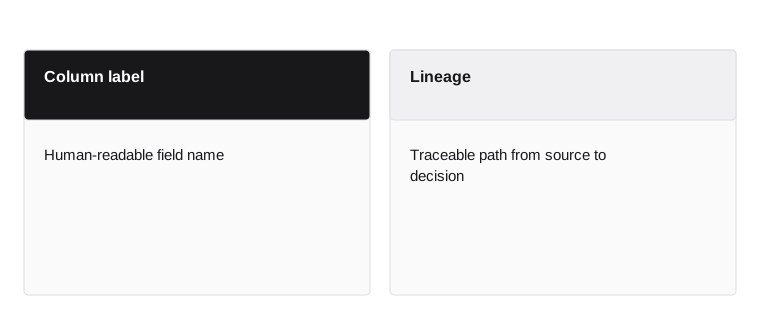
- Column label
- Human-readable field name
- Lineage
- Traceable path from source to decision
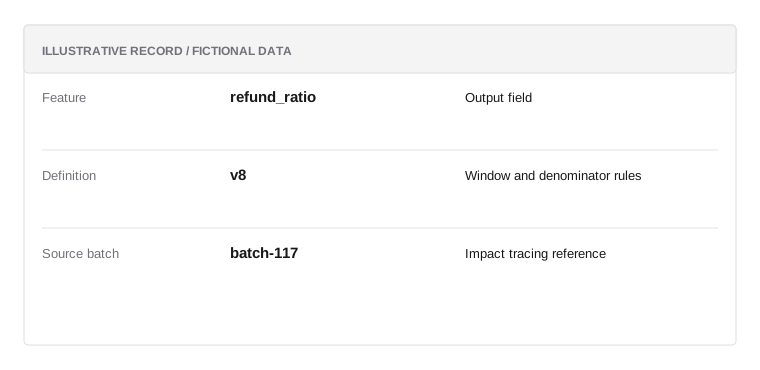
Feature lineage
Illustrative data; not a real customer record or a prescribed policy.
- Featurerefund_ratio
Output field
- Definitionv8
Window and denominator rules
- Source batchbatch-117
Impact tracing reference
The same name can hide changed meaning
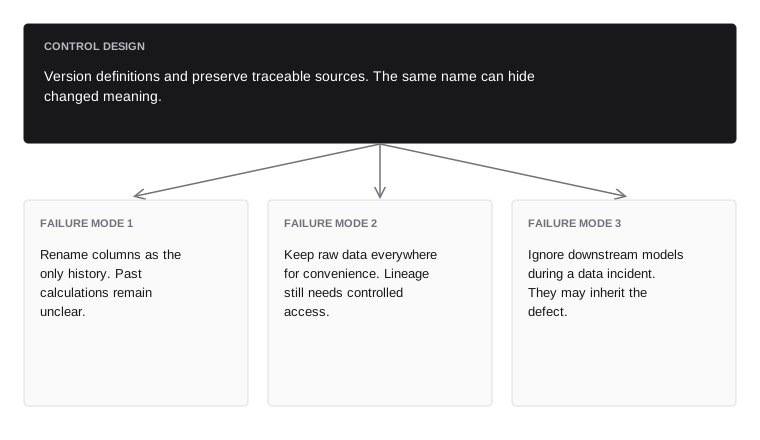
Version definitions and preserve traceable sources. The same name can hide changed meaning.
- Failure mode 1avoid
- Rename columns as the only history. Past calculations remain unclear.
- Failure mode 2avoid
- Keep raw data everywhere for convenience. Lineage still needs controlled access.
- Failure mode 3avoid
- Ignore downstream models during a data incident. They may inherit the defect.
Reconcile the population
Risk systems need population checks: eligible source events, accepted ingestion, feature computation, decisions, and downstream cases. Compare counts and identifiers across these stages. A model can be accurate on the records it sees while missing a large part of the business.
Use control totals and exception reports with explicit exclusions. Investigate unexpected differences by event type and partner. Preserve duplicates separately from missing events. A total count match can still hide one extra and one missing record, so perform identifier-level checks for consequential paths.
Population reconciliation tests whether the pipeline sees the activity it claims to cover. Compare source transactions with accepted events, feature rows, decisions, and final outcomes using stable identifiers and documented exclusions. An event can be valid in isolation while an entire partition is absent. Count checks, amount checks within currency, and age checks help locate these gaps. Keep duplicates, late arrivals, rejected records, and genuinely out-of-scope activity distinct so the reconciliation can explain a difference rather than merely detect one.
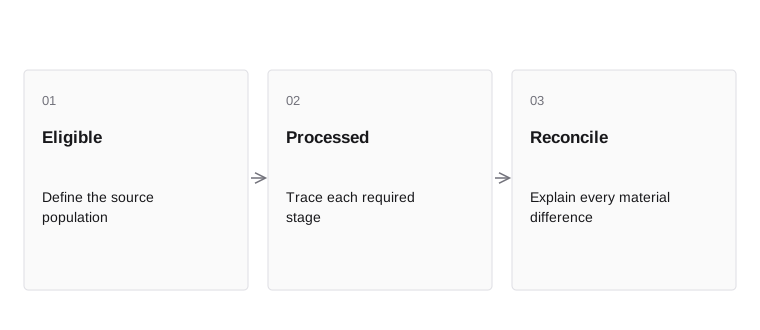
- EligibleDefine the source population
- ProcessedTrace each required stage
- ReconcileExplain every material difference
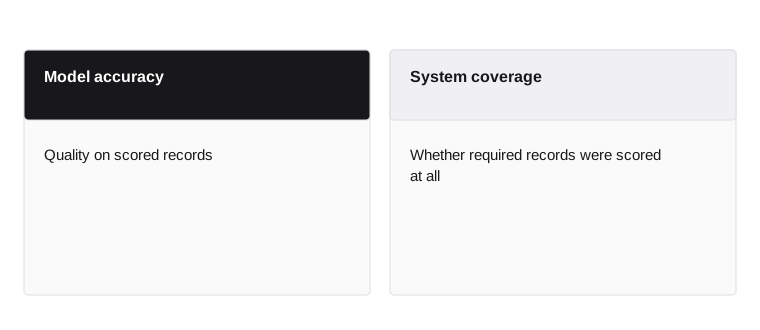
- Model accuracy
- Quality on scored records
- System coverage
- Whether required records were scored at all
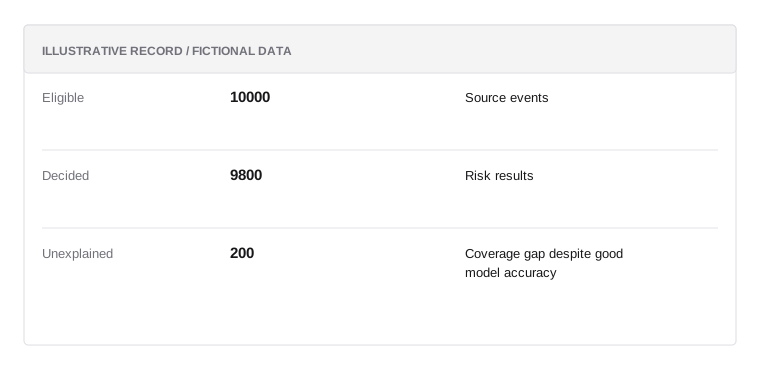
Coverage reconciliation
Illustrative data; not a real customer record or a prescribed policy.
- Eligible10000
Source events
- Decided9800
Risk results
- Unexplained200
Coverage gap despite good model accuracy
Coverage is a separate property from accuracy
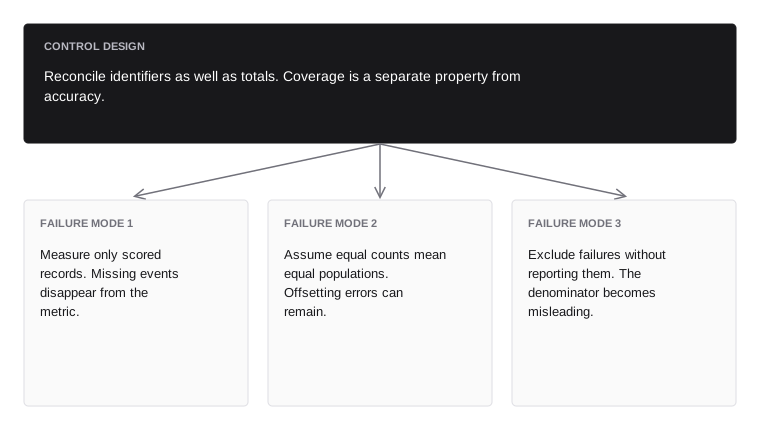
Reconcile identifiers as well as totals. Coverage is a separate property from accuracy.
- Failure mode 1avoid
- Measure only scored records. Missing events disappear from the metric.
- Failure mode 2avoid
- Assume equal counts mean equal populations. Offsetting errors can remain.
- Failure mode 3avoid
- Exclude failures without reporting them. The denominator becomes misleading.
Chapter connections
Continue with Decision engines, rules, and reliable execution to follow the next part of the system. Use the glossary for terminology and risk mathematics for formulas and worked calculations.