ACH, bank debits, and returns
Separate account access, authorization, settlement, and return exposure.
Lantern offers bank payments to save processing cost. Someone suggests shipping as soon as account verification passes. The accountant pauses: a real account can still be empty, a verified login can still be compromised, and a payment can still be returned.
Know the roles and directions
ACH credits push funds; ACH debits pull funds under an authorization arrangement. The originator initiates the entry, the ODFI sends it into the network, and the RDFI receives it for the receiver. The same customer can occupy different roles in different flows.
Draw the direction of the instruction separately from the direction of value. This prevents an easy mistake: assuming a debit is safe because the receiver bank accepted a file. A file acknowledgment and an authorized, funded transfer are different facts. Track origination, processing, settlement, and any return as linked records.
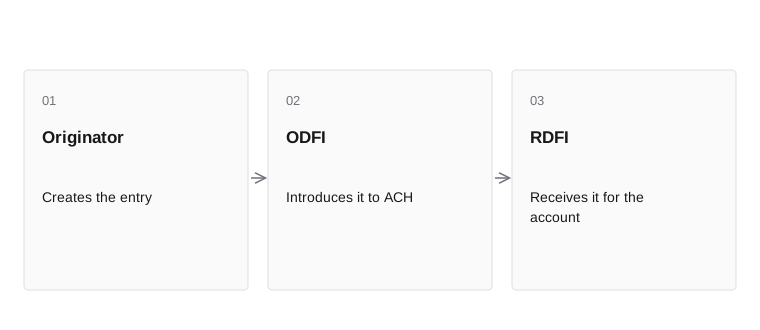
- OriginatorCreates the entry
- ODFIIntroduces it to ACH
- RDFIReceives it for the account
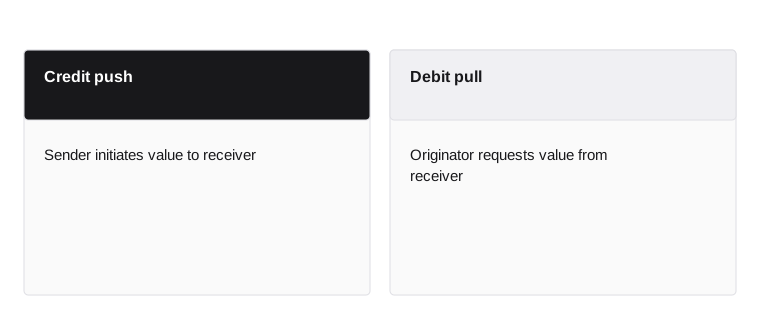
- Credit push
- Sender initiates value to receiver
- Debit pull
- Originator requests value from receiver
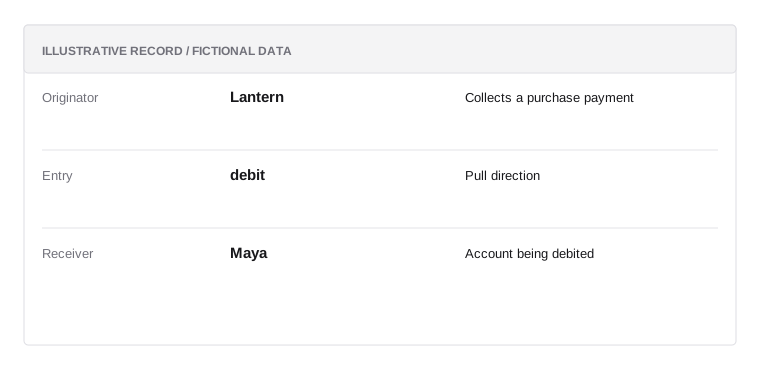
Bank debit specimen
Illustrative data; not a real customer record or a prescribed policy.
- OriginatorLantern
Collects a purchase payment
- Entrydebit
Pull direction
- ReceiverMaya
Account being debited
The originator creates the collection instruction
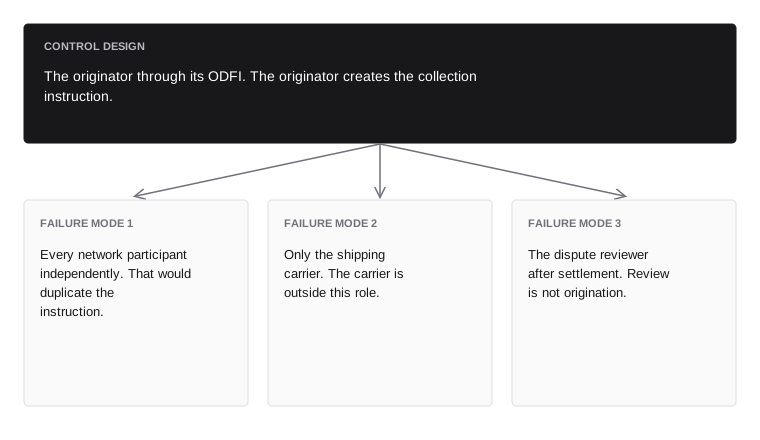
The originator through its ODFI. The originator creates the collection instruction.
- Failure mode 1avoid
- Every network participant independently. That would duplicate the instruction.
- Failure mode 2avoid
- Only the shipping carrier. The carrier is outside this role.
- Failure mode 3avoid
- The dispute reviewer after settlement. Review is not origination.
Verification is not authorization
Account verification can establish facts about an account. Authorization establishes permission for the specified debit under applicable requirements. Available balance gives a time-sensitive view of funds. None substitutes for the others. A customer who owns an account has not necessarily agreed to every amount or recurring schedule.
Store the authorization text and the facts needed to identify its scope. Keep account tokens rather than exposing raw account numbers across systems. If a provider supplies verification results, record what the provider actually tested. A match result without a documented meaning is hard to use consistently.
A customer can prove control of a bank account and still lack authority to use it for a particular business obligation. A successful account check answers a narrow evidence question. Authorization records must explain who permitted the debit, what activity was permitted, and how the product handles changes or withdrawal of that permission under the applicable arrangement. Treat these as connected records, not as one permanent verified flag.
The same distinction matters after onboarding. A valid account can later close, change ownership, or become the subject of a complaint. A control that runs only on the day an account is linked may miss the relevant change. Event-based checks can reduce this gap, but each new check needs a defined purpose and a response when its result is uncertain.
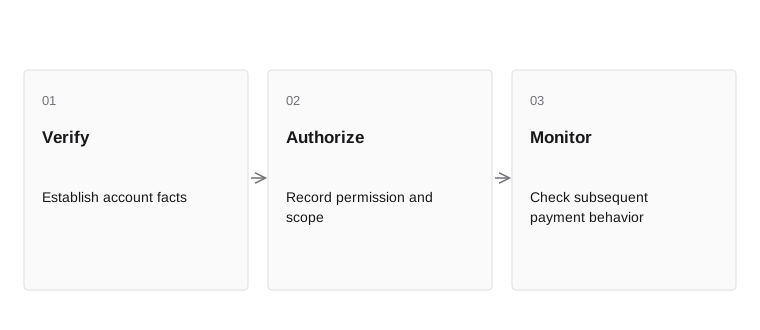
- VerifyEstablish account facts
- AuthorizeRecord permission and scope
- MonitorCheck subsequent payment behavior
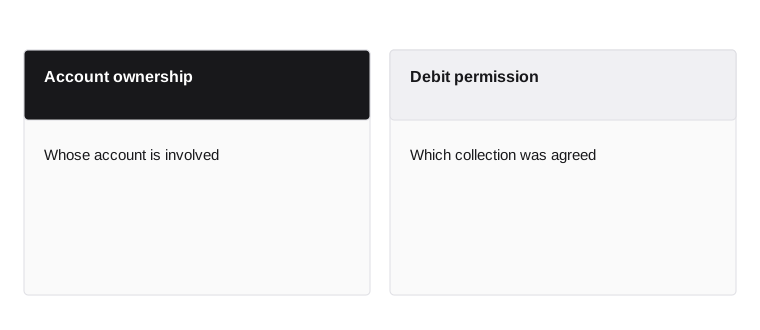
- Account ownership
- Whose account is involved
- Debit permission
- Which collection was agreed
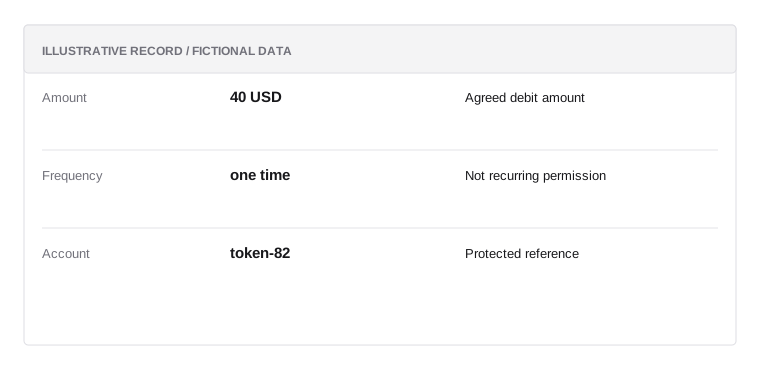
Authorization record
Illustrative data; not a real customer record or a prescribed policy.
- Amount40 USD
Agreed debit amount
- Frequencyone time
Not recurring permission
- Accounttoken-82
Protected reference
Ownership does not establish permission for this debit
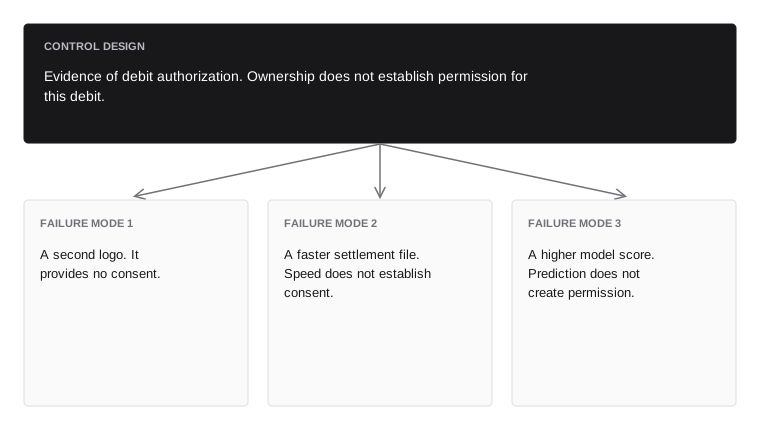
Evidence of debit authorization. Ownership does not establish permission for this debit.
- Failure mode 1avoid
- A second logo. It provides no consent.
- Failure mode 2avoid
- A faster settlement file. Speed does not establish consent.
- Failure mode 3avoid
- A higher model score. Prediction does not create permission.
Returns need reason-aware handling
A return can indicate insufficient funds, account problems, or an authorization issue. These causes require different responses. Treating all returns as fraud distorts labels; retrying all returns automatically can create customer harm and rule violations.
Create a return policy keyed by the applicable code, account type, product, prior attempts, and current network requirements. Preserve the original authorization and entry reference. An engineering example can use a configurable retry eligibility flag, but the flag must come from an approved rules table. Do not hard-code a universal return window or a universal retry count into a textbook example.
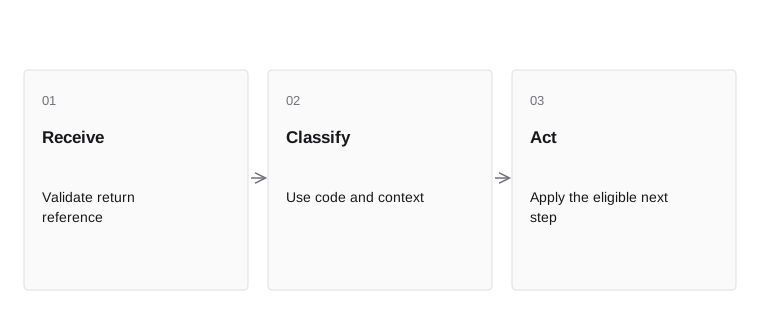
- ReceiveValidate return reference
- ClassifyUse code and context
- ActApply the eligible next step
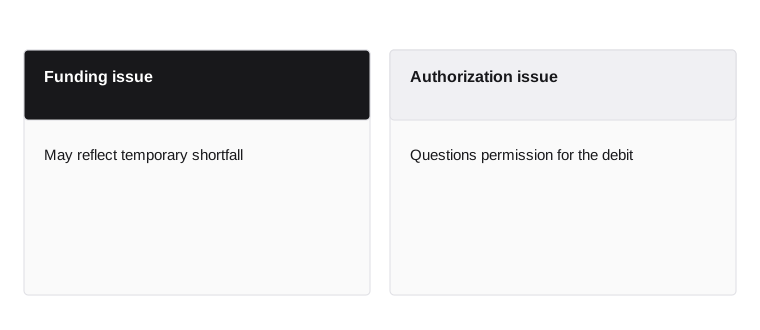
- Funding issue
- May reflect temporary shortfall
- Authorization issue
- Questions permission for the debit
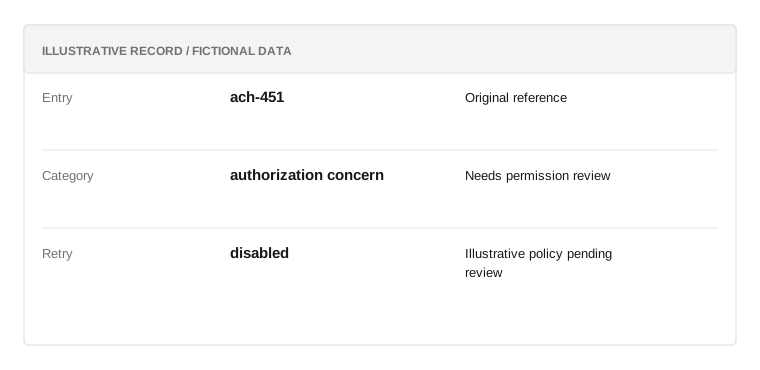
Return handling record
Illustrative data; not a real customer record or a prescribed policy.
- Entryach-451
Original reference
- Categoryauthorization concern
Needs permission review
- Retrydisabled
Illustrative policy pending review
A return code alone may not capture all conditions
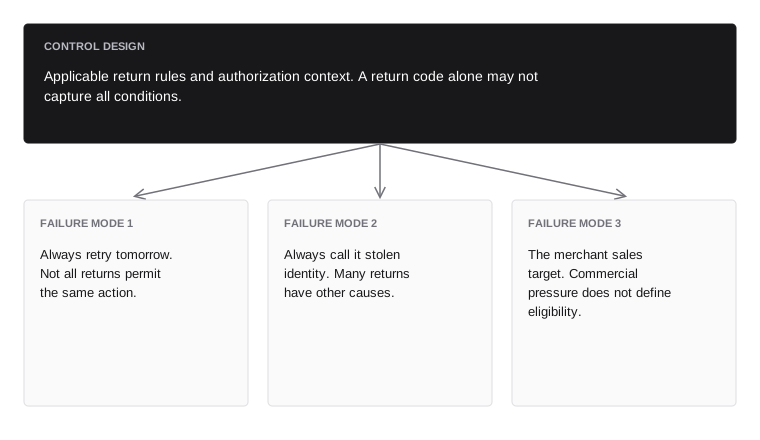
Applicable return rules and authorization context. A return code alone may not capture all conditions.
- Failure mode 1avoid
- Always retry tomorrow. Not all returns permit the same action.
- Failure mode 2avoid
- Always call it stolen identity. Many returns have other causes.
- Failure mode 3avoid
- The merchant sales target. Commercial pressure does not define eligibility.
Exposure continues after a status change
If Lantern pays a seller before bank-payment risk resolves, it finances the gap. A hold can reduce that gap but affects seller cash flow. The correct hold is a product and risk decision informed by return behavior, contracts, customer rights, and concentration. It is not a magic guarantee after a fixed number of days.
Estimate exposure as funds released while related obligations remain uncertain. Add pending refunds and returns, then subtract eligible funds that are actually available to cover them. Do not subtract a reserve that is legally unavailable for the obligation or has already covered another exposure.
Imagine that Lantern lets a seller withdraw funds as soon as an incoming ACH debit is submitted. If that debit later returns, the platform has already advanced value. The exposure is created by the availability policy as well as by the payment rail. Holding a payout can reduce one loss path while creating delay and support costs for legitimate sellers. A useful policy analysis compares the timing of returns, the seller’s ability to repay, and the value still available for recovery. An early processing status cannot resolve those economic facts.
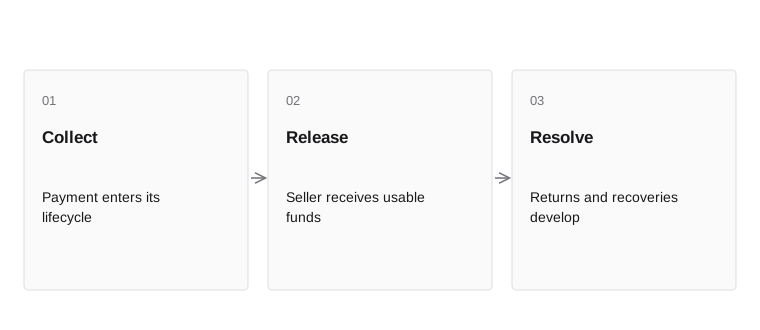
- CollectPayment enters its lifecycle
- ReleaseSeller receives usable funds
- ResolveReturns and recoveries develop
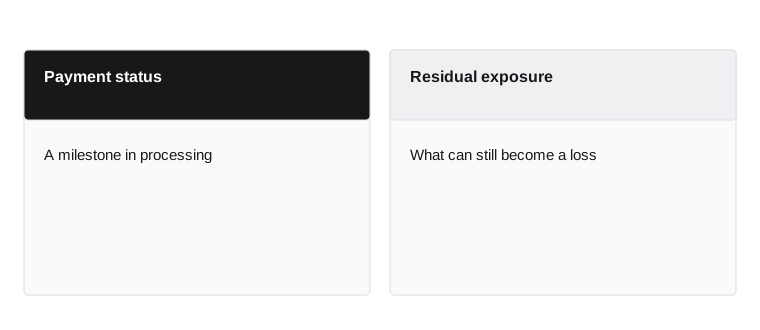
- Payment status
- A milestone in processing
- Residual exposure
- What can still become a loss
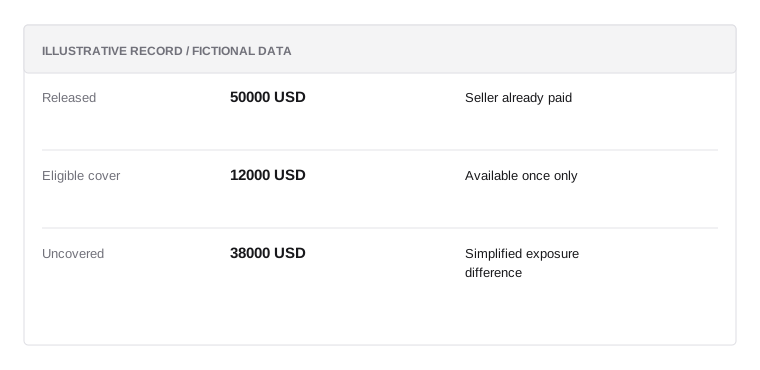
Illustrative payout gap
Illustrative data; not a real customer record or a prescribed policy.
- Released50000 USD
Seller already paid
- Eligible cover12000 USD
Available once only
- Uncovered38000 USD
Simplified exposure difference
Subtract available cover once from the released exposure
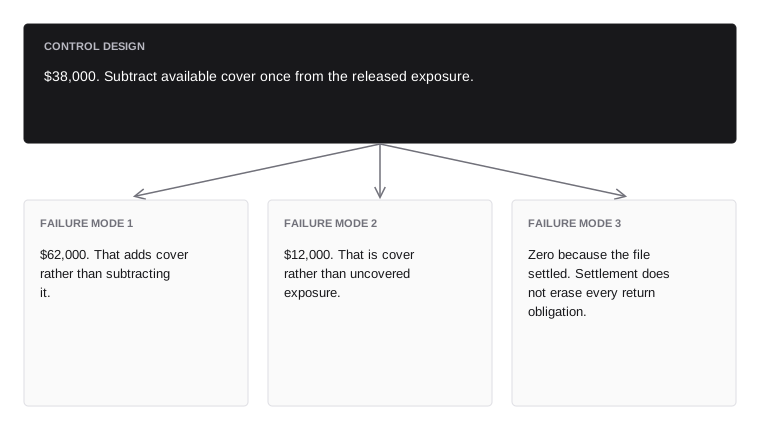
$38,000. Subtract available cover once from the released exposure.
- Failure mode 1avoid
- $62,000. That adds cover rather than subtracting it.
- Failure mode 2avoid
- $12,000. That is cover rather than uncovered exposure.
- Failure mode 3avoid
- Zero because the file settled. Settlement does not erase every return obligation.
Monitor both incoming and outgoing flows
Receiving institutions see patterns that a sender may miss, including unusual incoming credits followed by rapid outflow. Originating parties see payment creation and authorization behavior. A complete control map uses both views and a route for urgent contact.
Nacha identifies Phase 2 fraud-monitoring changes with a June 19, 2026 effective date and June 22 practical date because of the federal holiday. Its public explanation distinguishes role-based monitoring from a universal pre-processing requirement. Use the current rule text and partner obligations for implementation. Engineering teams should version the requirements map and test that monitored populations match it.
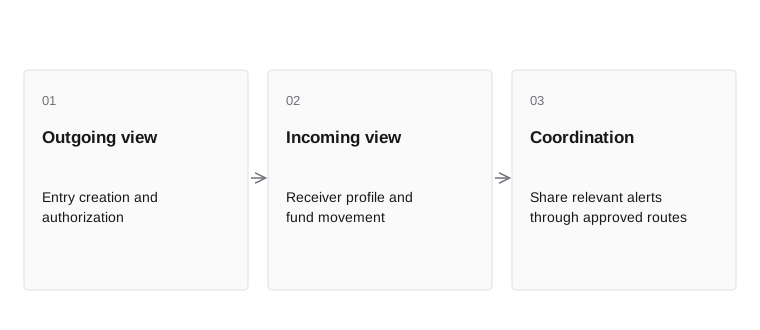
- Outgoing viewEntry creation and authorization
- Incoming viewReceiver profile and fund movement
- CoordinationShare relevant alerts through approved routes
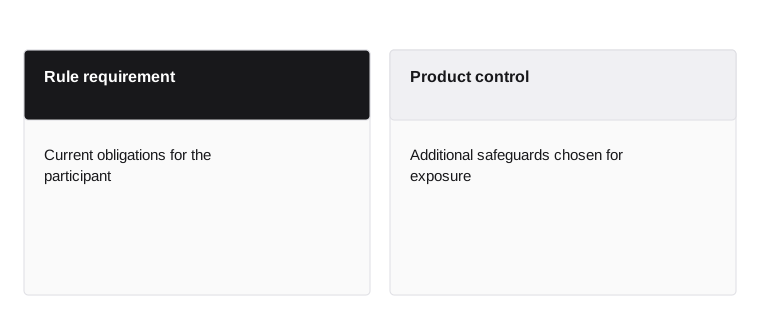
- Rule requirement
- Current obligations for the participant
- Product control
- Additional safeguards chosen for exposure
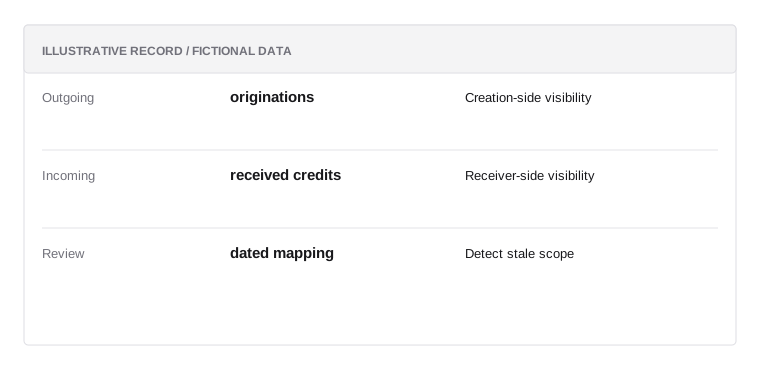
Monitoring coverage matrix
Illustrative data; not a real customer record or a prescribed policy.
- Outgoingoriginations
Creation-side visibility
- Incomingreceived credits
Receiver-side visibility
- Reviewdated mapping
Detect stale scope
Both sides observe different parts of the flow
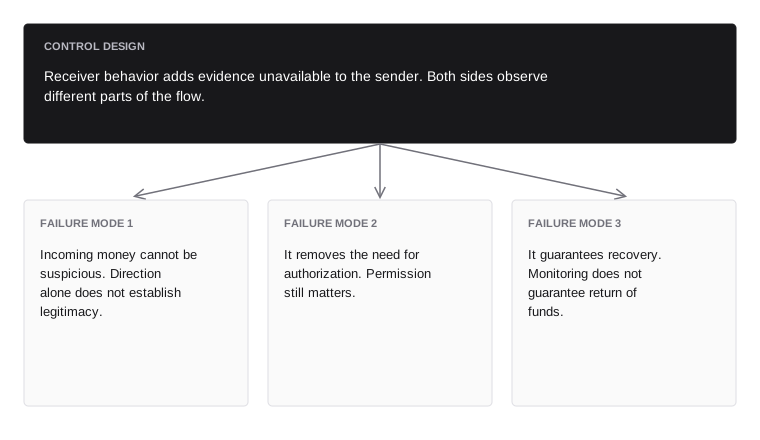
Receiver behavior adds evidence unavailable to the sender. Both sides observe different parts of the flow.
- Failure mode 1avoid
- Incoming money cannot be suspicious. Direction alone does not establish legitimacy.
- Failure mode 2avoid
- It removes the need for authorization. Permission still matters.
- Failure mode 3avoid
- It guarantees recovery. Monitoring does not guarantee return of funds.
Chapter connections
This chapter builds on Cards, authorization, and disputes. Continue with Instant payments and cross-border transfers to follow the next part of the system. Use the glossary for terminology and risk mathematics for formulas and worked calculations.