Unit 04 · Chapter 4 · 10 min read

Transaction monitoring and alert quality

Design scenarios that connect a risk hypothesis to evidence.

The monitoring rule has a name, a threshold, and an owner. It still does not have a reason to exist. A useful scenario begins with a risk hypothesis and ends with a review that can change a decision.

Write the hypothesis before the rule

A monitoring scenario should explain the activity of concern, the covered population, the evidence used, and the action an alert enables. Start with the risk assessment. A rule copied from another business may monitor a pattern that is normal in yours.

Keep the scenario rationale separate from implementation details. The rationale might concern unexplained movement inconsistent with a customer’s business. The implementation uses defined features and windows to find candidates. If the data cannot support the hypothesis, improve the data or narrow the claim. Do not make the threshold carry meaning it does not have.

A monitoring hypothesis explains what pattern could matter and why. It identifies the activity, the relevant customer population, the observation window, and the evidence needed for review. The rule is one implementation of that hypothesis. A threshold without the underlying explanation is difficult to tune because a change in alert count does not reveal whether the intended coverage improved.

Suppose a scenario looks for activity inconsistent with a newly opened business profile. The engineer must define what counts as the start of the relationship, how profile changes enter the calculation, and how late events affect the window. The investigator must know which facts caused the alert and which expected information is absent. Both roles depend on a shared, testable definition.
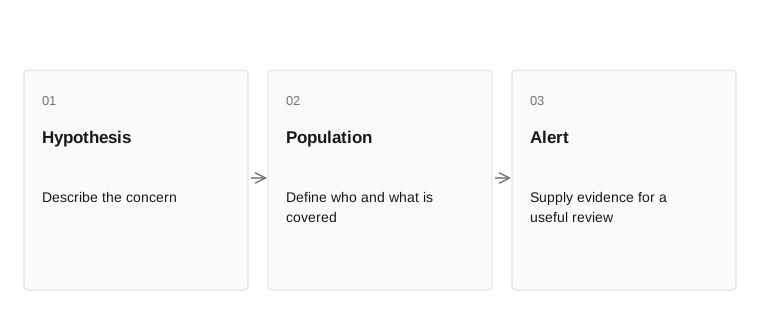
Write the hypothesis before the rule — the flow
Write the hypothesis before the rule Write the hypothesis before the rule — the flow Follow the sequence. Supply evidence for a useful review. Hypothesis Describe the concern Population Define who and what is covered Alert Supply evidence for a useful review
  1. HypothesisDescribe the concern
  2. PopulationDefine who and what is covered
  3. AlertSupply evidence for a useful review
Follow the sequence. Supply evidence for a useful review. Chapter sources · Open image
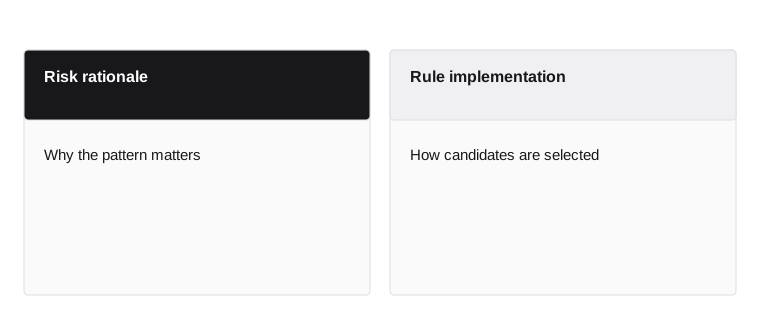
Write the hypothesis before the rule — the distinction
Write the hypothesis before the rule Write the hypothesis before the rule — the distinction These concepts answer different questions. Read each definition in the context of the section. Risk rationale Why the pattern matters Rule implementation How candidates are selected
Risk rationale
  • Why the pattern matters
Rule implementation
  • How candidates are selected
These concepts answer different questions. Read each definition in the context of the section. Chapter sources · Open image
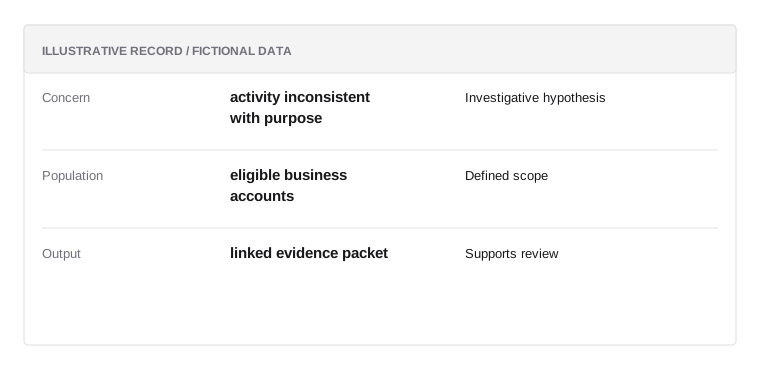
Scenario record
Write the hypothesis before the rule Scenario record Fictional teaching record. Supports review. Scenario record Illustrative data; not a real customer record or a prescribed policy. Concern activity inconsistent with purpose Investigative hypothesis Population eligible business accounts Defined scope Output linked evidence packet Supports review An unexplained threshold is hard to evaluate
Fictional educational excerpt / Not for execution

Scenario record

Illustrative data; not a real customer record or a prescribed policy.

  1. Concernactivity inconsistent with purpose

    Investigative hypothesis

  2. Populationeligible business accounts

    Defined scope

  3. Outputlinked evidence packet

    Supports review

An unexplained threshold is hard to evaluate

Fictional teaching record. Supports review. Chapter sources · Open image
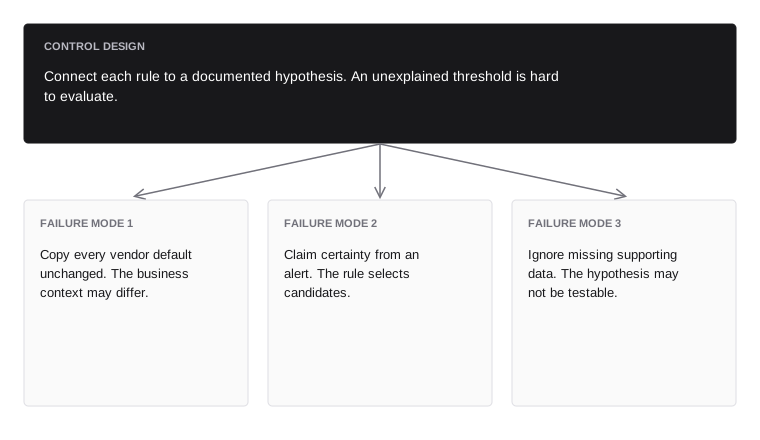
Write the hypothesis before the rule — control and failure modes
Write the hypothesis before the rule Write the hypothesis before the rule — control and failure modes An unexplained threshold is hard to evaluate. The branches show why alternative designs fail. Control design Connect each rule to a documented hypothesis. An unexplained threshold is hard to evaluate. Failure mode 1 Copy every vendor default unchanged. The business context may differ. avoid Failure mode 2 Claim certainty from an alert. The rule selects candidates. avoid Failure mode 3 Ignore missing supporting data. The hypothesis may not be testable. avoid
Control design

Connect each rule to a documented hypothesis. An unexplained threshold is hard to evaluate.

Failure mode 1avoid
Copy every vendor default unchanged. The business context may differ.
Failure mode 2avoid
Claim certainty from an alert. The rule selects candidates.
Failure mode 3avoid
Ignore missing supporting data. The hypothesis may not be testable.
An unexplained threshold is hard to evaluate. The branches show why alternative designs fail. Chapter sources · Open image

Segment for meaningful comparison

A peer group should make activity comparisons more meaningful. Product, business type, account age, and expected use can all matter. Too broad a segment creates noise; too narrow a segment produces unstable estimates and can hide unusual behavior.

Document the segmentation logic and minimum evidence needed. Evaluate whether a customer can move between segments and how that affects monitoring. Avoid creating a low-scrutiny segment merely because it generates fewer alerts. Compare coverage and outcomes, and investigate whether the segmentation removes the very pattern the program needs to see.
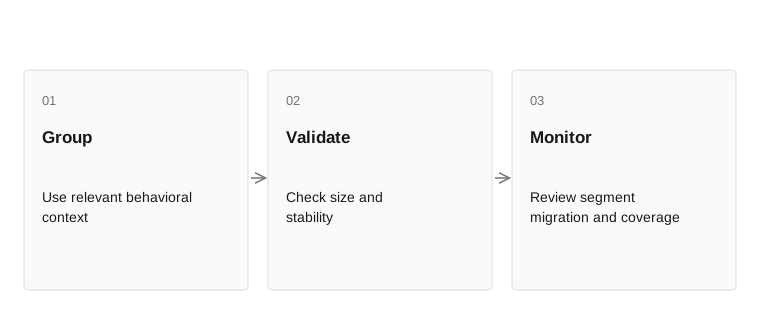
Segment for meaningful comparison — the flow
Segment for meaningful comparison Segment for meaningful comparison — the flow Follow the sequence. Review segment migration and coverage. Group Use relevant behavioral context Validate Check size and stability Monitor Review segment migration and coverage
  1. GroupUse relevant behavioral context
  2. ValidateCheck size and stability
  3. MonitorReview segment migration and coverage
Follow the sequence. Review segment migration and coverage. Chapter sources · Open image
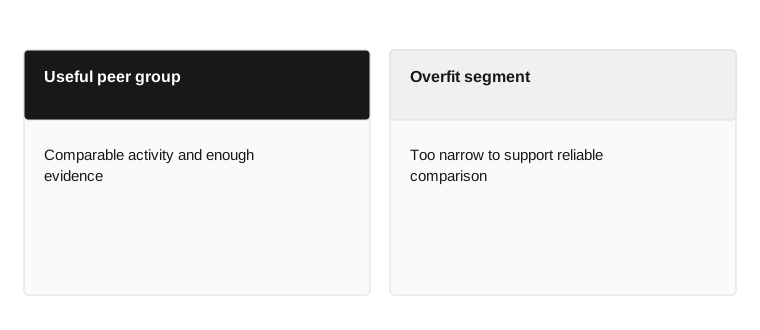
Segment for meaningful comparison — the distinction
Segment for meaningful comparison Segment for meaningful comparison — the distinction These concepts answer different questions. Read each definition in the context of the section. Useful peer group Comparable activity and enough evidence Overfit segment Too narrow to support reliable comparison
Useful peer group
  • Comparable activity and enough evidence
Overfit segment
  • Too narrow to support reliable comparison
These concepts answer different questions. Read each definition in the context of the section. Chapter sources · Open image
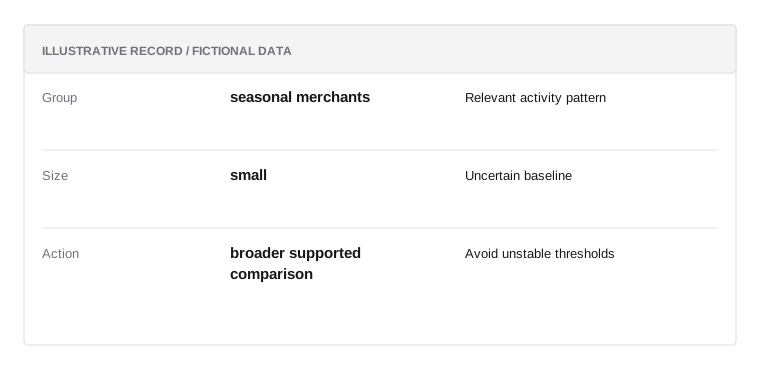
Segment design
Segment for meaningful comparison Segment design Fictional teaching record. Avoid unstable thresholds. Segment design Illustrative data; not a real customer record or a prescribed policy. Group seasonal merchants Relevant activity pattern Size small Uncertain baseline Action broader supported comparison Avoid unstable thresholds Small groups can produce unreliable baselines
Fictional educational excerpt / Not for execution

Segment design

Illustrative data; not a real customer record or a prescribed policy.

  1. Groupseasonal merchants

    Relevant activity pattern

  2. Sizesmall

    Uncertain baseline

  3. Actionbroader supported comparison

    Avoid unstable thresholds

Small groups can produce unreliable baselines

Fictional teaching record. Avoid unstable thresholds. Chapter sources · Open image
Segment for meaningful comparison — control and failure modes
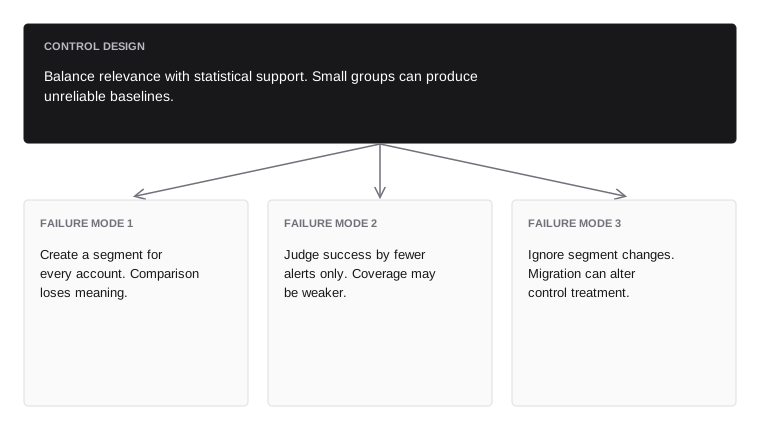
Segment for meaningful comparison Segment for meaningful comparison — control and failure modes Small groups can produce unreliable baselines. The branches show why alternative designs fail. Control design Balance relevance with statistical support. Small groups can produce unreliable baselines. Failure mode 1 Create a segment for every account. Comparison loses meaning. avoid Failure mode 2 Judge success by fewer alerts only. Coverage may be weaker. avoid Failure mode 3 Ignore segment changes. Migration can alter control treatment. avoid
Control design

Balance relevance with statistical support. Small groups can produce unreliable baselines.

Failure mode 1avoid
Create a segment for every account. Comparison loses meaning.
Failure mode 2avoid
Judge success by fewer alerts only. Coverage may be weaker.
Failure mode 3avoid
Ignore segment changes. Migration can alter control treatment.
Small groups can produce unreliable baselines. The branches show why alternative designs fail. Chapter sources · Open image

Deduplicate alerts without losing evidence

Several rules can detect the same underlying activity. Group related alerts into a coherent case when appropriate, but preserve the original triggers and evidence. Deduplication should reduce repeated work, not erase distinct concerns.

Use entity, event, time, and scenario relationships to define grouping. An account can have two unrelated issues in the same day. A single case may also involve several accounts. Make grouping reversible and visible. Analysts should know whether a new signal extends an existing investigation or requires a new line of inquiry.
Deduplicate alerts without losing evidence — the flow
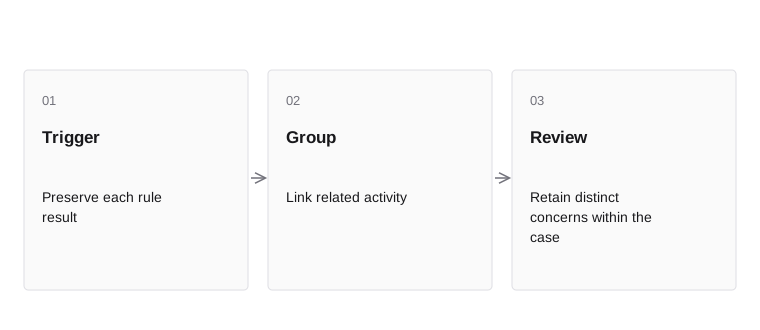
Deduplicate alerts without losing evidence Deduplicate alerts without losing evidence — the flow Follow the sequence. Retain distinct concerns within the case. Trigger Preserve each rule result Group Link related activity Review Retain distinct concerns within the case
  1. TriggerPreserve each rule result
  2. GroupLink related activity
  3. ReviewRetain distinct concerns within the case
Follow the sequence. Retain distinct concerns within the case. Chapter sources · Open image
Deduplicate alerts without losing evidence — the distinction
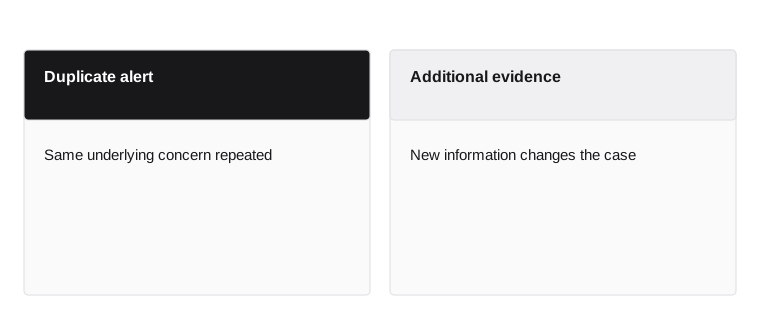
Deduplicate alerts without losing evidence Deduplicate alerts without losing evidence — the distinction These concepts answer different questions. Read each definition in the context of the section. Duplicate alert Same underlying concern repeated Additional evidence New information changes the case
Duplicate alert
  • Same underlying concern repeated
Additional evidence
  • New information changes the case
These concepts answer different questions. Read each definition in the context of the section. Chapter sources · Open image
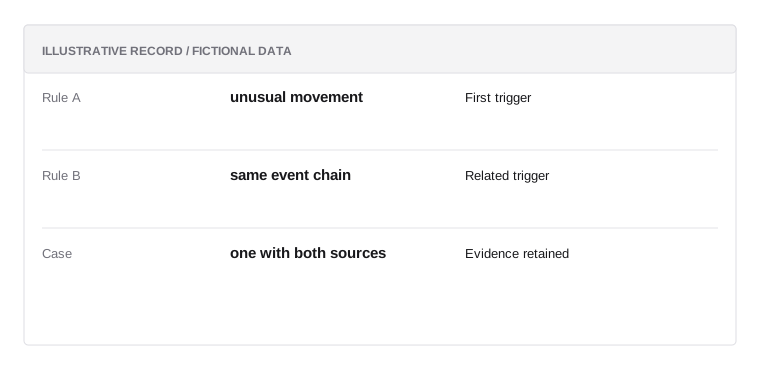
Alert grouping
Deduplicate alerts without losing evidence Alert grouping Fictional teaching record. Evidence retained. Alert grouping Illustrative data; not a real customer record or a prescribed policy. Rule A unusual movement First trigger Rule B same event chain Related trigger Case one with both sources Evidence retained Efficiency should not remove evidence
Fictional educational excerpt / Not for execution

Alert grouping

Illustrative data; not a real customer record or a prescribed policy.

  1. Rule Aunusual movement

    First trigger

  2. Rule Bsame event chain

    Related trigger

  3. Caseone with both sources

    Evidence retained

Efficiency should not remove evidence

Fictional teaching record. Evidence retained. Chapter sources · Open image
Deduplicate alerts without losing evidence — control and failure modes
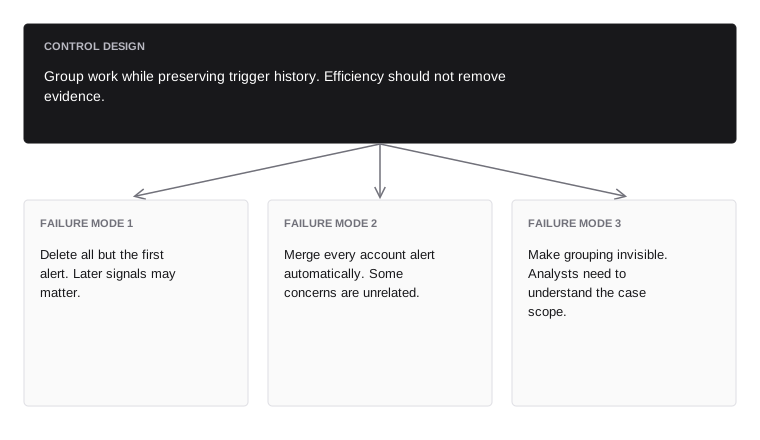
Deduplicate alerts without losing evidence Deduplicate alerts without losing evidence — control and failure modes Efficiency should not remove evidence. The branches show why alternative designs fail. Control design Group work while preserving trigger history. Efficiency should not remove evidence. Failure mode 1 Delete all but the first alert. Later signals may matter. avoid Failure mode 2 Merge every account alert automatically. Some concerns are unrelated. avoid Failure mode 3 Make grouping invisible. Analysts need to understand the case scope. avoid
Control design

Group work while preserving trigger history. Efficiency should not remove evidence.

Failure mode 1avoid
Delete all but the first alert. Later signals may matter.
Failure mode 2avoid
Merge every account alert automatically. Some concerns are unrelated.
Failure mode 3avoid
Make grouping invisible. Analysts need to understand the case scope.
Efficiency should not remove evidence. The branches show why alternative designs fail. Chapter sources · Open image

Tune with outcomes and coverage

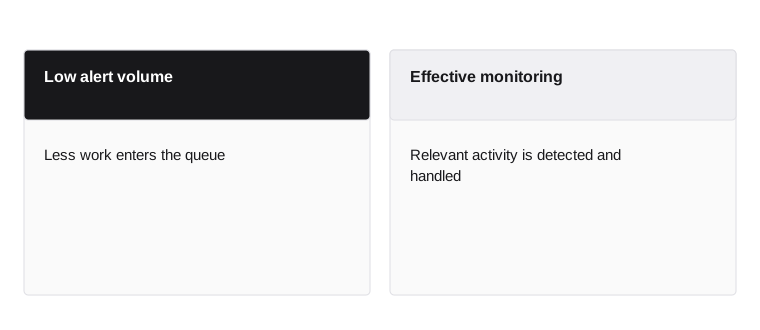
Alert volume is a workload measure, not a direct measure of effectiveness. Review yield, investigation quality, known missed cases, coverage, and customer impact. A high closure rate can mean good triage or superficial review.

Use labeled examples carefully because prior policies shape what was investigated. Sample below-threshold and otherwise unalerted activity where appropriate to assess blind spots. Document tuning changes and their expected effects. Do not lower sensitivity solely to fit today’s staffing. If capacity is inadequate, make the risk and resource decision explicit.

Low alert yield does not automatically mean a control is useless, and high yield does not prove complete coverage. A narrow rule can produce convincing cases while missing a large unobserved population. Review quality, known-event coverage, data completeness, and scenario purpose alongside case outcomes. When a rule is retired or reduced, record which other control covers the exposure or which residual risk is accepted by the appropriate owner. Fewer alerts is a workload result; it becomes a risk result only with evidence about what changed.
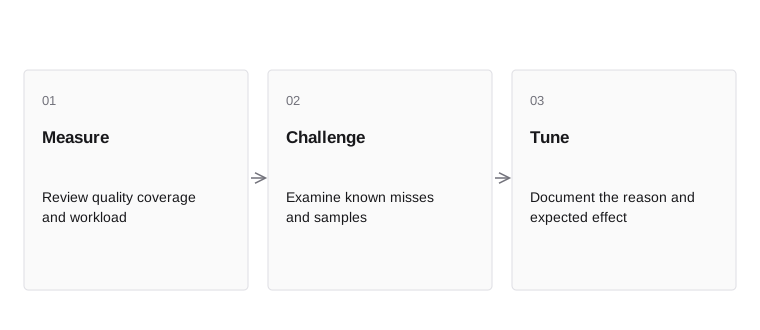
Tune with outcomes and coverage — the flow
Tune with outcomes and coverage Tune with outcomes and coverage — the flow Follow the sequence. Document the reason and expected effect. Measure Review quality coverage and workload Challenge Examine known misses and samples Tune Document the reason and expected effect
  1. MeasureReview quality coverage and workload
  2. ChallengeExamine known misses and samples
  3. TuneDocument the reason and expected effect
Follow the sequence. Document the reason and expected effect. Chapter sources · Open image
Tune with outcomes and coverage — the distinction
Tune with outcomes and coverage Tune with outcomes and coverage — the distinction These concepts answer different questions. Read each definition in the context of the section. Low alert volume Less work enters the queue Effective monitoring Relevant activity is detected and handled
Low alert volume
  • Less work enters the queue
Effective monitoring
  • Relevant activity is detected and handled
These concepts answer different questions. Read each definition in the context of the section. Chapter sources · Open image
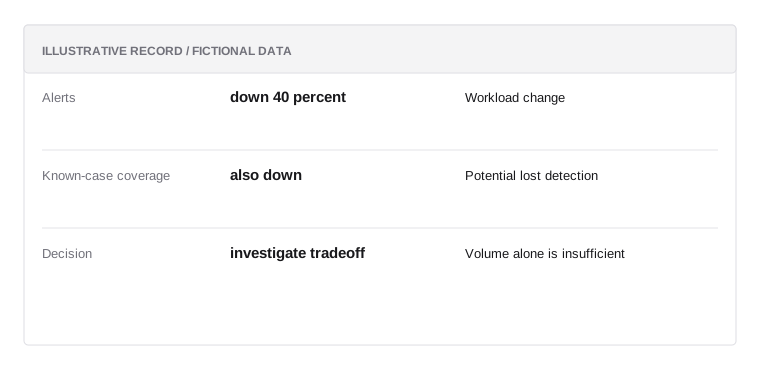
Tuning review
Tune with outcomes and coverage Tuning review Fictional teaching record. Volume alone is insufficient. Tuning review Illustrative data; not a real customer record or a prescribed policy. Alerts down 40 percent Workload change Known-case coverage also down Potential lost detection Decision investigate tradeoff Volume alone is insufficient Fewer alerts can mean worse coverage
Fictional educational excerpt / Not for execution

Tuning review

Illustrative data; not a real customer record or a prescribed policy.

  1. Alertsdown 40 percent

    Workload change

  2. Known-case coveragealso down

    Potential lost detection

  3. Decisioninvestigate tradeoff

    Volume alone is insufficient

Fewer alerts can mean worse coverage

Fictional teaching record. Volume alone is insufficient. Chapter sources · Open image
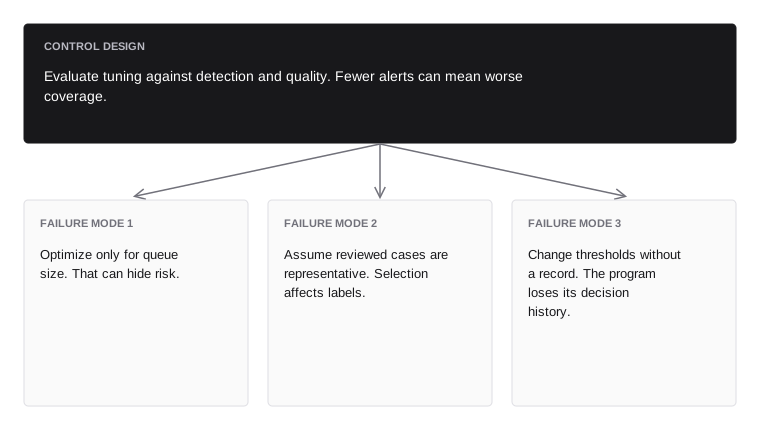
Tune with outcomes and coverage — control and failure modes
Tune with outcomes and coverage Tune with outcomes and coverage — control and failure modes Fewer alerts can mean worse coverage. The branches show why alternative designs fail. Control design Evaluate tuning against detection and quality. Fewer alerts can mean worse coverage. Failure mode 1 Optimize only for queue size. That can hide risk. avoid Failure mode 2 Assume reviewed cases are representative. Selection affects labels. avoid Failure mode 3 Change thresholds without a record. The program loses its decision history. avoid
Control design

Evaluate tuning against detection and quality. Fewer alerts can mean worse coverage.

Failure mode 1avoid
Optimize only for queue size. That can hide risk.
Failure mode 2avoid
Assume reviewed cases are representative. Selection affects labels.
Failure mode 3avoid
Change thresholds without a record. The program loses its decision history.
Fewer alerts can mean worse coverage. The branches show why alternative designs fail. Chapter sources · Open image

Test end-to-end delivery

A scenario can calculate correctly and still fail if alerts never reach reviewers. Test ingestion, feature construction, rule execution, queue creation, assignment, and disposition. Use controlled synthetic events that represent the intended patterns without exposing real customer information.

Track expected counts at each boundary and reconcile them. A queue outage should create a visible operational incident with preserved events for replay. Replaying must not duplicate cases or lose the original event times. The monitoring system needs the same reliability discipline as a money-moving service.
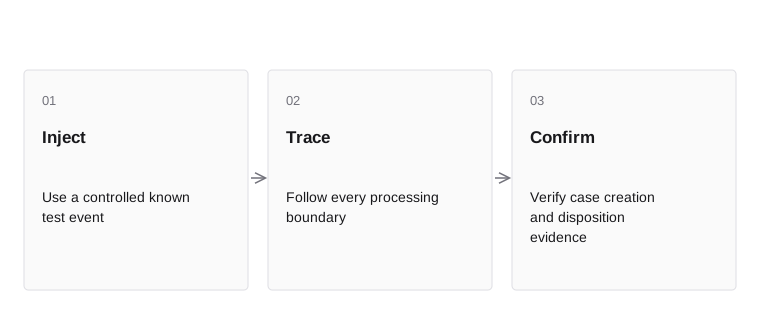
Test end-to-end delivery — the flow
Test end-to-end delivery Test end-to-end delivery — the flow Follow the sequence. Verify case creation and disposition evidence. Inject Use a controlled known test event Trace Follow every processing boundary Confirm Verify case creation and disposition evidence
  1. InjectUse a controlled known test event
  2. TraceFollow every processing boundary
  3. ConfirmVerify case creation and disposition evidence
Follow the sequence. Verify case creation and disposition evidence. Chapter sources · Open image
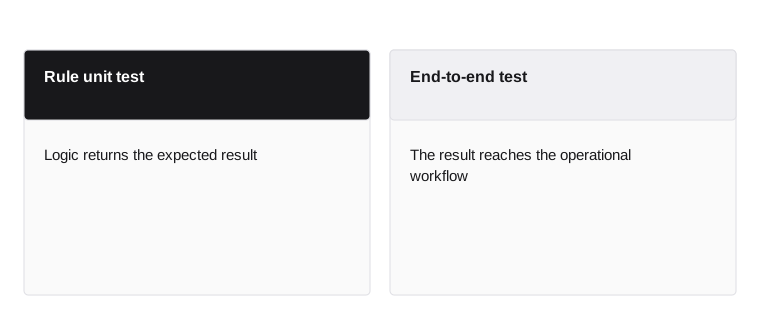
Test end-to-end delivery — the distinction
Test end-to-end delivery Test end-to-end delivery — the distinction These concepts answer different questions. Read each definition in the context of the section. Rule unit test Logic returns the expected result End-to-end test The result reaches the operational workflow
Rule unit test
  • Logic returns the expected result
End-to-end test
  • The result reaches the operational workflow
These concepts answer different questions. Read each definition in the context of the section. Chapter sources · Open image
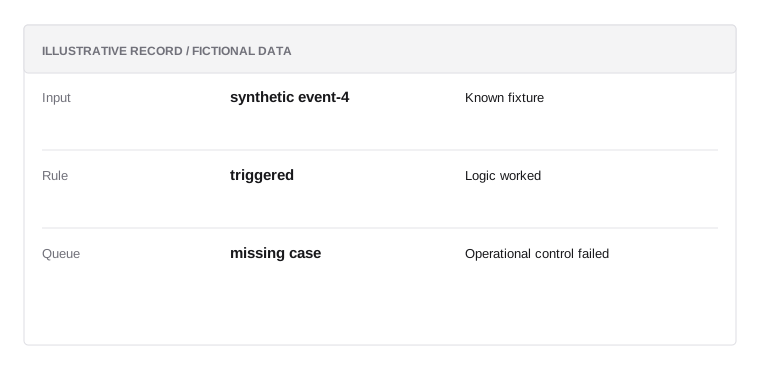
Pipeline test
Test end-to-end delivery Pipeline test Fictional teaching record. Operational control failed. Pipeline test Illustrative data; not a real customer record or a prescribed policy. Input synthetic event-4 Known fixture Rule triggered Logic worked Queue missing case Operational control failed Detection is incomplete if no one receives it
Fictional educational excerpt / Not for execution

Pipeline test

Illustrative data; not a real customer record or a prescribed policy.

  1. Inputsynthetic event-4

    Known fixture

  2. Ruletriggered

    Logic worked

  3. Queuemissing case

    Operational control failed

Detection is incomplete if no one receives it

Fictional teaching record. Operational control failed. Chapter sources · Open image
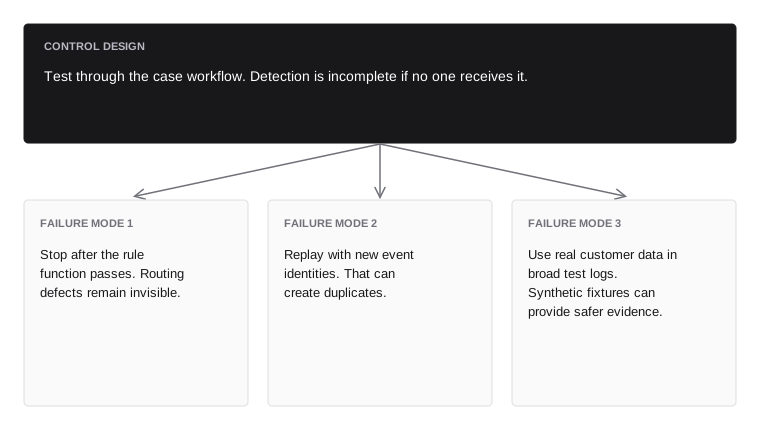
Test end-to-end delivery — control and failure modes
Test end-to-end delivery Test end-to-end delivery — control and failure modes Detection is incomplete if no one receives it. The branches show why alternative designs fail. Control design Test through the case workflow. Detection is incomplete if no one receives it. Failure mode 1 Stop after the rule function passes. Routing defects remain invisible. avoid Failure mode 2 Replay with new event identities. That can create duplicates. avoid Failure mode 3 Use real customer data in broad test logs. Synthetic fixtures can provide safer evidence. avoid
Control design

Test through the case workflow. Detection is incomplete if no one receives it.

Failure mode 1avoid
Stop after the rule function passes. Routing defects remain invisible.
Failure mode 2avoid
Replay with new event identities. That can create duplicates.
Failure mode 3avoid
Use real customer data in broad test logs. Synthetic fixtures can provide safer evidence.
Detection is incomplete if no one receives it. The branches show why alternative designs fail. Chapter sources · Open image

Chapter connections

This chapter builds on Entity resolution and financial networks. Continue with Investigations, reporting, and confidentiality to follow the next part of the system. Use the glossary for terminology and risk mathematics for formulas and worked calculations.

Sources

Reviewed 2026-09-17
  1. FFIEC: suspicious activity reporting
  2. FATF Recommendations: international standards