Account takeover and account recovery
Protect high-impact actions across the entire account lifecycle.
The attacker does not break the front door. They persuade the help desk to reset the lock. Account security is only as strong as the recovery path, the active sessions, and the actions allowed after a reset.
Map the takeover chain
Account takeover is unauthorized control of an existing account. The chain can include stolen credentials, compromised recovery channels, active sessions, changed contact details, and a new payout destination. Detecting only login anomalies leaves the rest of the chain unobserved.
Create events for enrollment, credential changes, recovery, session creation, payee changes, and money movement. Link them by account and time. A new device followed by a password reset and immediate withdrawal is more informative than any single event alone. Avoid turning this into a universal ban on new devices; legitimate customers replace phones too.
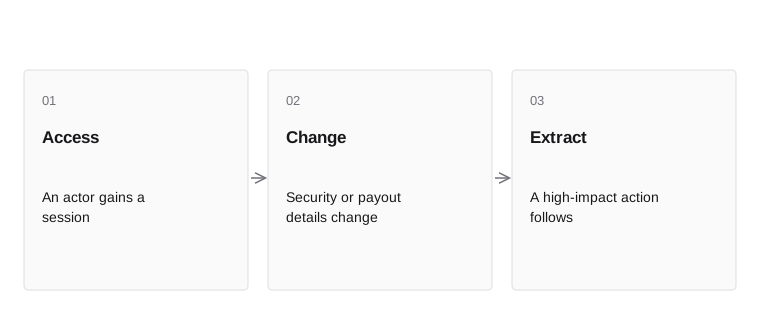
- AccessAn actor gains a session
- ChangeSecurity or payout details change
- ExtractA high-impact action follows
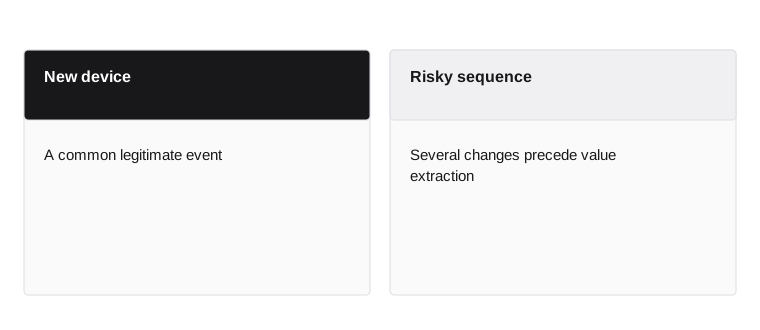
- New device
- A common legitimate event
- Risky sequence
- Several changes precede value extraction
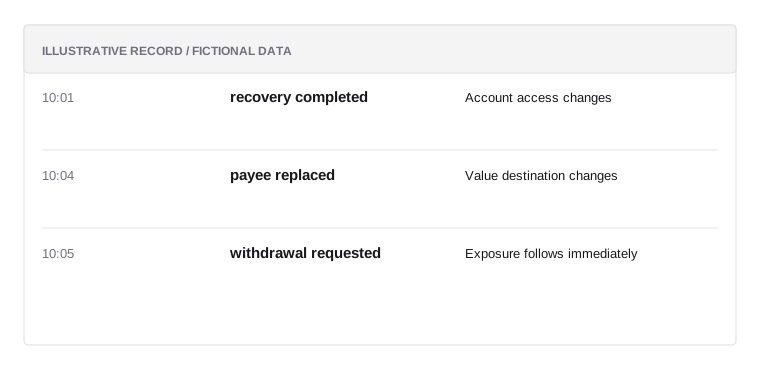
Takeover timeline
Illustrative data; not a real customer record or a prescribed policy.
- 10:01recovery completed
Account access changes
- 10:04payee replaced
Value destination changes
- 10:05withdrawal requested
Exposure follows immediately
Connected events give stronger context
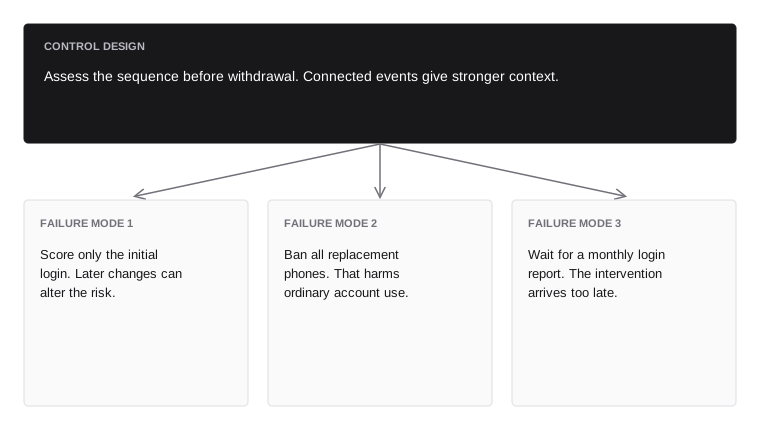
Assess the sequence before withdrawal. Connected events give stronger context.
- Failure mode 1avoid
- Score only the initial login. Later changes can alter the risk.
- Failure mode 2avoid
- Ban all replacement phones. That harms ordinary account use.
- Failure mode 3avoid
- Wait for a monthly login report. The intervention arrives too late.
Use strong authentication with scope
Authenticators differ in resistance to phishing and replay. Select controls according to the action and the threat model. A stronger method for a payout change can be justified even when a lower-risk read action uses a normal session.
Bind confirmation to the actual action where possible. A generic approval prompt may not tell the customer which destination or amount is being approved. Store the action reference and authentication context together. Do not describe any single method as eliminating fraud: session theft, device compromise, and manipulation can remain relevant. Good security includes understandable prompts and a usable recovery path.
Authentication proves a particular relationship between a claimant and an authenticator under a defined protocol. It does not establish that every later instruction reflects the account owner’s informed intent. A person can authenticate successfully while being deceived into approving a payment. A stolen session can also let an attacker act after the original authentication ceremony has ended.
Bind additional controls to the sensitive action. Changing a payout destination, creating a new administrator, and viewing a receipt have different consequences. A useful design can require fresh evidence for the first two while allowing routine low-risk work to continue. The evidence should be tied to the operation and its relevant details, so an approval for one action cannot be casually reused for another.
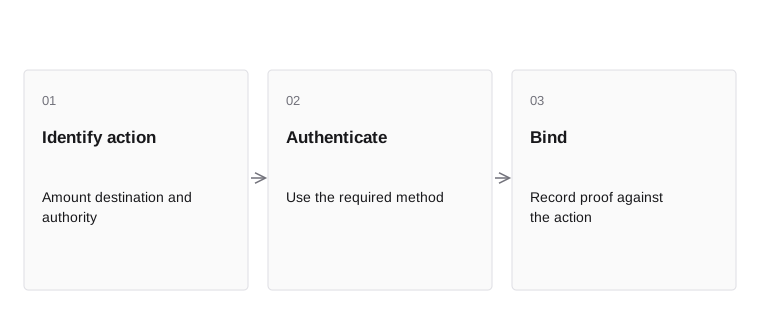
- Identify actionAmount destination and authority
- AuthenticateUse the required method
- BindRecord proof against the action
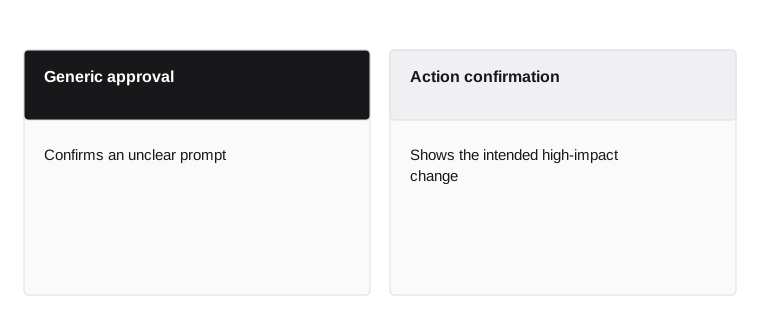
- Generic approval
- Confirms an unclear prompt
- Action confirmation
- Shows the intended high-impact change
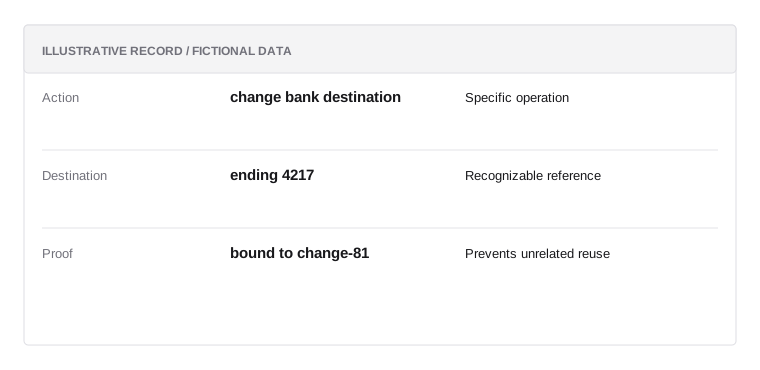
Payout confirmation
Illustrative data; not a real customer record or a prescribed policy.
- Actionchange bank destination
Specific operation
- Destinationending 4217
Recognizable reference
- Proofbound to change-81
Prevents unrelated reuse
The evidence should authorize this operation
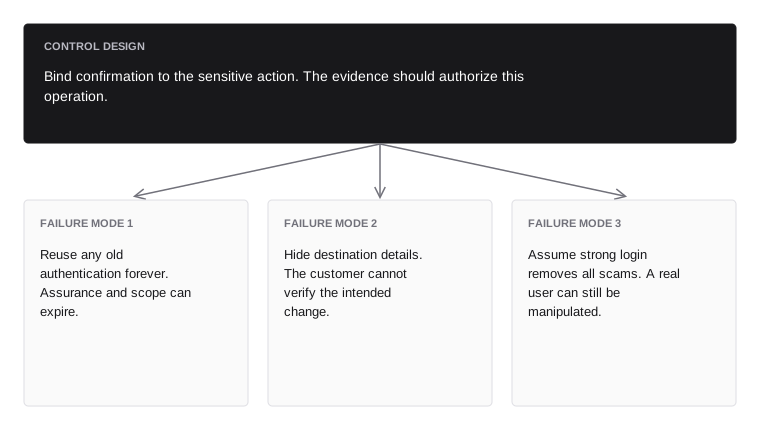
Bind confirmation to the sensitive action. The evidence should authorize this operation.
- Failure mode 1avoid
- Reuse any old authentication forever. Assurance and scope can expire.
- Failure mode 2avoid
- Hide destination details. The customer cannot verify the intended change.
- Failure mode 3avoid
- Assume strong login removes all scams. A real user can still be manipulated.
Treat recovery as a privileged flow
Recovery can replace the credentials that protect every other action. It therefore deserves its own threat model, evidence requirements, and audit trail. A support agent should not improvise proofing questions from public information.
Define which changes invalidate sessions, which trigger notifications through established channels, and which require a temporary restriction on high-impact actions. Recovery restrictions need clear expiry and escalation routes. Otherwise, a customer who lost a phone can become trapped. Measure account restoration success and subsequent loss together so security and access are evaluated as one system.
Recovery deserves the same engineering attention as login. A support agent may see an urgent customer story, while an attacker sees a route around the strongest authenticator. Define which evidence can restore which privileges, when another person must approve a change, and how the genuine customer is informed through a reliable channel. Record the old and new authority, not merely that a ticket was closed. Recovery success means restoring appropriate access without transferring control to the wrong person.
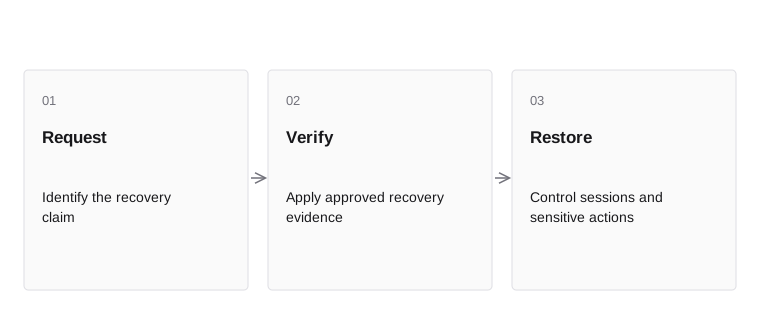
- RequestIdentify the recovery claim
- VerifyApply approved recovery evidence
- RestoreControl sessions and sensitive actions
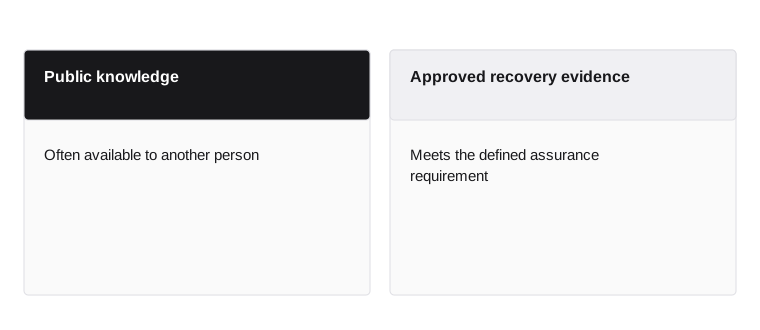
- Public knowledge
- Often available to another person
- Approved recovery evidence
- Meets the defined assurance requirement
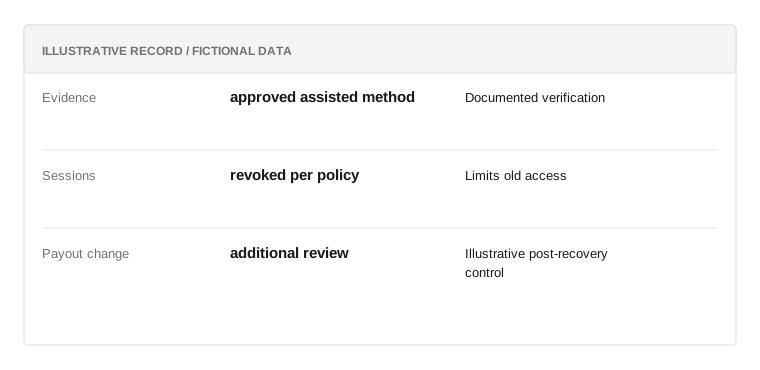
Recovery action record
Illustrative data; not a real customer record or a prescribed policy.
- Evidenceapproved assisted method
Documented verification
- Sessionsrevoked per policy
Limits old access
- Payout changeadditional review
Illustrative post-recovery control
Recovery must be secure and usable
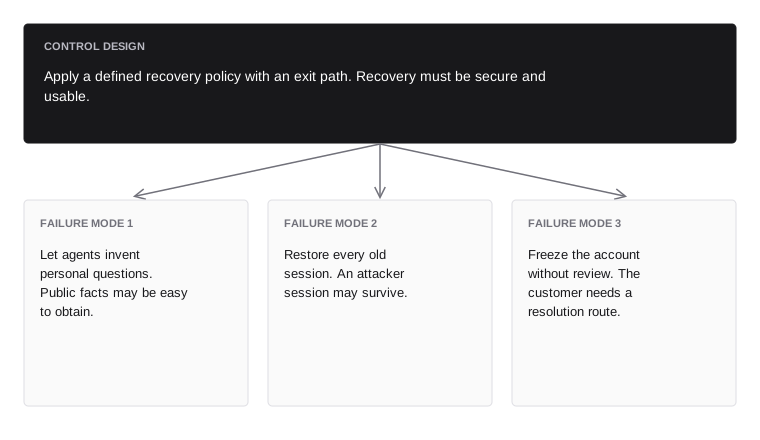
Apply a defined recovery policy with an exit path. Recovery must be secure and usable.
- Failure mode 1avoid
- Let agents invent personal questions. Public facts may be easy to obtain.
- Failure mode 2avoid
- Restore every old session. An attacker session may survive.
- Failure mode 3avoid
- Freeze the account without review. The customer needs a resolution route.
Manage sessions and authority
A valid session can outlive a changed password or a changed role unless the system explicitly handles revocation. Maintain session identifiers, creation time, assurance context, and authority scope. Sensitive actions should re-evaluate relevant permissions rather than trust a stale role snapshot indefinitely.
For business accounts, separate viewer, preparer, approver, and administrator permissions. Test role changes during active sessions. A former employee should not retain payout authority because a browser tab stayed open. Use server-side enforcement; hiding a button is a user-interface change, not an authorization control.
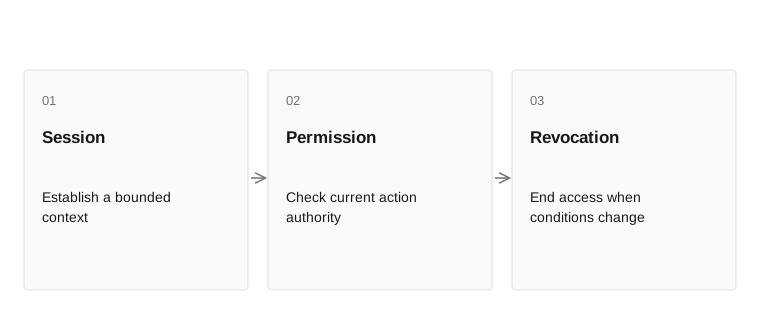
- SessionEstablish a bounded context
- PermissionCheck current action authority
- RevocationEnd access when conditions change
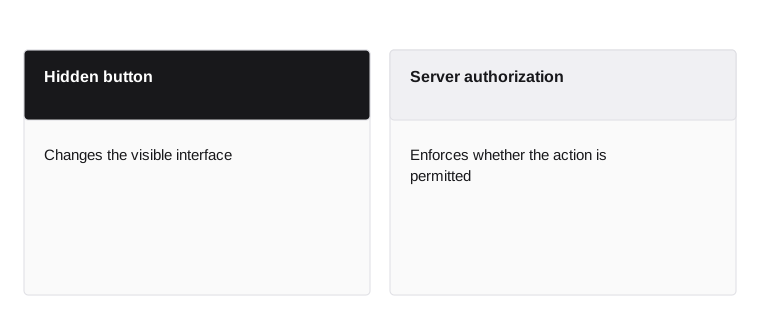
- Hidden button
- Changes the visible interface
- Server authorization
- Enforces whether the action is permitted
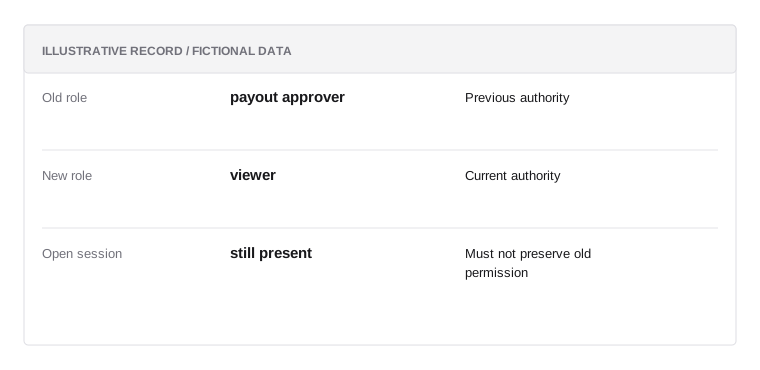
Role-change specimen
Illustrative data; not a real customer record or a prescribed policy.
- Old rolepayout approver
Previous authority
- New roleviewer
Current authority
- Open sessionstill present
Must not preserve old permission
An old session must not preserve removed rights
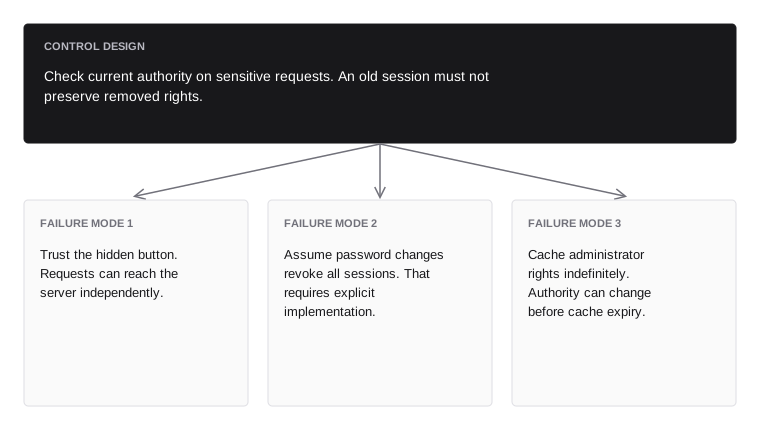
Check current authority on sensitive requests. An old session must not preserve removed rights.
- Failure mode 1avoid
- Trust the hidden button. Requests can reach the server independently.
- Failure mode 2avoid
- Assume password changes revoke all sessions. That requires explicit implementation.
- Failure mode 3avoid
- Cache administrator rights indefinitely. Authority can change before cache expiry.
Measure protection and customer cost
A takeover control can reduce loss while also locking out honest users. Measure both. Useful metrics include confirmed compromise rate, prevented high-impact actions, recovery time, false restrictions, and complaint patterns. Define how confirmation is obtained; a challenge failure alone is not proof of an attacker.
Review a sample of both allowed and restricted sessions. Otherwise, analysts see only the population the system already suspects. Separate friction caused by security policy from friction caused by broken integrations. A vendor outage that blocks every login should not appear as a successful fraud-prevention campaign.
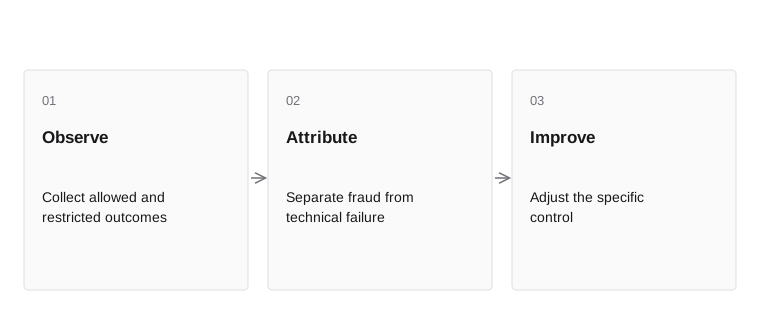
- ObserveCollect allowed and restricted outcomes
- AttributeSeparate fraud from technical failure
- ImproveAdjust the specific control
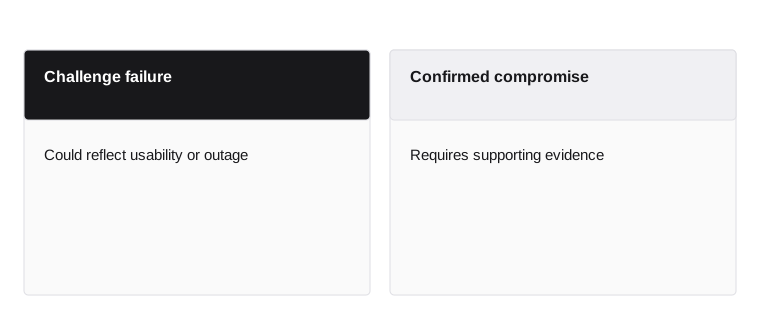
- Challenge failure
- Could reflect usability or outage
- Confirmed compromise
- Requires supporting evidence
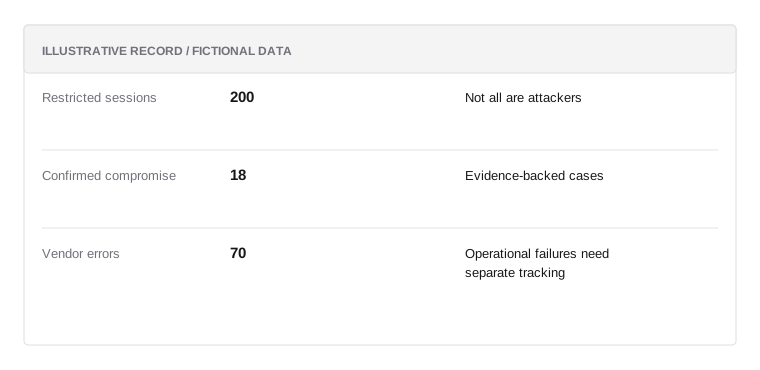
Control outcome report
Illustrative data; not a real customer record or a prescribed policy.
- Restricted sessions200
Not all are attackers
- Confirmed compromise18
Evidence-backed cases
- Vendor errors70
Operational failures need separate tracking
The system has more than one outcome
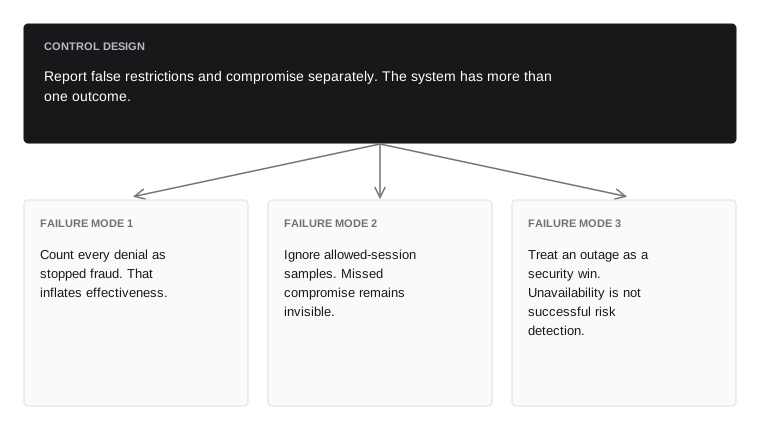
Report false restrictions and compromise separately. The system has more than one outcome.
- Failure mode 1avoid
- Count every denial as stopped fraud. That inflates effectiveness.
- Failure mode 2avoid
- Ignore allowed-session samples. Missed compromise remains invisible.
- Failure mode 3avoid
- Treat an outage as a security win. Unavailability is not successful risk detection.
Chapter connections
This chapter builds on Identity, credentials, and synthetic profiles. Continue with Transaction risk and decision economics to follow the next part of the system. Use the glossary for terminology and risk mathematics for formulas and worked calculations.