Case operations and human decisions
Make queues, evidence, authority, and service quality work together.
The dashboard shows 400 open cases. One is a routine document refresh. Another is an urgent request to stop a large transfer. A queue becomes a control only when it knows the difference.
Prioritize by consequence and time
Case priority should reflect potential harm, deadlines, intervention windows, and the evidence available. Arrival order alone can put an urgent case behind routine work. A large amount can matter, but so can a vulnerable customer or an imminent legal deadline.
Define priority rules and permitted overrides. Preserve the original arrival time and every reassignment. Monitor aging by case type and priority. A global average can hide a small set of dangerously old cases. The queue should make the next responsible action visible rather than merely sort records by a score.
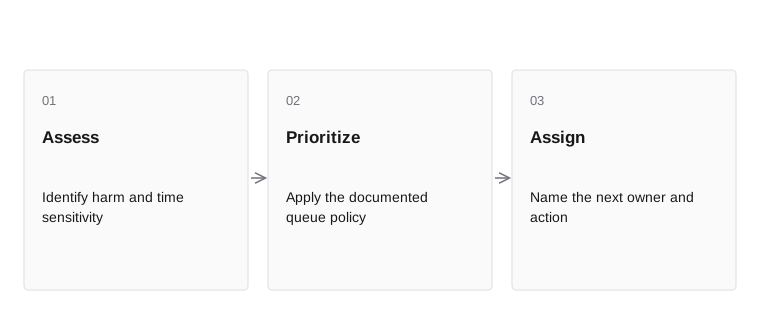
- AssessIdentify harm and time sensitivity
- PrioritizeApply the documented queue policy
- AssignName the next owner and action
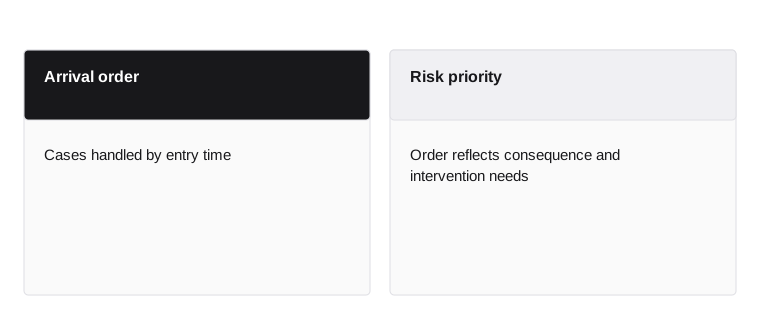
- Arrival order
- Cases handled by entry time
- Risk priority
- Order reflects consequence and intervention needs
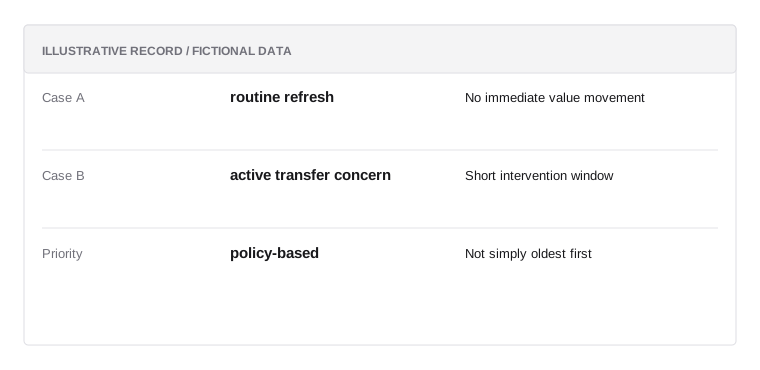
Queue comparison
Illustrative data; not a real customer record or a prescribed policy.
- Case Aroutine refresh
No immediate value movement
- Case Bactive transfer concern
Short intervention window
- Prioritypolicy-based
Not simply oldest first
Not all cases have the same urgency
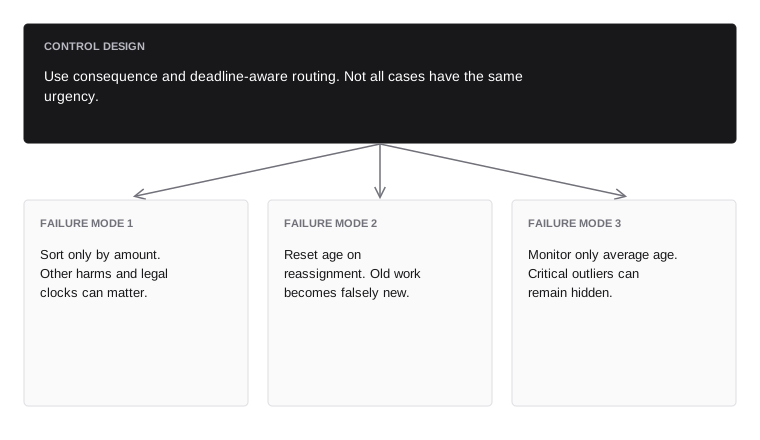
Use consequence and deadline-aware routing. Not all cases have the same urgency.
- Failure mode 1avoid
- Sort only by amount. Other harms and legal clocks can matter.
- Failure mode 2avoid
- Reset age on reassignment. Old work becomes falsely new.
- Failure mode 3avoid
- Monitor only average age. Critical outliers can remain hidden.
Give reviewers the evidence and authority
A reviewer needs the facts relevant to the decision, the applicable policy, and clear authority. Too little information creates guesswork; too much irrelevant data creates distraction and privacy exposure.
Design a case view that shows the timeline, disputed facts, source references, prior actions, and unresolved questions. Separate internal control details from approved customer language. Make escalation available when the reviewer lacks authority or evidence. A queue should not pressure analysts to choose a final label merely because the interface offers no pending state.
A reviewer needs both evidence and a defined authority to act. A case screen can show a payment history while omitting the current restriction or the fact that another team has already intervened. This creates duplicated work and conflicting customer messages. Present the relevant timeline, active controls, pending tasks, and reason for referral in one coherent view, with access limited to the reviewer’s role.
Decision options should have clear consequences. “Close case” can mean that no concern remains, that another team accepted ownership, or that the issue cannot be resolved with available evidence. These outcomes should not share an ambiguous status. A precise closure reason supports quality review and prevents downstream models from learning from a mixture of incompatible labels.
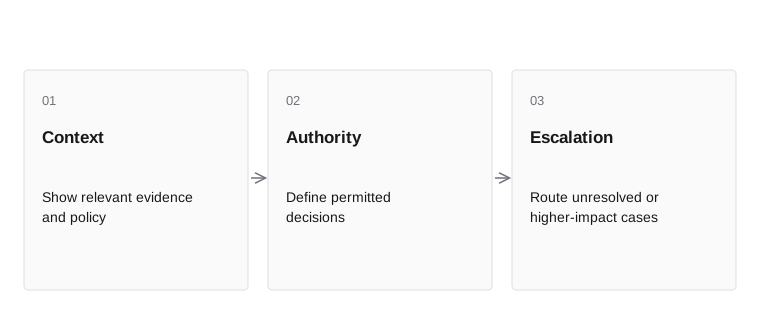
- ContextShow relevant evidence and policy
- AuthorityDefine permitted decisions
- EscalationRoute unresolved or higher-impact cases
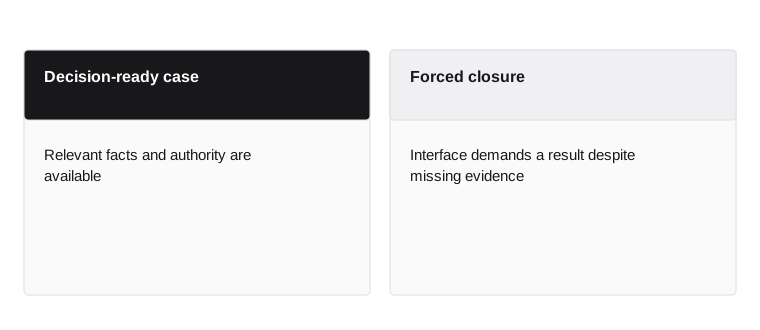
- Decision-ready case
- Relevant facts and authority are available
- Forced closure
- Interface demands a result despite missing evidence
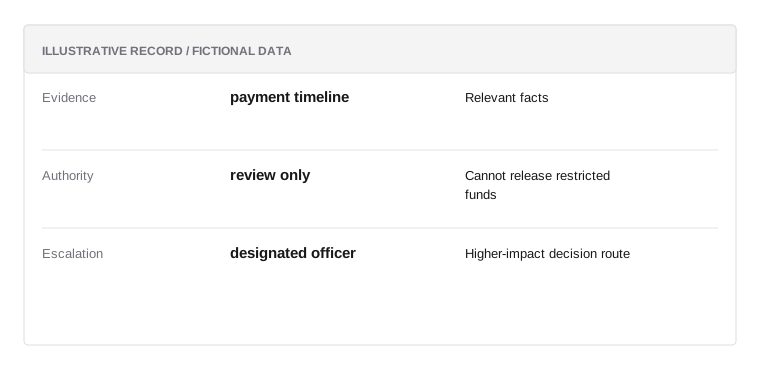
Reviewer workspace
Illustrative data; not a real customer record or a prescribed policy.
- Evidencepayment timeline
Relevant facts
- Authorityreview only
Cannot release restricted funds
- Escalationdesignated officer
Higher-impact decision route
Available buttons should match permitted actions
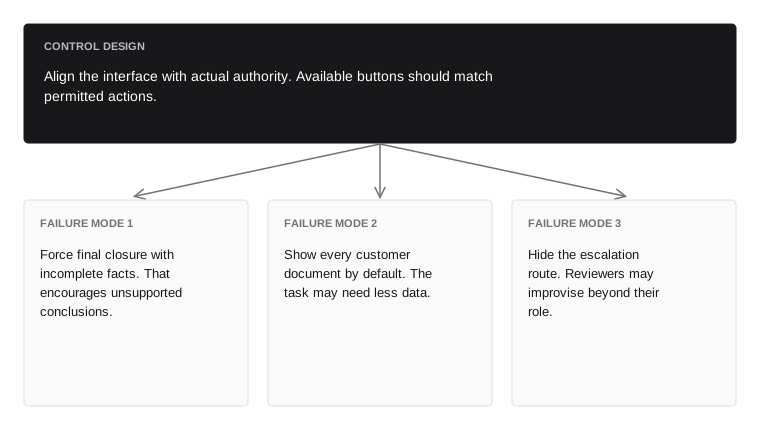
Align the interface with actual authority. Available buttons should match permitted actions.
- Failure mode 1avoid
- Force final closure with incomplete facts. That encourages unsupported conclusions.
- Failure mode 2avoid
- Show every customer document by default. The task may need less data.
- Failure mode 3avoid
- Hide the escalation route. Reviewers may improvise beyond their role.
Size capacity with queue arithmetic
In a stable system, Little’s Law relates average work in progress, arrival rate, and average time in the system: L equals lambda times W. The units must match, and the relation describes long-run averages under suitable conditions. It does not guarantee a deadline for every case.
If 60 cases arrive per hour and average time in the system is two hours, average work in progress is 120 cases. Service time differs from total elapsed time, which includes waiting. Plan capacity for peaks, complexity, breaks, quality review, and absence rather than assuming every analyst processes cases continuously.
Little’s Law connects average work in progress, arrival rate, and average time in a suitably stable system. It is not a guarantee that staffing equal to average demand will produce a short queue. Variable arrivals, different case durations, breaks, escalation work, and limited specialist capacity can create long waits. Measure the age distribution and service times as well as averages. A small urgent population can miss critical deadlines while the overall average appears healthy.
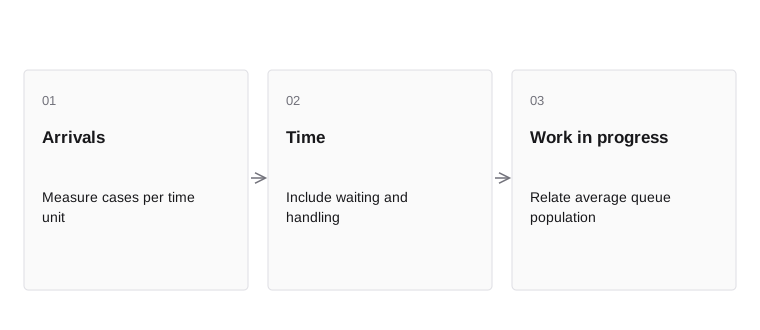
- ArrivalsMeasure cases per time unit
- TimeInclude waiting and handling
- Work in progressRelate average queue population
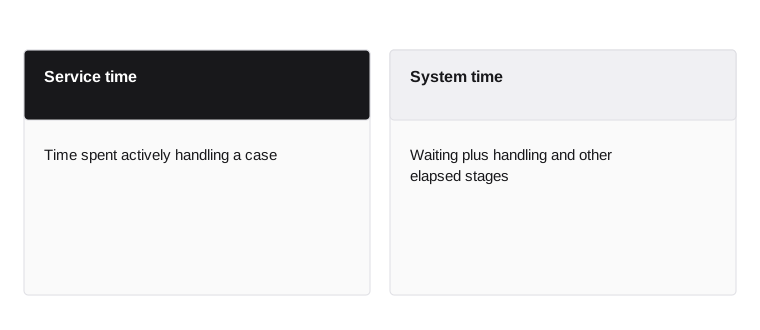
- Service time
- Time spent actively handling a case
- System time
- Waiting plus handling and other elapsed stages
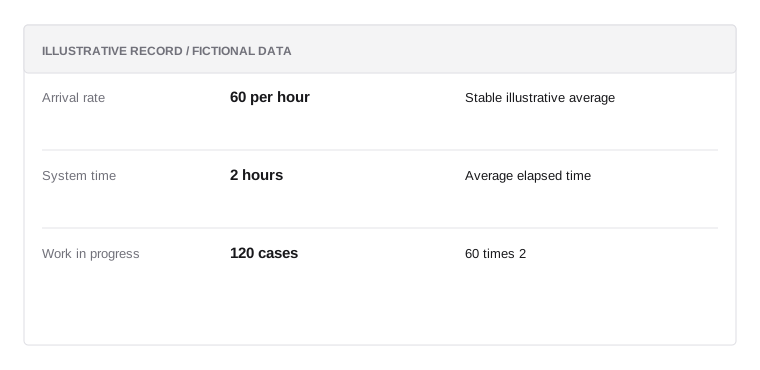
Queue example
Illustrative data; not a real customer record or a prescribed policy.
- Arrival rate60 per hour
Stable illustrative average
- System time2 hours
Average elapsed time
- Work in progress120 cases
60 times 2
Capacity math needs a clear time definition
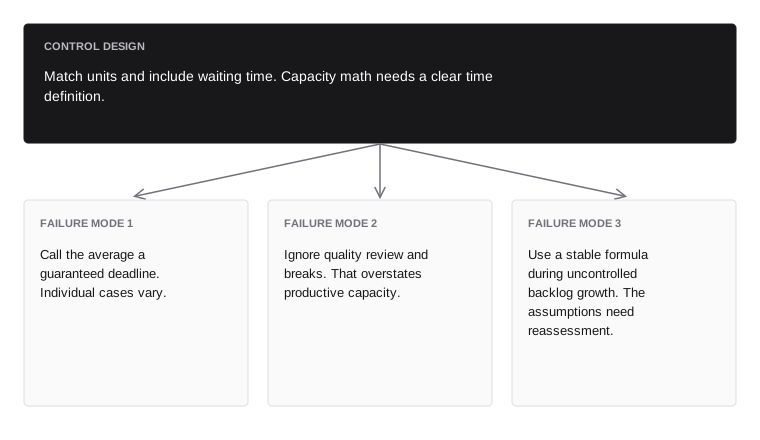
Match units and include waiting time. Capacity math needs a clear time definition.
- Failure mode 1avoid
- Call the average a guaranteed deadline. Individual cases vary.
- Failure mode 2avoid
- Ignore quality review and breaks. That overstates productive capacity.
- Failure mode 3avoid
- Use a stable formula during uncontrolled backlog growth. The assumptions need reassessment.
Use quality controls that improve decisions
Quality review should inspect reasoning, evidence, policy application, and customer treatment. Sample across outcomes, reviewers, and risk levels. A checklist can support review, but it should not replace judgment about whether the conclusion follows from the facts.
Track defects by cause. Missing evidence can require a data fix, unclear policy can require editorial work, and inconsistent treatment can require training or supervision. Share feedback in a way that improves the process. Counting errors without giving reviewers a usable correction path creates anxiety more reliably than quality.
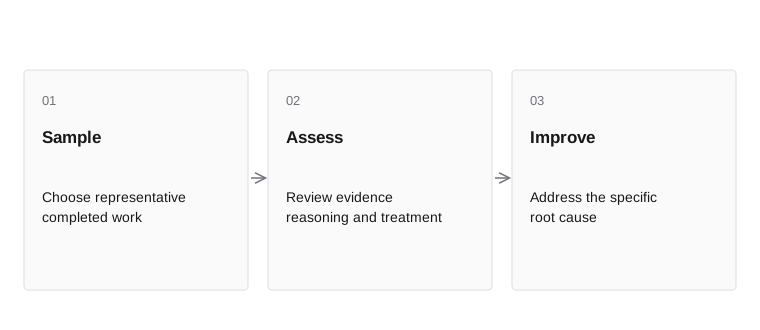
- SampleChoose representative completed work
- AssessReview evidence reasoning and treatment
- ImproveAddress the specific root cause
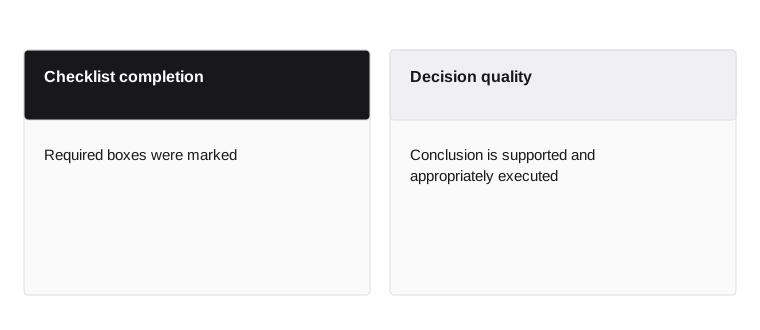
- Checklist completion
- Required boxes were marked
- Decision quality
- Conclusion is supported and appropriately executed
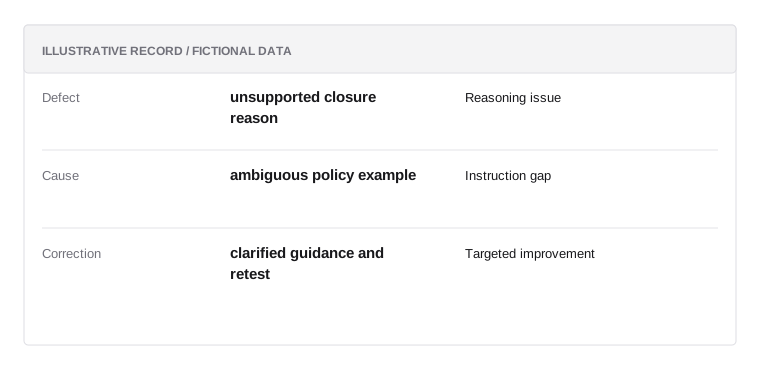
Quality review
Illustrative data; not a real customer record or a prescribed policy.
- Defectunsupported closure reason
Reasoning issue
- Causeambiguous policy example
Instruction gap
- Correctionclarified guidance and retest
Targeted improvement
Complete forms can still contain weak decisions
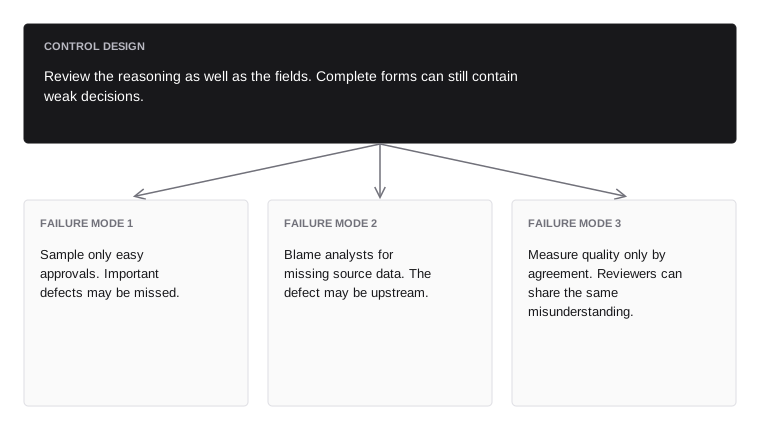
Review the reasoning as well as the fields. Complete forms can still contain weak decisions.
- Failure mode 1avoid
- Sample only easy approvals. Important defects may be missed.
- Failure mode 2avoid
- Blame analysts for missing source data. The defect may be upstream.
- Failure mode 3avoid
- Measure quality only by agreement. Reviewers can share the same misunderstanding.
Close the operational loop
Case closure should record the disposition, evidence, actions taken, customer communication, and remaining obligations. A closed investigation can still require a refund, notice, or monitoring update. Model those follow-up tasks explicitly.
Reconcile completed cases with their required downstream actions. Use outcome feedback to improve detection and product design, with appropriate confidentiality controls. A closure label should not become an automatic model truth without considering evidence quality. The case lifecycle ends when the required work is evidenced, not when a reviewer presses close.
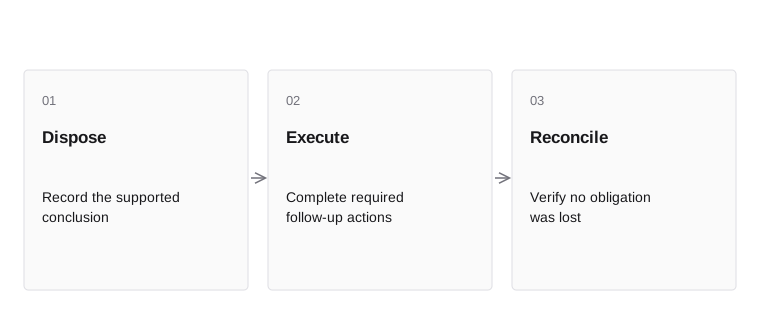
- DisposeRecord the supported conclusion
- ExecuteComplete required follow-up actions
- ReconcileVerify no obligation was lost
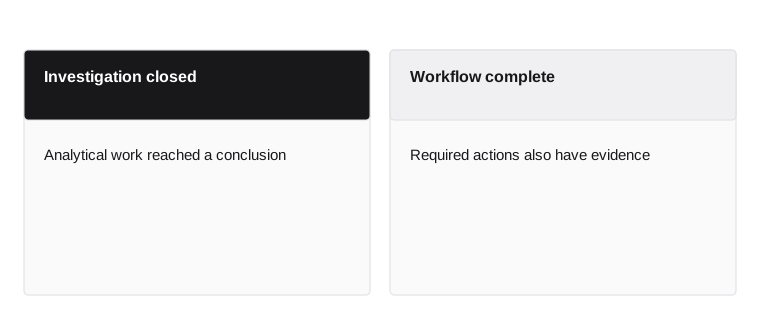
- Investigation closed
- Analytical work reached a conclusion
- Workflow complete
- Required actions also have evidence
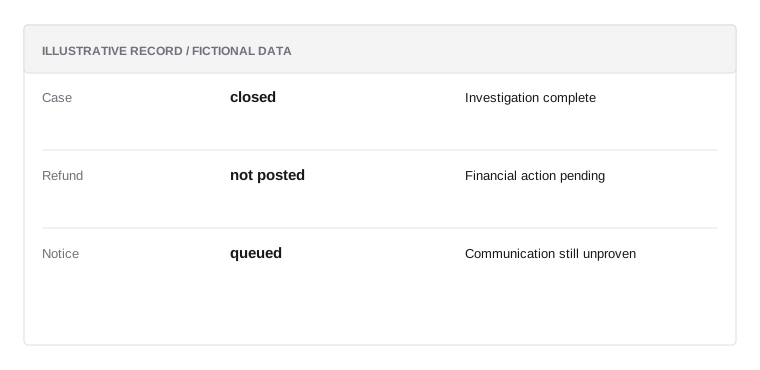
Closure reconciliation
Illustrative data; not a real customer record or a prescribed policy.
- Caseclosed
Investigation complete
- Refundnot posted
Financial action pending
- Noticequeued
Communication still unproven
A status change does not execute every action
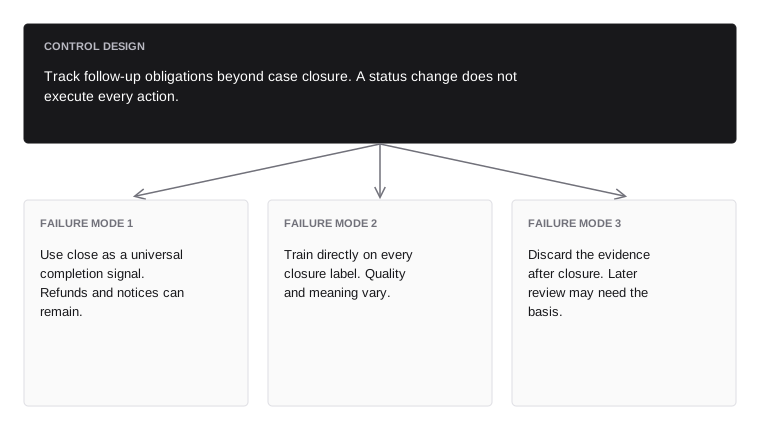
Track follow-up obligations beyond case closure. A status change does not execute every action.
- Failure mode 1avoid
- Use close as a universal completion signal. Refunds and notices can remain.
- Failure mode 2avoid
- Train directly on every closure label. Quality and meaning vary.
- Failure mode 3avoid
- Discard the evidence after closure. Later review may need the basis.
Chapter connections
Continue with Treasury, liquidity, and settlement operations to follow the next part of the system. Use the glossary for terminology and risk mathematics for formulas and worked calculations.