Instant payments and cross-border transfers
Design for finality, payee risk, foreign exchange, and international handoffs.
A customer says the transfer is urgent. The risk analyst says that is exactly why it deserves attention. Instant movement removes waiting time for honest people and recovery time for everyone else. Cross-border movement adds more places where messages, currencies, and responsibilities can diverge.
Fast rails change control timing
A short transfer window compresses the time available to stop a payment. Build the control path before release: validate the destination, check applicable restrictions, authenticate the instruction, and assess signs of manipulation. A slow manual queue cannot protect a payment already sent.
Distinguish acceptance by your application from acceptance and settlement by the payment system. Store the authoritative identifiers and timestamps for each. A timeout leaves uncertainty, not proof of failure. Recovery requests may still be possible through the relevant participants, but the user interface must not promise a reversible transfer when the rail does not provide that promise.
A transfer can cross several boundaries: customer authentication, the platform’s decision service, a sending institution, a payment system, and a receiving institution. Each boundary has its own acknowledgement. The platform must distinguish “the next system accepted my request” from “the intended beneficiary received usable funds.” A timeout is especially dangerous because the absence of a reply is not evidence that no transfer occurred.
The safe recovery path begins with a stable payment identifier and a status inquiry or reconciliation process supported by the actual integration. Sending a new transfer with a new identifier merely to make the screen stop spinning can create a second financial obligation. The product needs an honest pending state and a clear owner for resolving it.
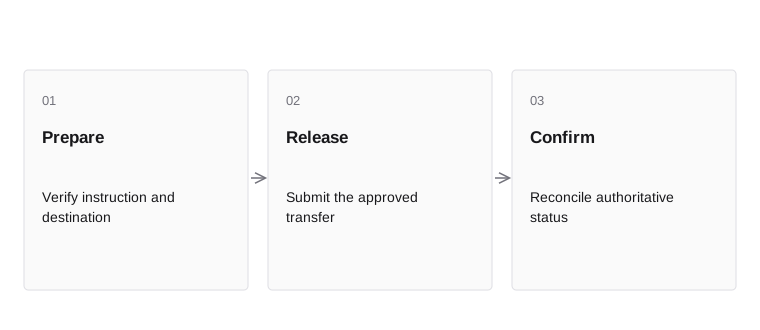
- PrepareVerify instruction and destination
- ReleaseSubmit the approved transfer
- ConfirmReconcile authoritative status
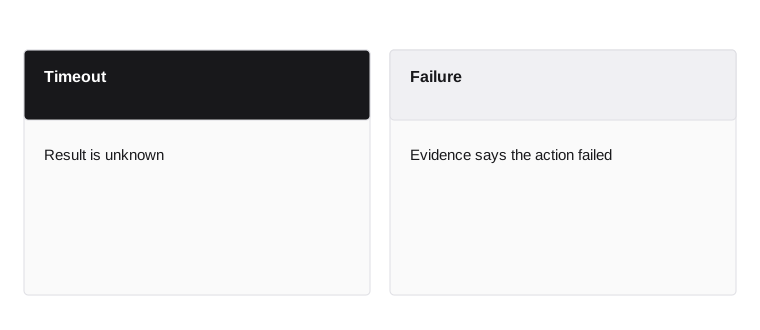
- Timeout
- Result is unknown
- Failure
- Evidence says the action failed
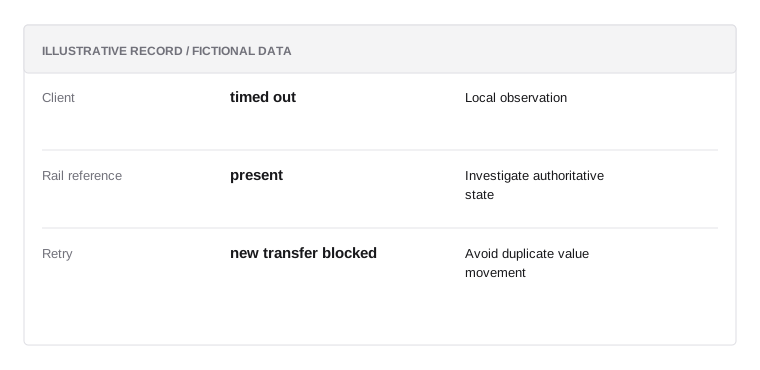
Instant transfer journal
Illustrative data; not a real customer record or a prescribed policy.
- Clienttimed out
Local observation
- Rail referencepresent
Investigate authoritative state
- Retrynew transfer blocked
Avoid duplicate value movement
Unknown is not the same as failed
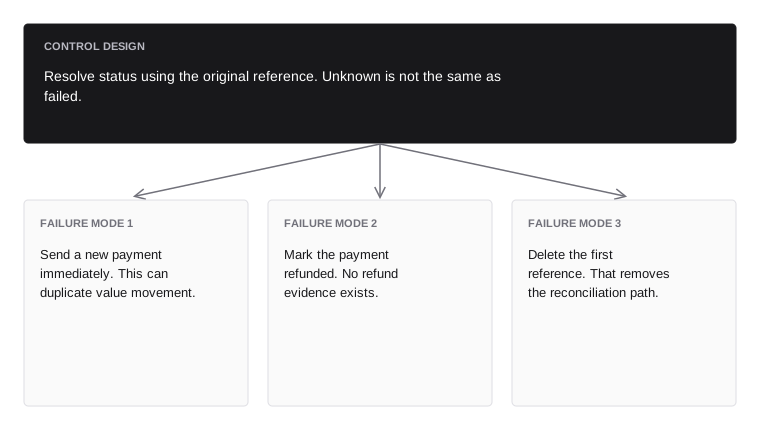
Resolve status using the original reference. Unknown is not the same as failed.
- Failure mode 1avoid
- Send a new payment immediately. This can duplicate value movement.
- Failure mode 2avoid
- Mark the payment refunded. No refund evidence exists.
- Failure mode 3avoid
- Delete the first reference. That removes the reconciliation path.
Protect the payee change
A real user can be persuaded to pay a wrong destination. Strong login controls do not solve every scam. Place attention on destination changes, first payments, unusual urgency, and context that differs from the established relationship. Avoid blaming customers for a workflow that makes verification difficult.
For business payments, a second authorized reviewer and an independent callback can help verify a changed bank instruction. Use a contact established before the change request. Calling the number in a suspicious email merely asks the same source to confirm itself. Record the verification method without storing unnecessary personal details.
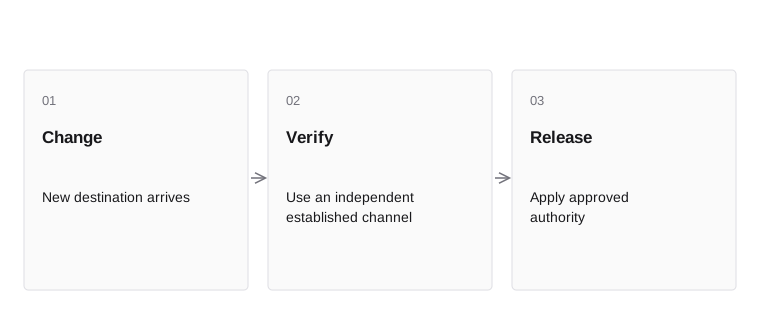
- ChangeNew destination arrives
- VerifyUse an independent established channel
- ReleaseApply approved authority
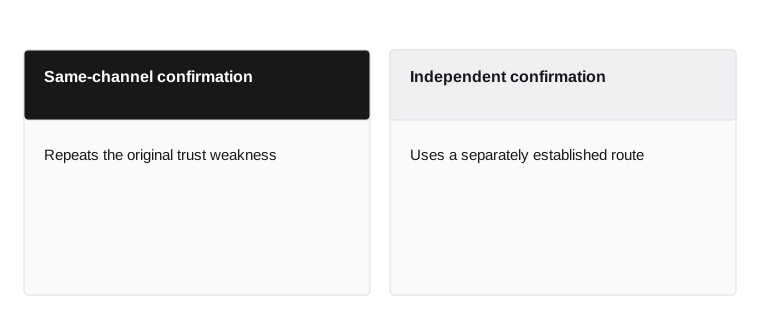
- Same-channel confirmation
- Repeats the original trust weakness
- Independent confirmation
- Uses a separately established route
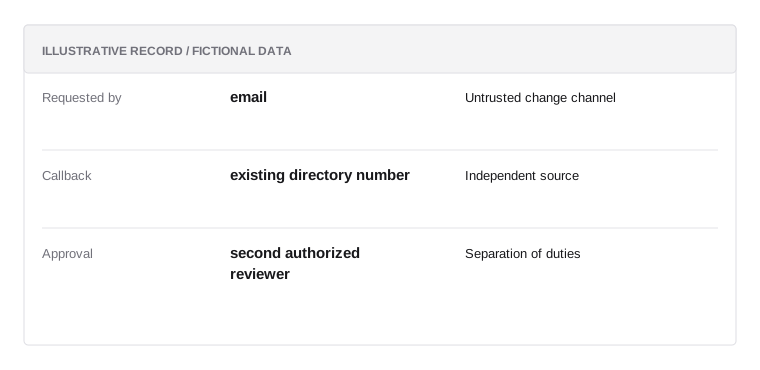
Vendor change record
Illustrative data; not a real customer record or a prescribed policy.
- Requested byemail
Untrusted change channel
- Callbackexisting directory number
Independent source
- Approvalsecond authorized reviewer
Separation of duties
It is independent of the change request
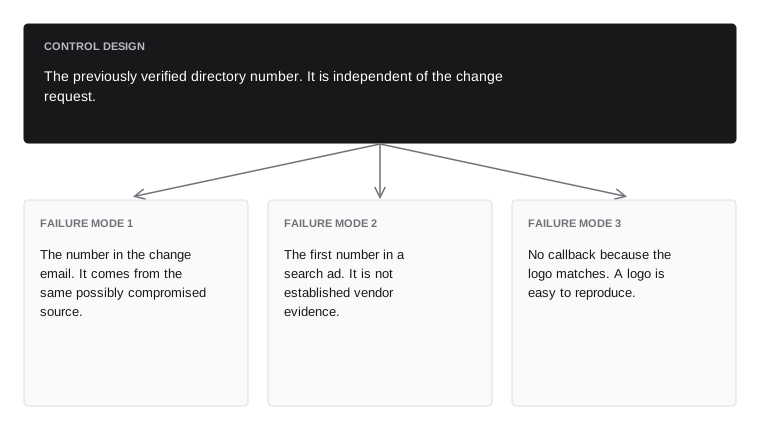
The previously verified directory number. It is independent of the change request.
- Failure mode 1avoid
- The number in the change email. It comes from the same possibly compromised source.
- Failure mode 2avoid
- The first number in a search ad. It is not established vendor evidence.
- Failure mode 3avoid
- No callback because the logo matches. A logo is easy to reproduce.
Model the currency legs
A cross-border transfer can contain a sender amount, fees, a conversion rate, a receiver amount, and multiple settlement legs. Always identify the currency of each amount and the time of the quote. Adding 100 dollars to 100 euros does not produce a meaningful 200-unit balance.
Use decimal-safe arithmetic or integer minor units with currency metadata. Some currencies use different minor-unit conventions. Treat rounding, quote expiry, and rate changes as explicit events. If a transfer fails after one leg executes, the unwind can create a foreign-exchange gain or loss even when the original principal is returned.
For a USD-to-EUR payment, the customer quote, the currency purchase, and the beneficiary credit can occur at different times. The platform must define which rate is binding, who bears movement before completion, and what happens if one leg succeeds while another fails. A compensating transaction may require a new exchange at a different rate. It is not necessarily the exact reverse of the original trade. Track principal, fees, rate source, quote expiry, and the link between both currency legs so support and treasury can explain the final amount.
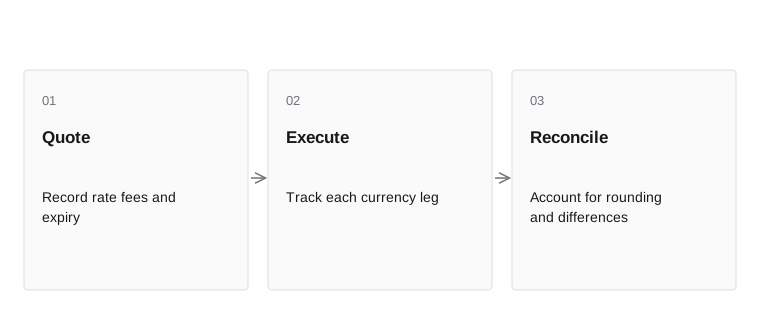
- QuoteRecord rate fees and expiry
- ExecuteTrack each currency leg
- ReconcileAccount for rounding and differences
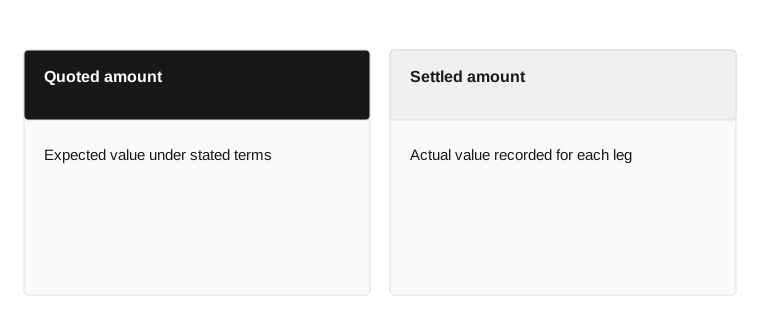
- Quoted amount
- Expected value under stated terms
- Settled amount
- Actual value recorded for each leg
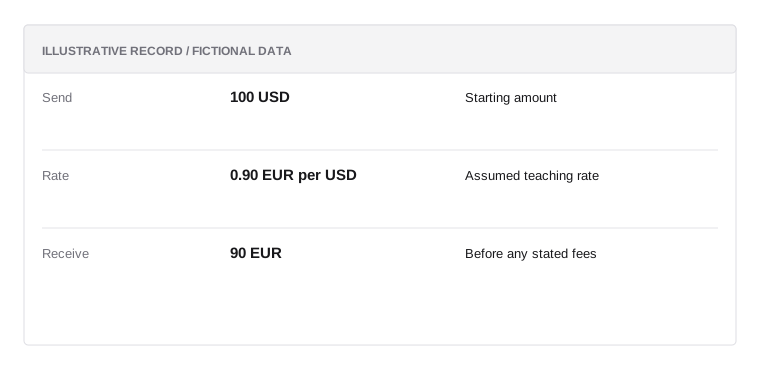
Illustrative conversion
Illustrative data; not a real customer record or a prescribed policy.
- Send100 USD
Starting amount
- Rate0.90 EUR per USD
Assumed teaching rate
- Receive90 EUR
Before any stated fees
Multiply dollars by euros per dollar
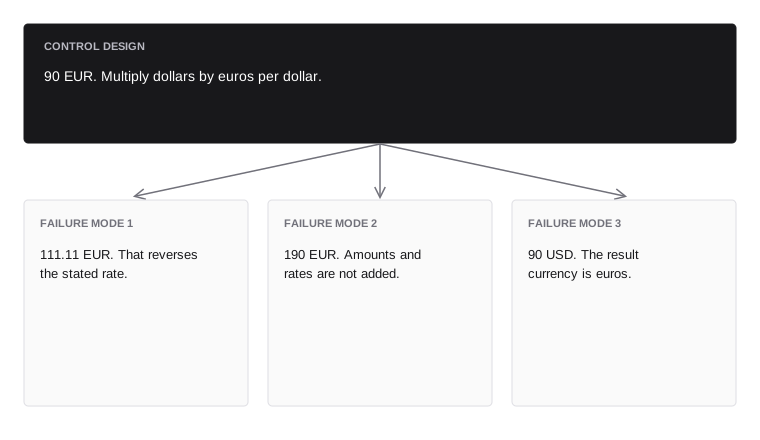
90 EUR. Multiply dollars by euros per dollar.
- Failure mode 1avoid
- 111.11 EUR. That reverses the stated rate.
- Failure mode 2avoid
- 190 EUR. Amounts and rates are not added.
- Failure mode 3avoid
- 90 USD. The result currency is euros.
Use jurisdiction and corridor context
Sanctions and other legal restrictions depend on people, entities, ownership, location, activity, and the applicable jurisdiction. A country field alone cannot represent the full analysis. An intermediary may introduce additional duties or restrictions. Keep screening evidence tied to the actual parties and payment route.
A corridor is a defined origin-destination flow, often including currency and partner choices. Compare performance within corridors before drawing conclusions from a global average. A rise in total returns may reflect a shift toward a difficult corridor rather than a broken model. Segment carefully without treating nationality as proof of misconduct.
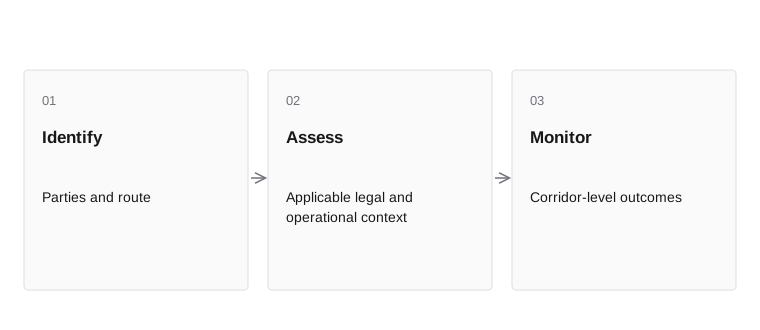
- IdentifyParties and route
- AssessApplicable legal and operational context
- MonitorCorridor-level outcomes
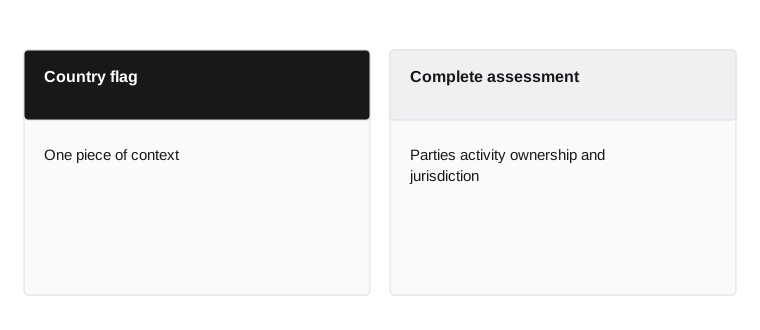
- Country flag
- One piece of context
- Complete assessment
- Parties activity ownership and jurisdiction
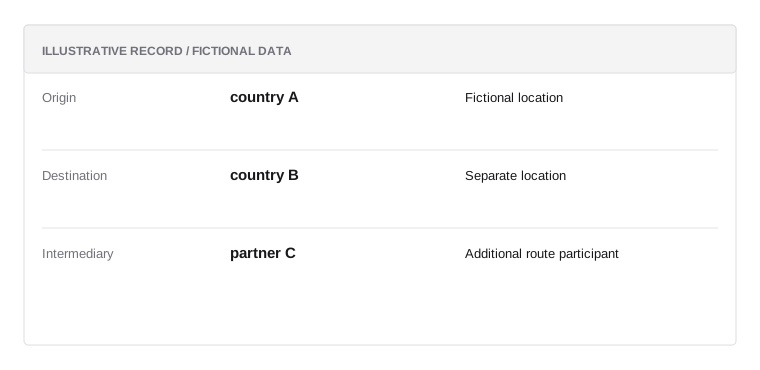
Corridor context record
Illustrative data; not a real customer record or a prescribed policy.
- Origincountry A
Fictional location
- Destinationcountry B
Separate location
- Intermediarypartner C
Additional route participant
Geography is only part of the analysis
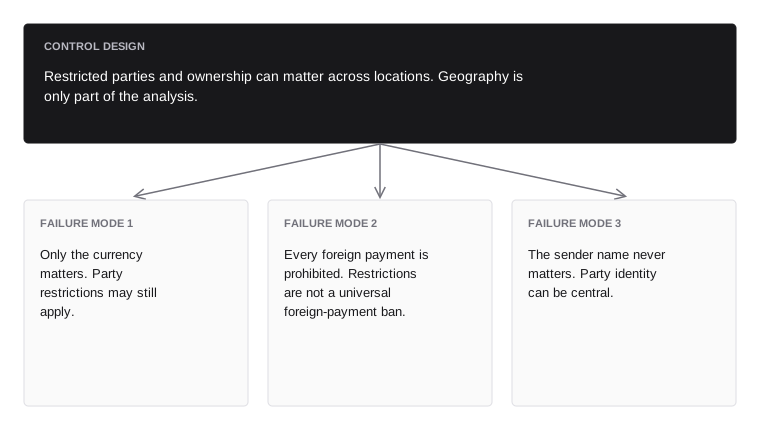
Restricted parties and ownership can matter across locations. Geography is only part of the analysis.
- Failure mode 1avoid
- Only the currency matters. Party restrictions may still apply.
- Failure mode 2avoid
- Every foreign payment is prohibited. Restrictions are not a universal foreign-payment ban.
- Failure mode 3avoid
- The sender name never matters. Party identity can be central.
Design the recovery handoff
When a customer reports a wrong transfer, collect the payment reference, amount, currency, time, destination, and explanation. Route the case through the appropriate bank or payment partner quickly. Preserve evidence and distinguish an attempted recovery from a completed recovery.
Give support a state vocabulary: reported, escalated, partner acknowledged, funds located, recovered, or unresolved. Do not display money as available until the ledger supports it. Operational speed matters, but so does a clear communication trail. A customer who hears funds recovered before settlement may spend money that the firm does not yet have.
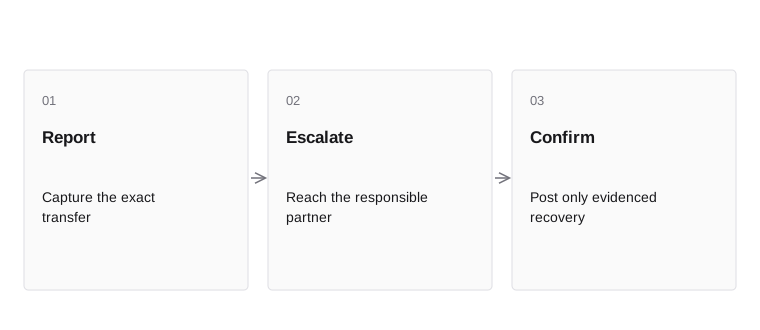
- ReportCapture the exact transfer
- EscalateReach the responsible partner
- ConfirmPost only evidenced recovery
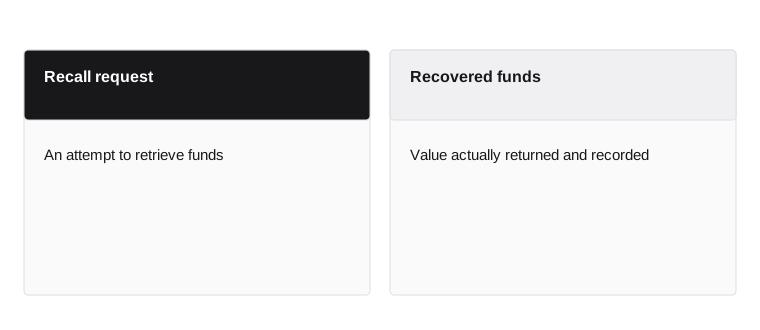
- Recall request
- An attempt to retrieve funds
- Recovered funds
- Value actually returned and recorded
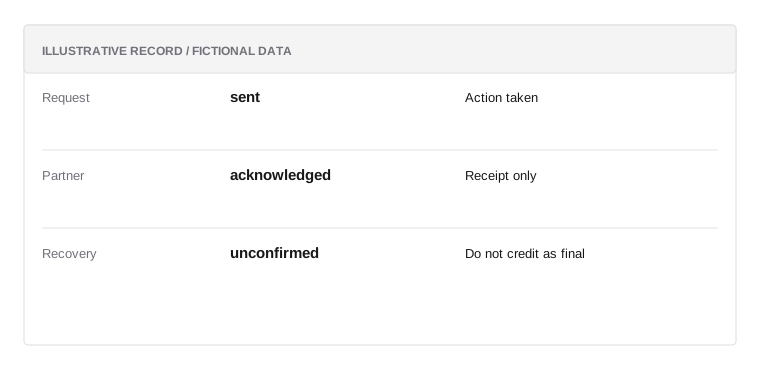
Recovery case record
Illustrative data; not a real customer record or a prescribed policy.
- Requestsent
Action taken
- Partneracknowledged
Receipt only
- Recoveryunconfirmed
Do not credit as final
Acknowledgment is not returned value
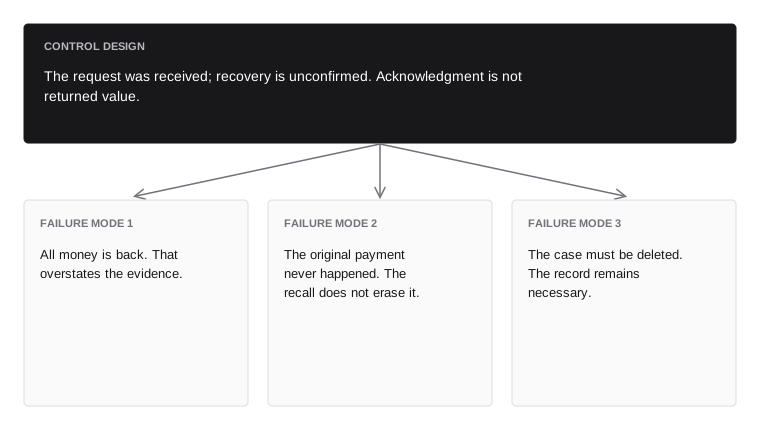
The request was received; recovery is unconfirmed. Acknowledgment is not returned value.
- Failure mode 1avoid
- All money is back. That overstates the evidence.
- Failure mode 2avoid
- The original payment never happened. The recall does not erase it.
- Failure mode 3avoid
- The case must be deleted. The record remains necessary.
Chapter connections
This chapter builds on ACH, bank debits, and returns. Continue with Ledgers, reconciliation, and settlement risk to follow the next part of the system. Use the glossary for terminology and risk mathematics for formulas and worked calculations.